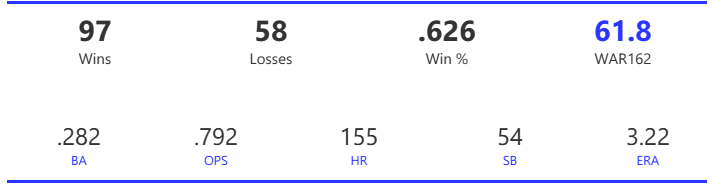
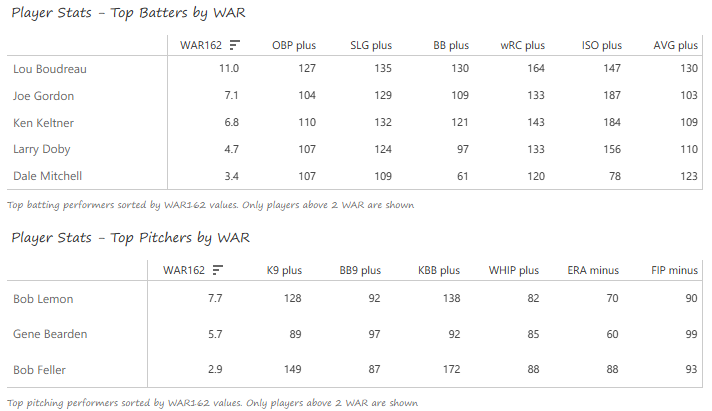
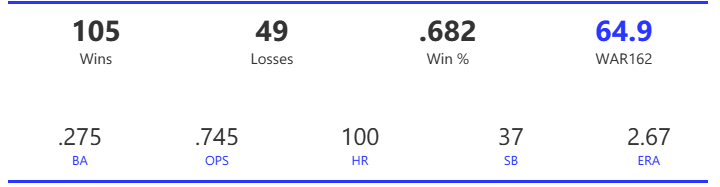
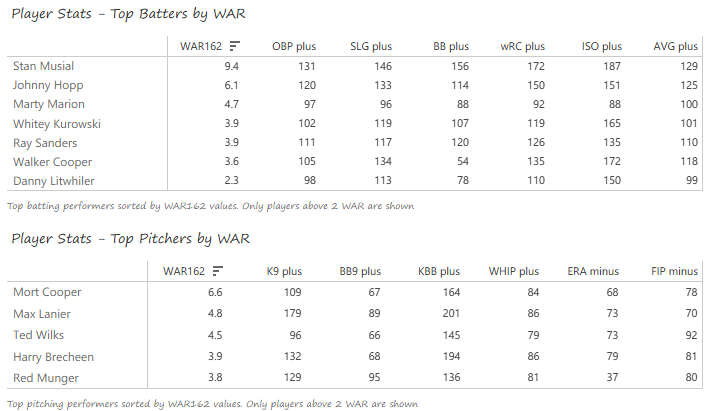
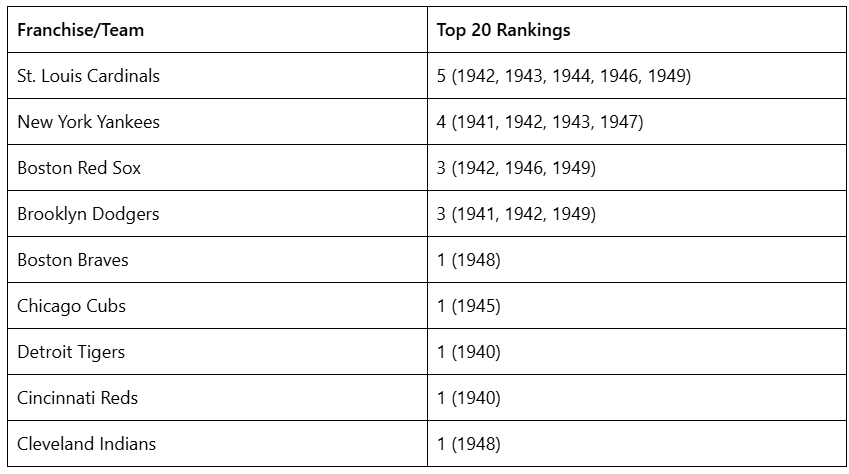
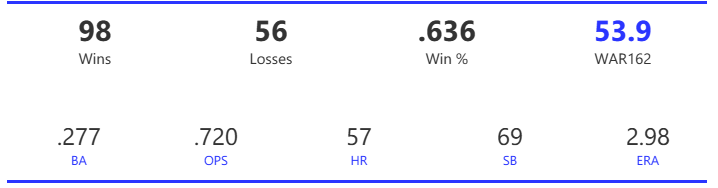
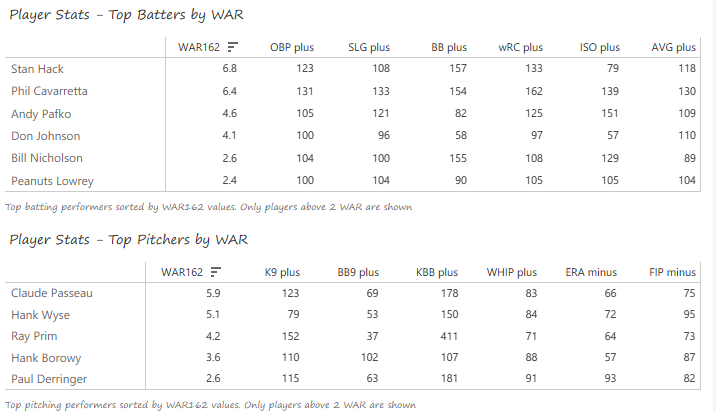
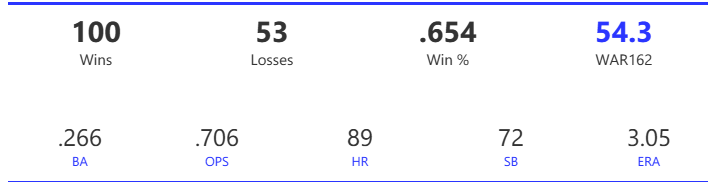
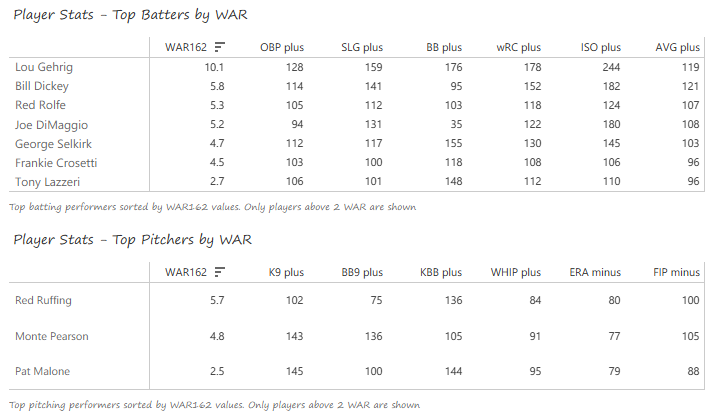
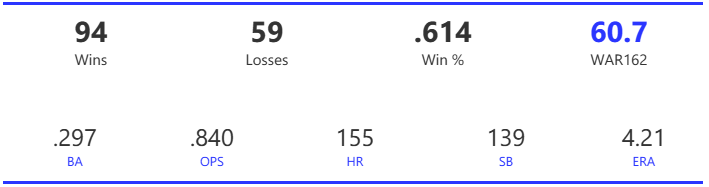
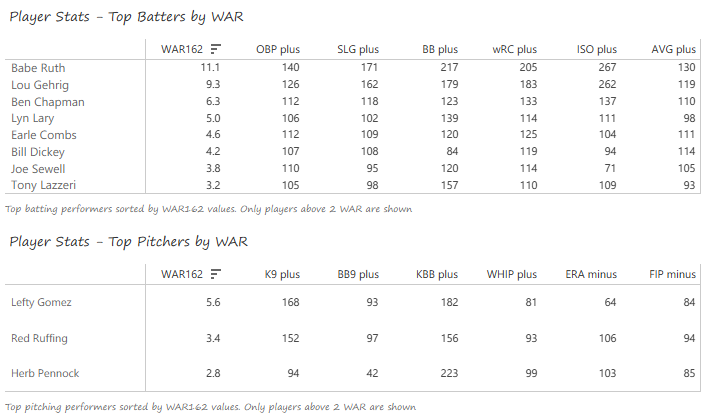
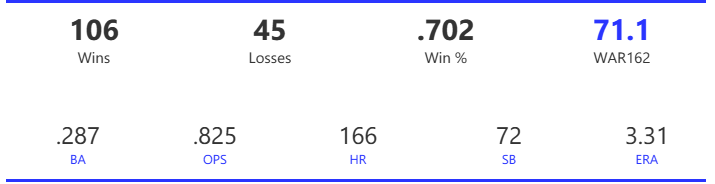
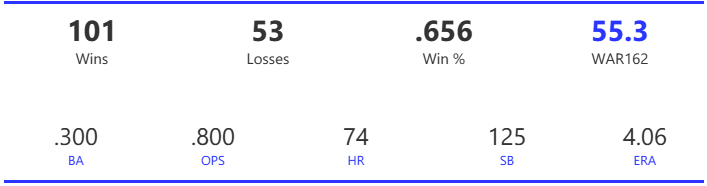
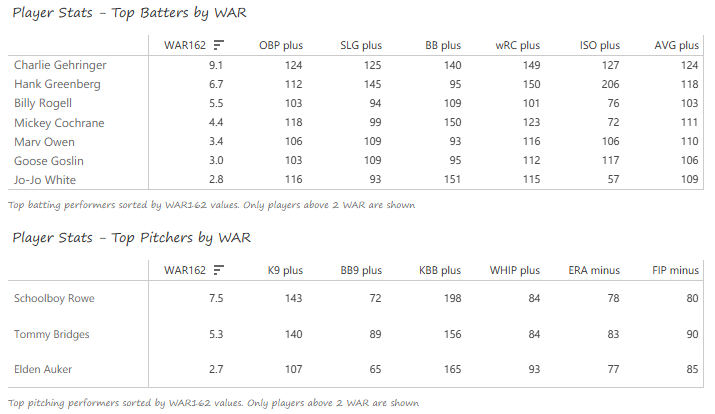
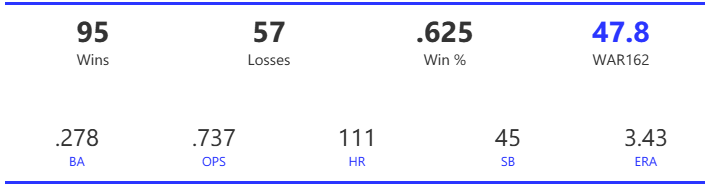
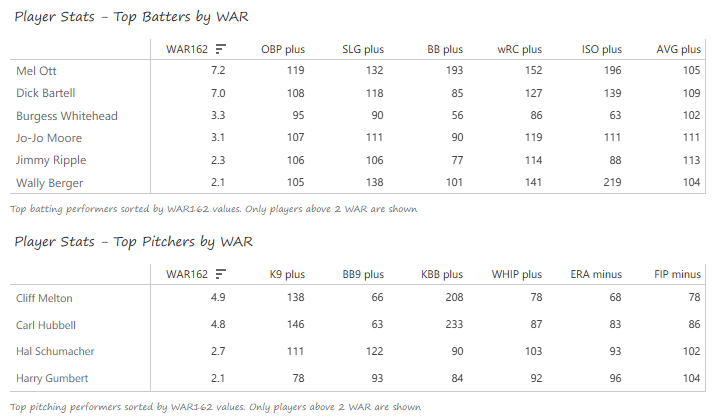
Welcome to the second countdown post in our series of MLB team rankings for the 1950s. As a reminder, the teams are ranked from #20 through #1 based on aggregate WAR162. For the 1950s (1950-1959), a total of 160 teams were eligible (16 teams x 10 seasons), so the top 20 teams are a fairly exclusive group. We’ll summarize each team, including portions of their team dashboard, and explain how they attained their ranking. So, without further ado, here are the teams ranked #15 through #11.
Here’s the interactive dashboard at Tableau Public: 1950s Top 20 MLB Teams Dashboard
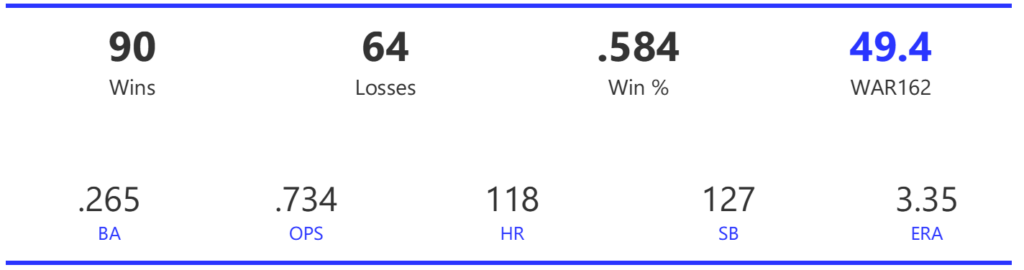
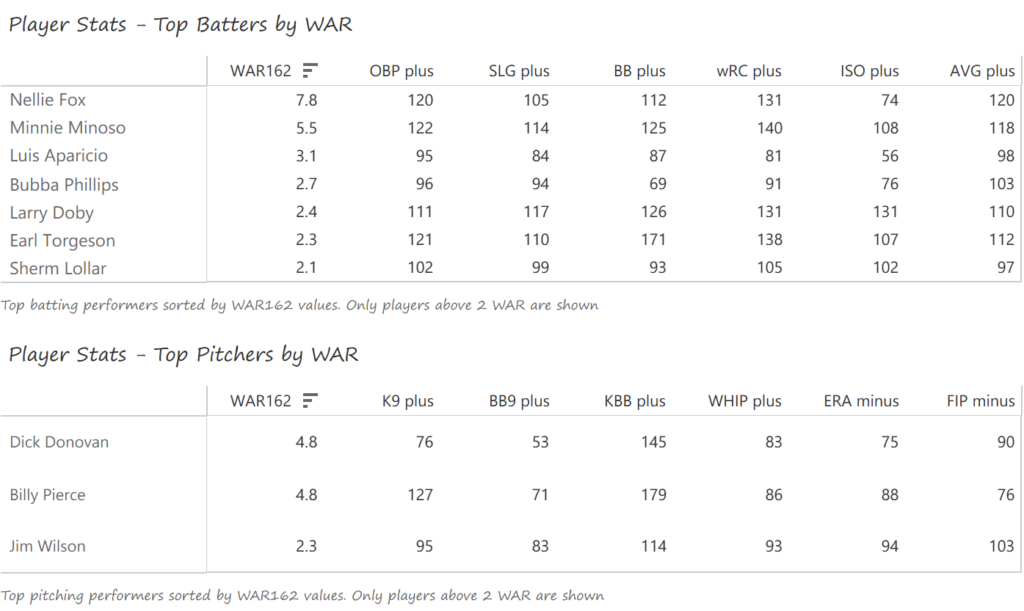
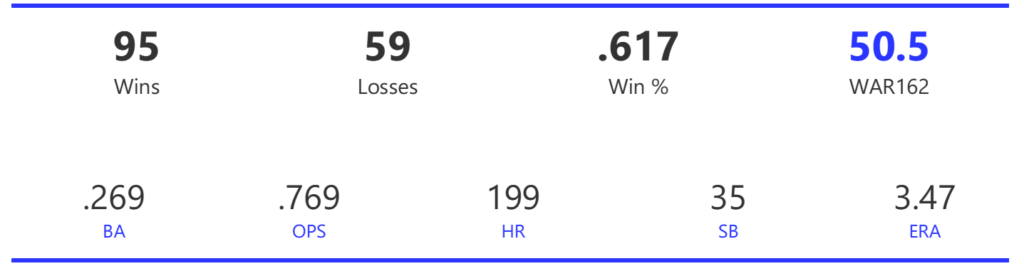
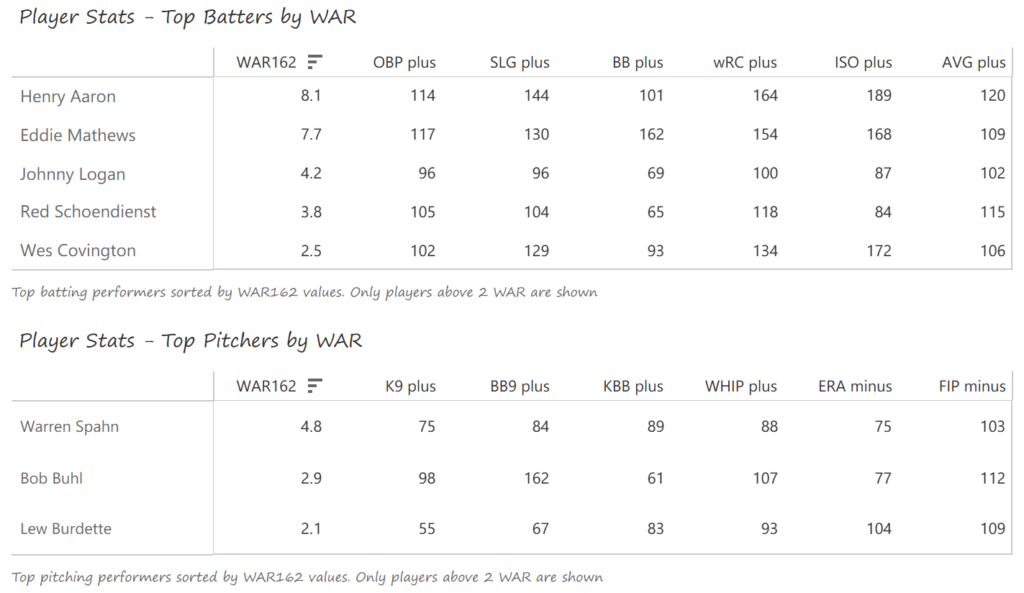
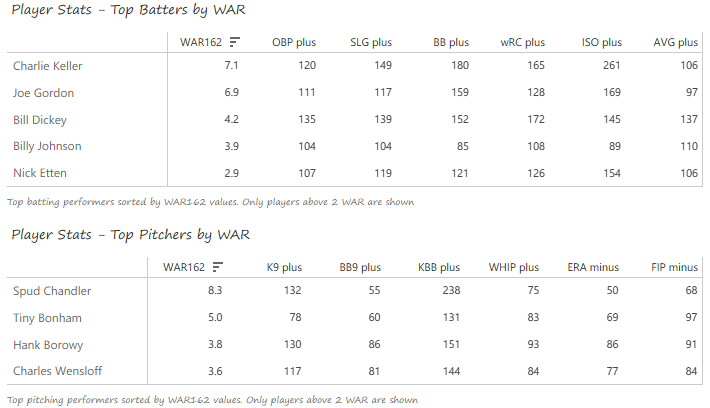
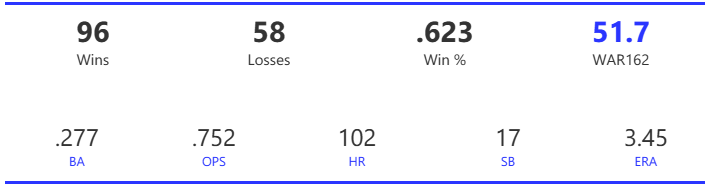
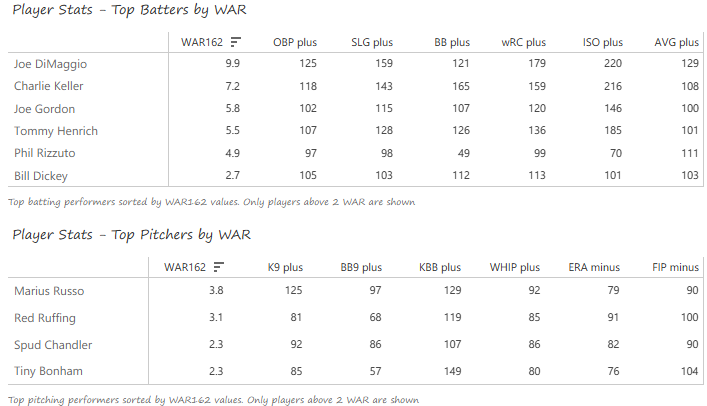
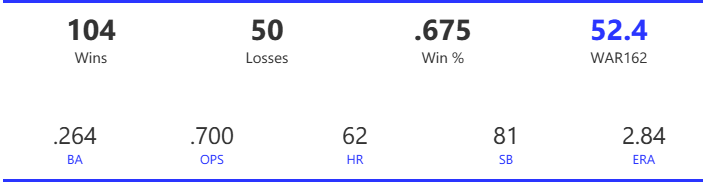
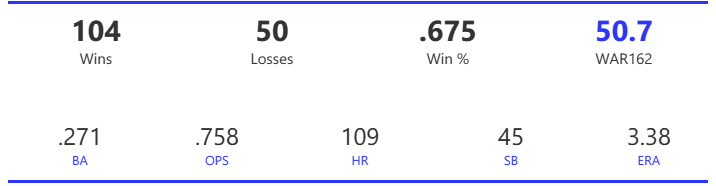
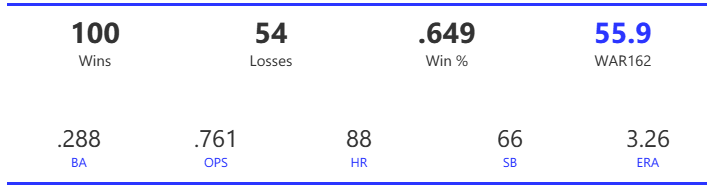
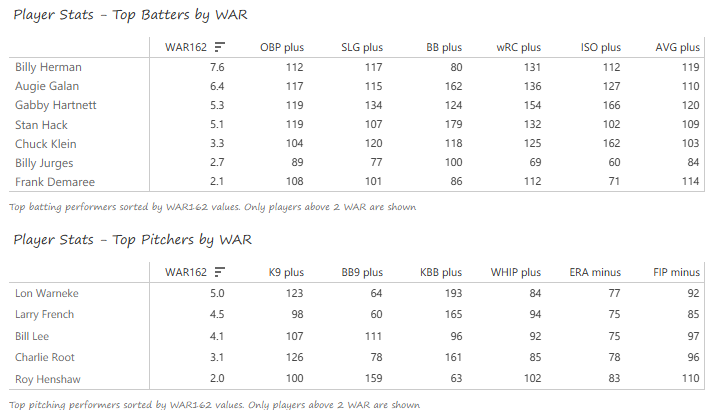
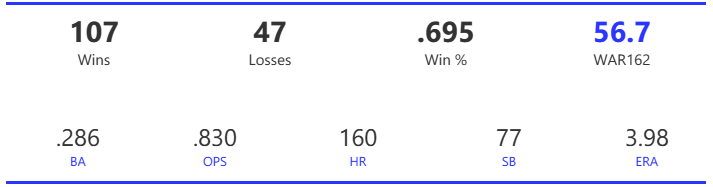
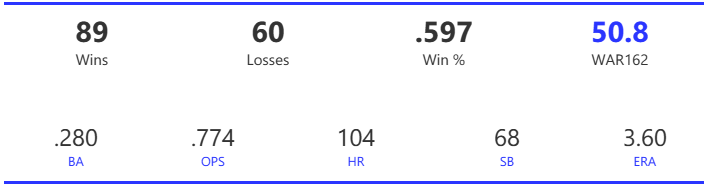
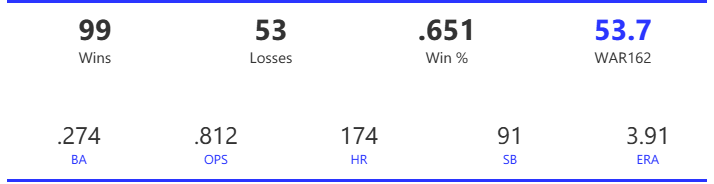
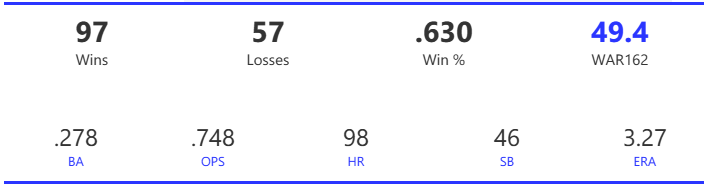
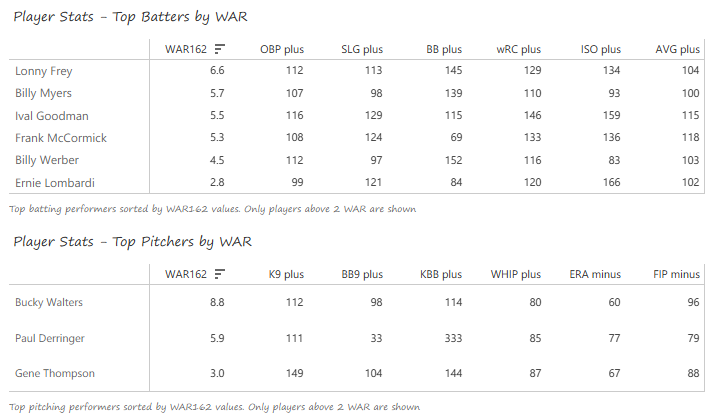
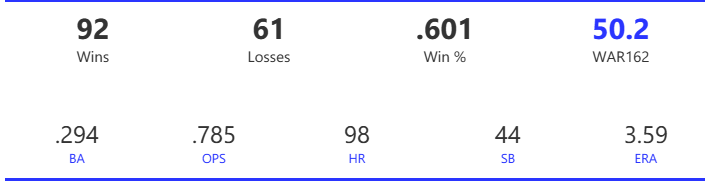
#15: 1954 New York Yankees, 50.8 WAR162
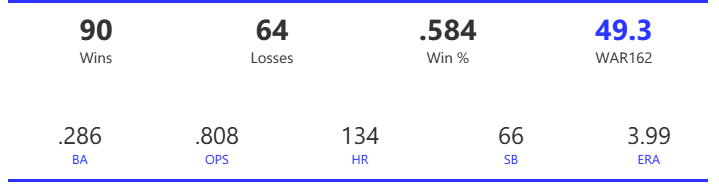
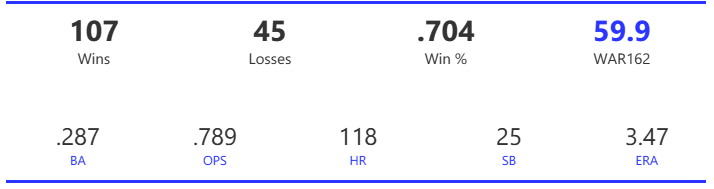
The Yankees put together a 103-win season, only to finish 8 games behind the Indians, who enjoyed a historic season. Even accounting for a hefty dose of luck for Cleveland, they were the better team in 1954.
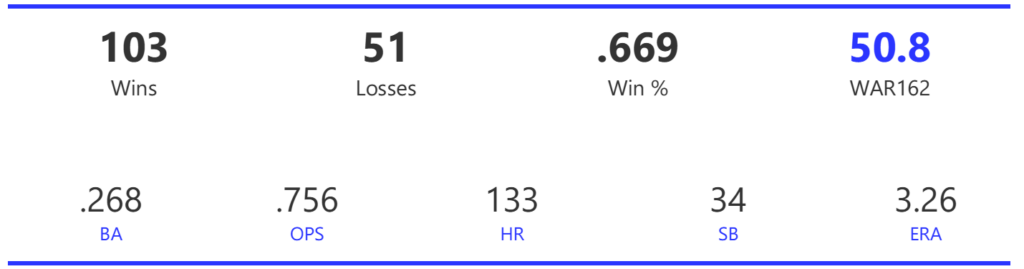
The Yankees had a dominant offense that outscored the Indians by 59 runs and placed second in doubles, triples, and home runs. They were just ahead of the White Sox in BA and OBP, and well ahead of their rivals in OPS. While the Yankees’ pitching was sound, their performance was far behind the Indians’ numbers. The New Yorkers ranked third in ERA, third in WHIP, and second in shutouts. Their other pitching metrics were typically ahead of league average, but not comparable to the Indians’ or White Sox’ performances.
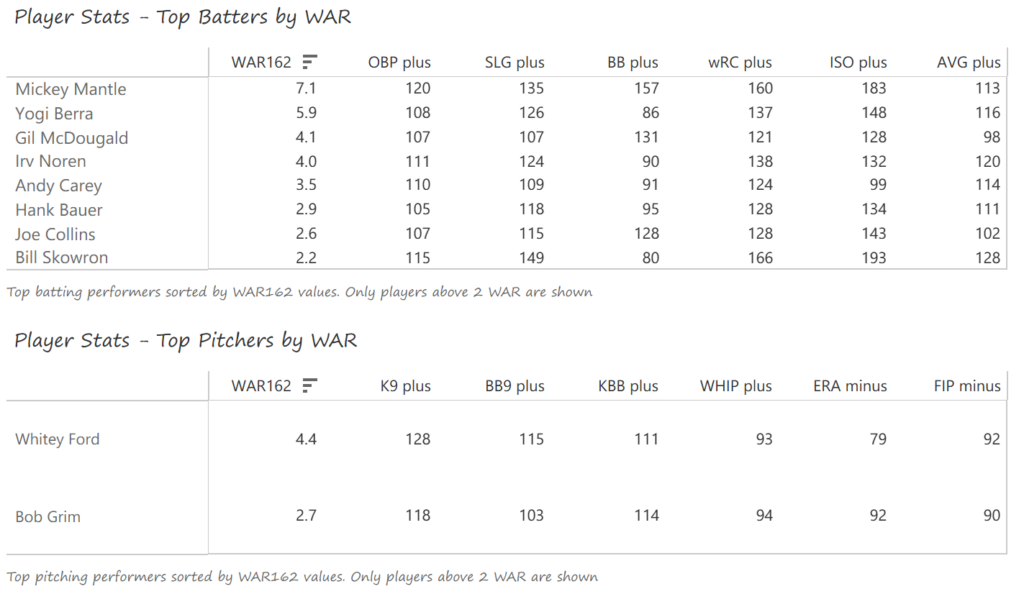
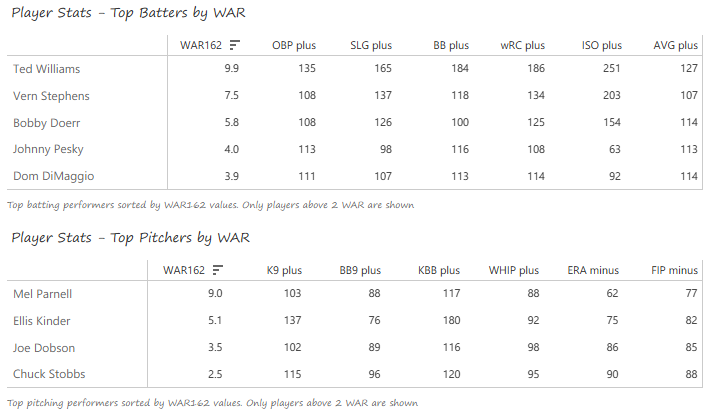
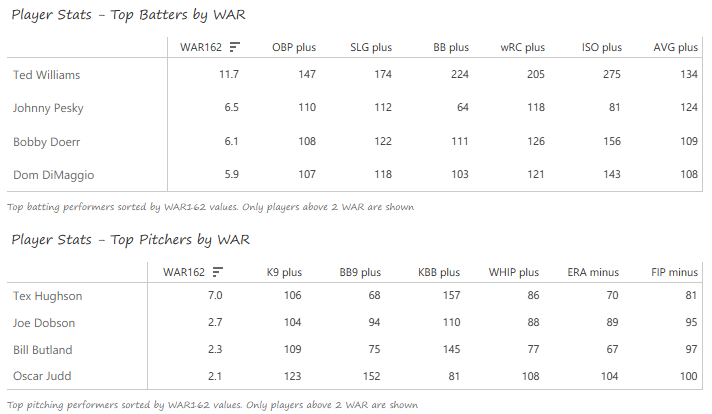
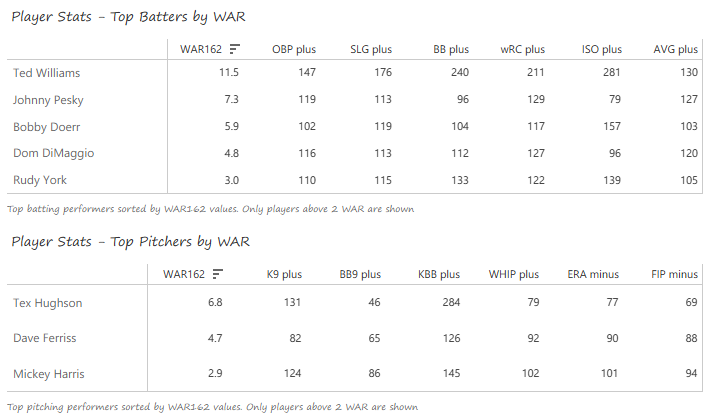
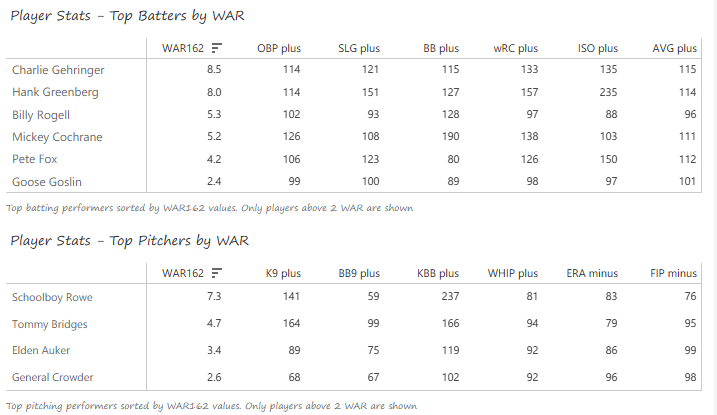
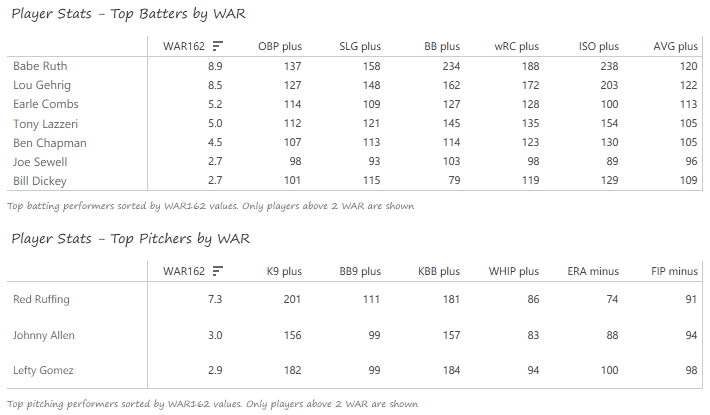
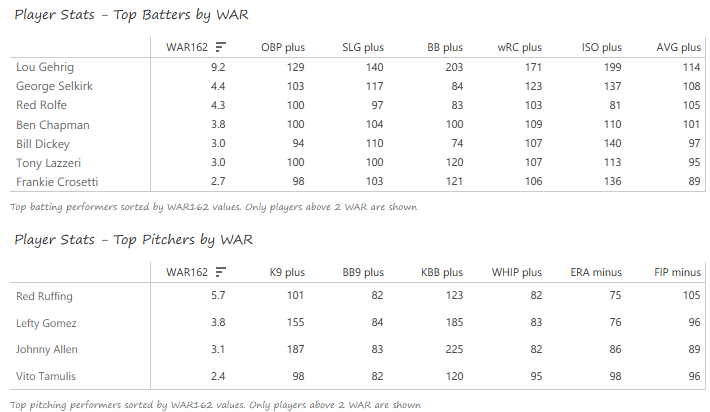
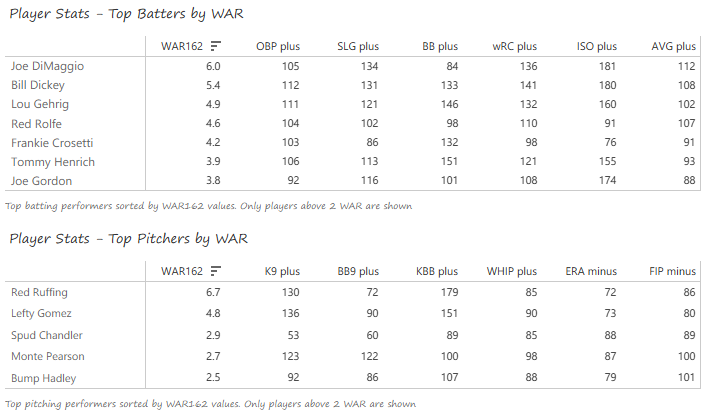
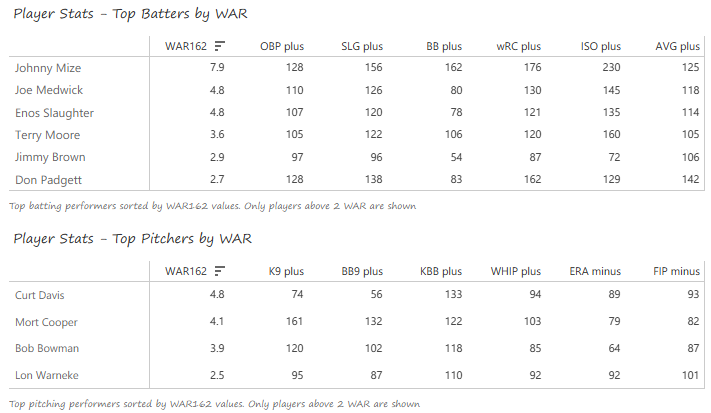
Mickey Mantle and Yogi Berra were the offensive stars for the Yankees, with Mantle batting .300, belting 27 homers, and leading the AL with 129 runs scored. Berra (AL MVP) batted .307 from his catcher spot, with 22 homers and 125 RBI. Gil McDougald was a standout at second base, Irv Noren batted .319 as a fourth outfielder, and Andy Carey batted .302 from his third base position. Whitey Ford led the pitching staff with a 16-8 record and 2.82 ERA, followed by Rookie of the Year Bob Grim (20-6, 3.26 ERA).
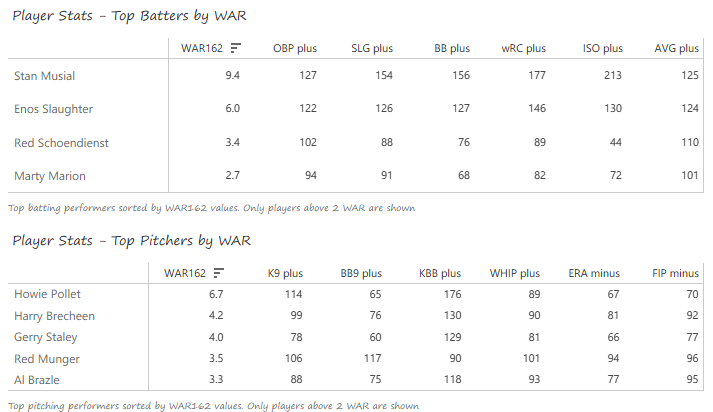
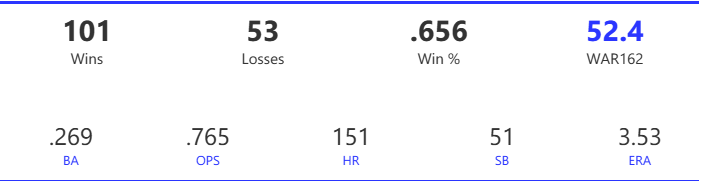
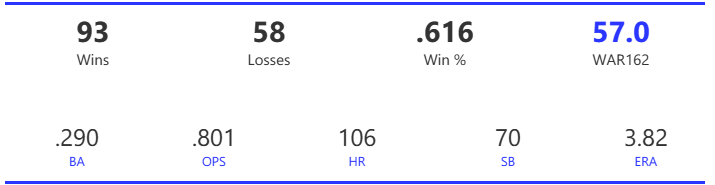
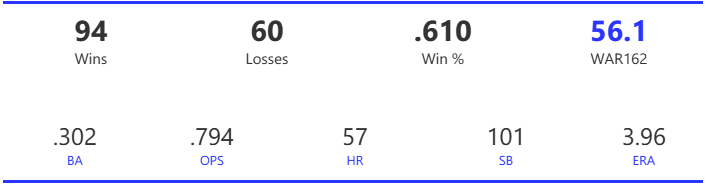
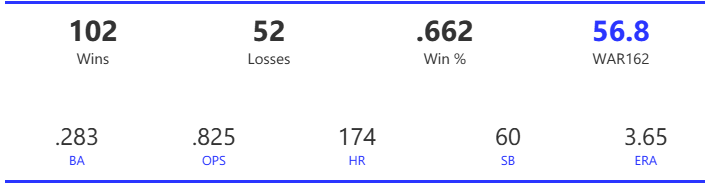
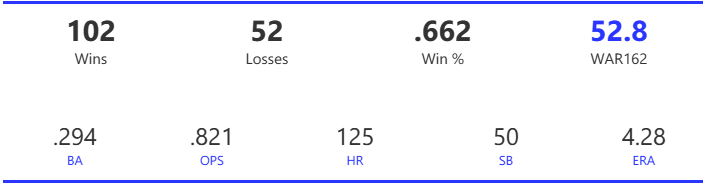
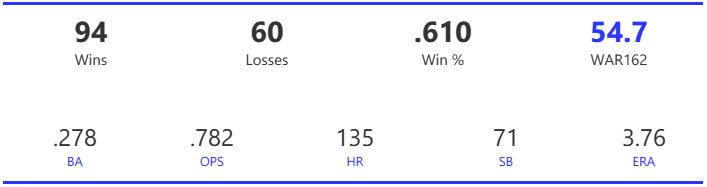
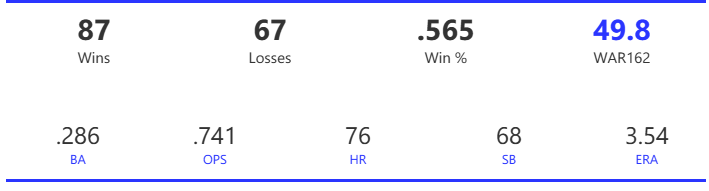
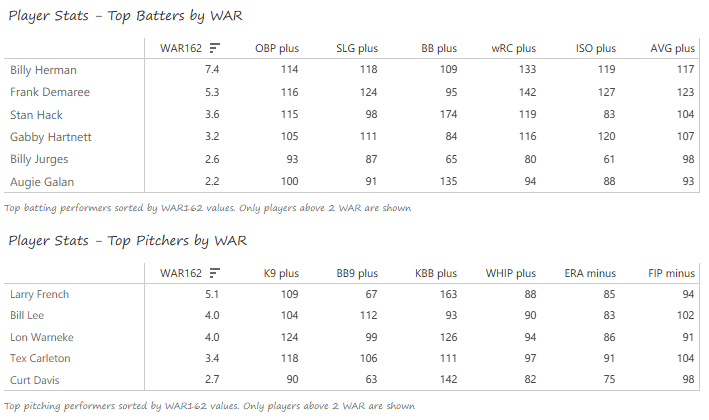
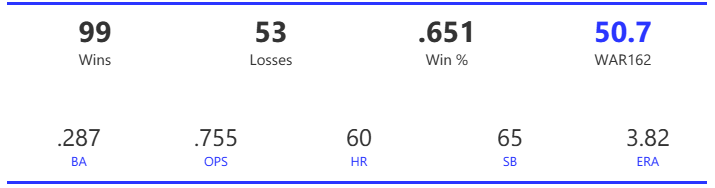
#14: 1956 New York Yankees, 51.0 WAR162
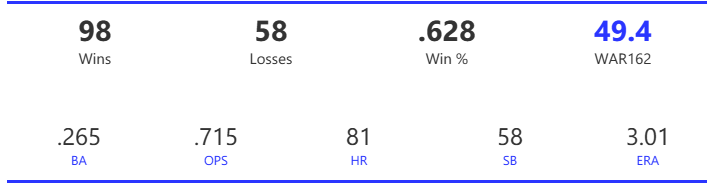
The 1956 Yankees coasted to a 9-game margin over the Indians to repeat as AL champs. They then avenged their 1955 World Series loss by defeating the Dodgers in seven games.
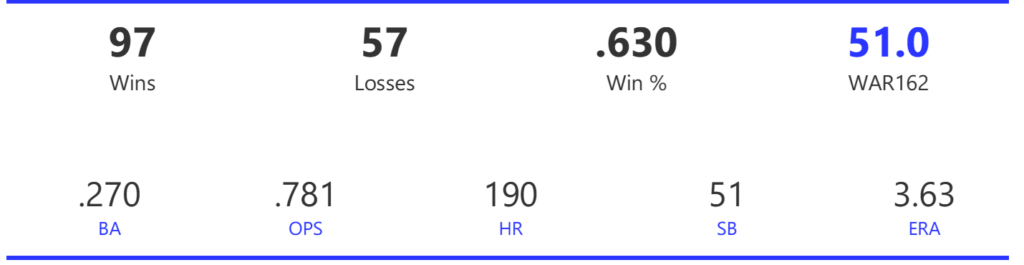
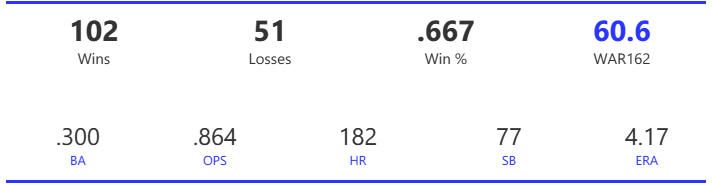
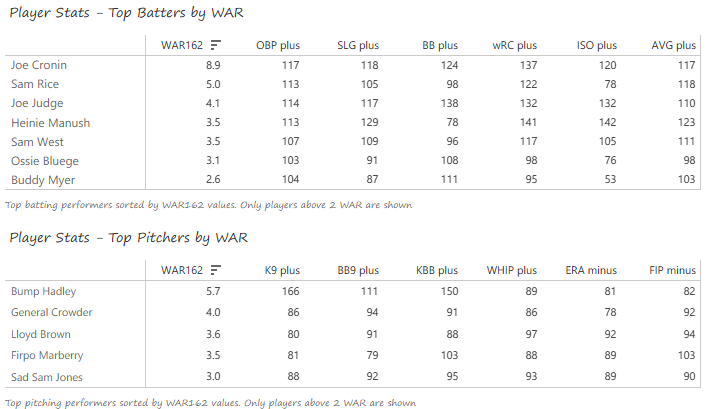
The Yankees’ pennant odds were enhanced by a powerful offense that totaled 857 runs, 68 more than the Tigers. They also walloped 190 homers, leading to the top OPS ranking despite placing third in BA and fourth in OBP. The Yankees’ pitching was solid, if not at the level of the Indians. The team ranked second in ERA, third in WHIP, and third in strikeouts.
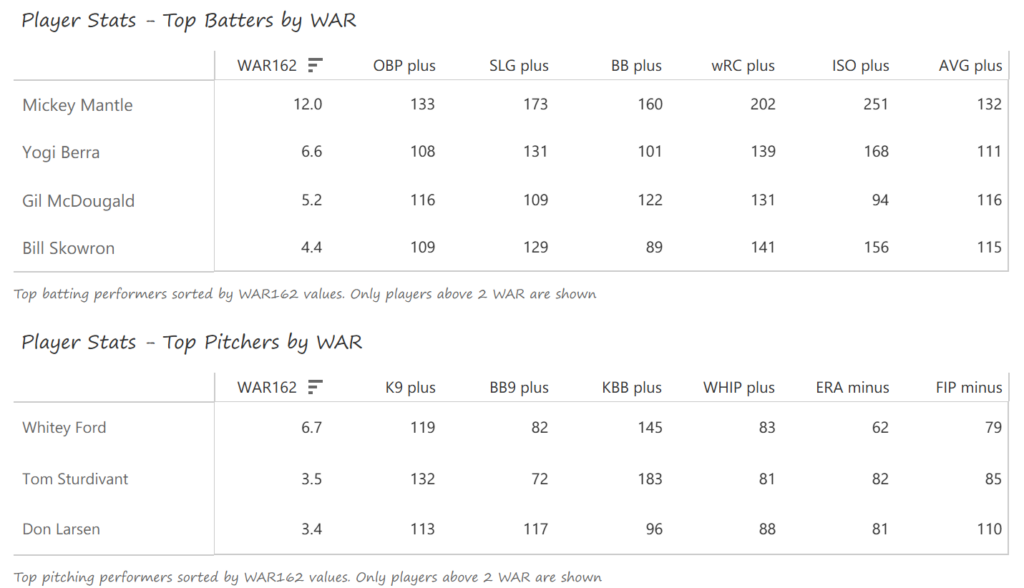
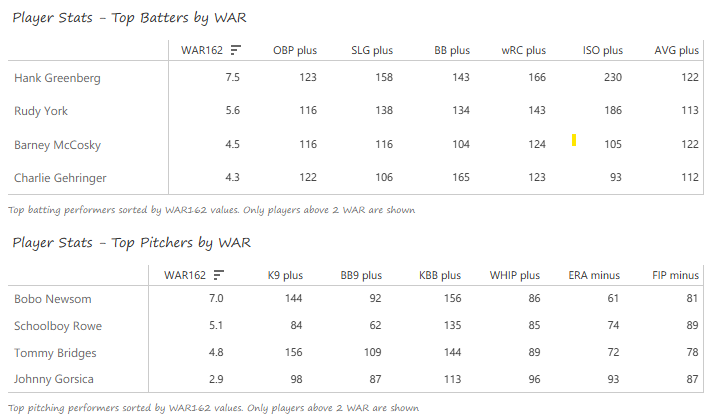
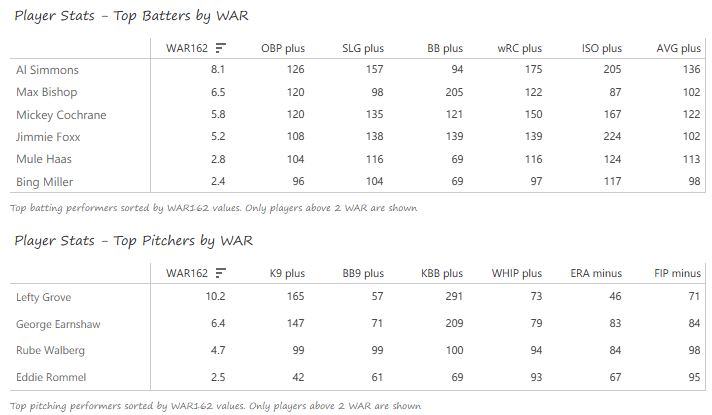
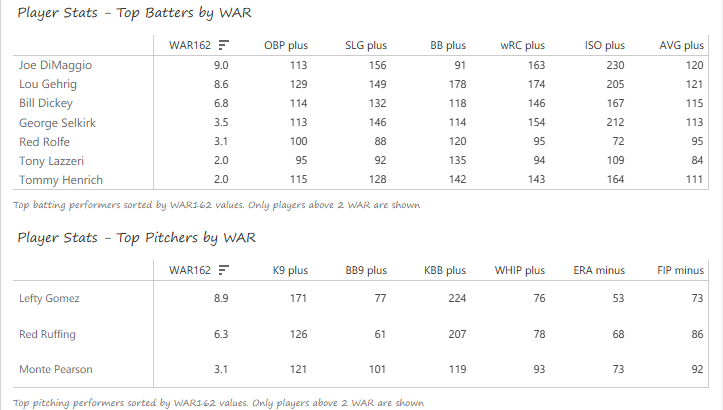
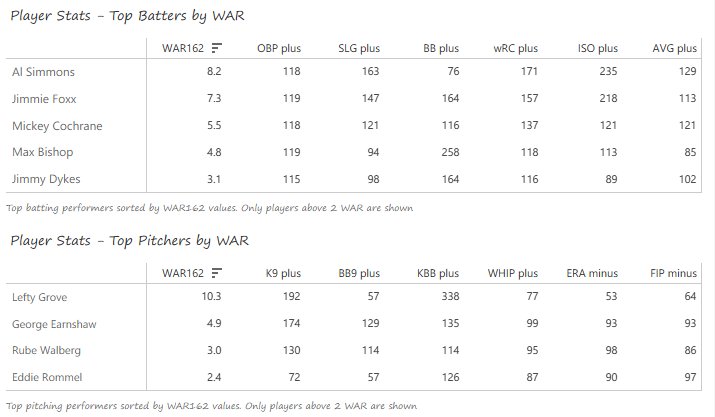
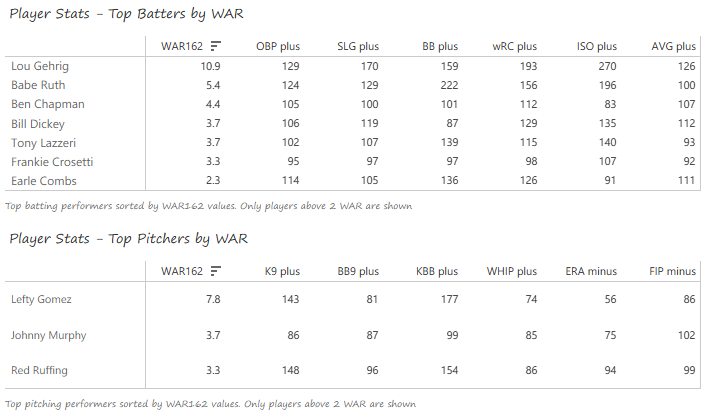
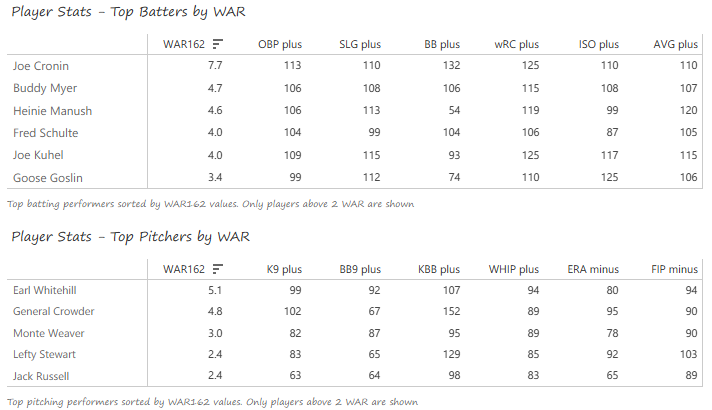
Mickey Mantle had a monster Triple Crown season, batting .353 with 52 homers and 130 RBI. He also led the AL in runs (132), SLG (.705), and OPS (1.169). Yogi Berra was a capable second act, belting 30 homers with 105 RBI, and Gil McDougald batted .311 with a .405 OBP from the shortstop position. Bill Skowron added another 23 homers to go with a .308 BA for a loaded Yankees offense. Whitey Ford again topped the Yankees staff, winning 19 games with an AL-best 2.47 ERA, ably supported by Tom Sturdivant (16-8, 3.30 ERA) and Don Larsen (11-5, 3.26 ERA).
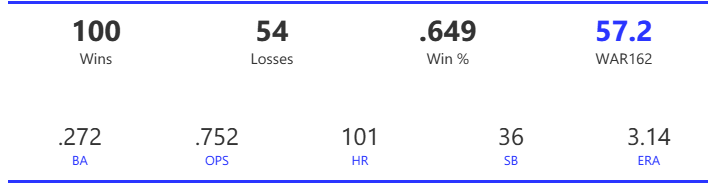
#13: 1951 New York Giants, 51.0 WAR162
The 1951 Giants shocked the world with an amazing stretch run to catch the rival Dodgers and then top them in a single tiebreaker game to claim the NL pennant. However, they couldn’t top the other New York team, losing to the Yankees in a six-game World Series.
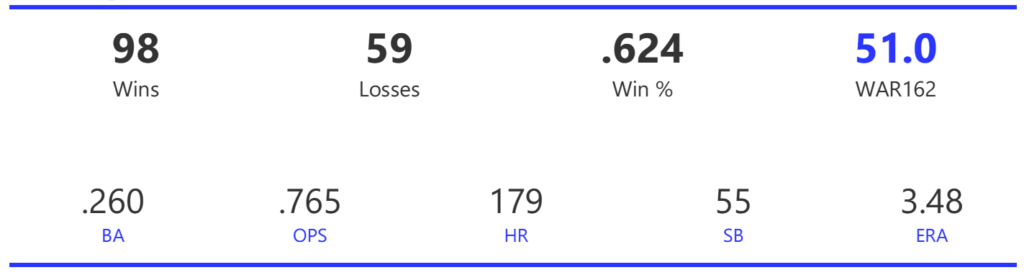
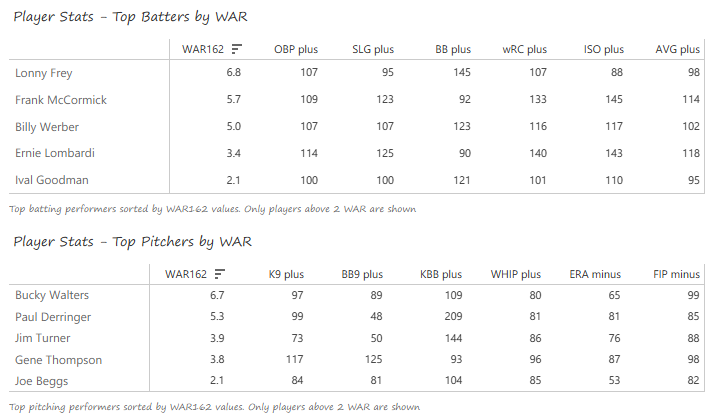
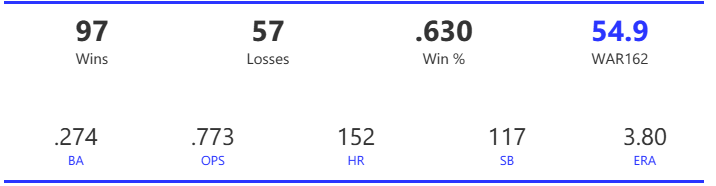
The Giants trailed the Dodgers by a considerable 74 runs for the season, ranking second for the season. They also trailed their rivals in home runs (184-179), OBP, and OPS, and ranked just fourth in BA. This was a solid offense, but not quite as potent as the crosstown Dodgers unit. Pitching helped offset the offensive gap, as the Giants’ 3.48 ERA easily topped the NL. They also led the league in WHIP and strikeout-to-walk rate.
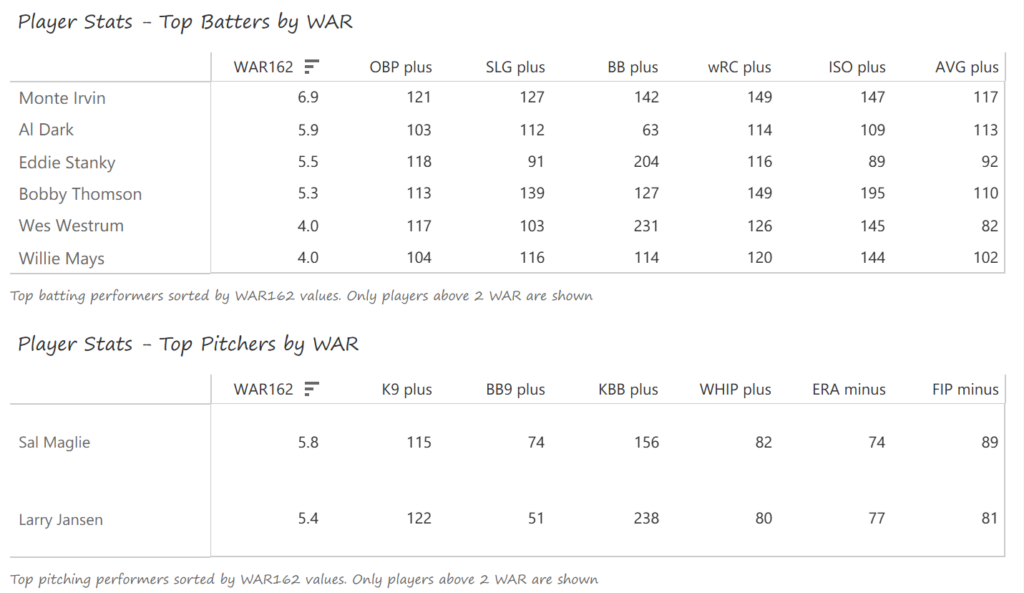
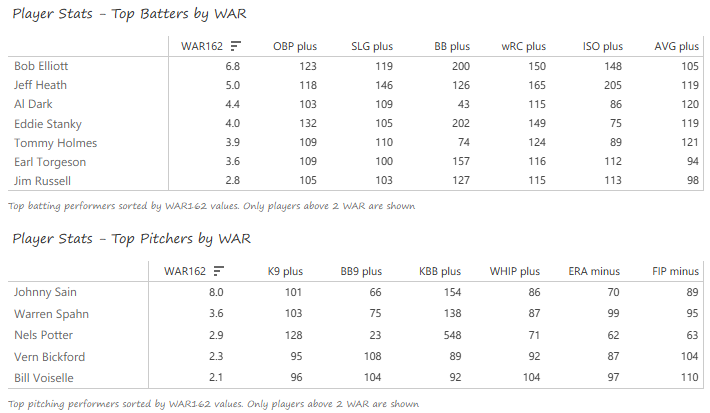
Monte Irvin had a fine season for the Giants, stroking 21 homers and batting .312 with a .415 OBP, while leading the NL with 121 RBI. Al Dark provided pop from the shortstop position, tallying an NL-best 41 doubles, batting .303, and scoring 114 runs. Eddie Stanky (127 walks, .401 OBP) and Bobby Thomson (32 homers, 101 RBI) provided strong support, further aided by catcher Wes Westrum (.400 OBP) and a 20-year-old Willie Mays (20 homers). Sal Maglie and Larry Jansen were the pitching star, with each winning 23 games. Maglie led the NL in fewest hits per 9 innings (7.7) while Jansen led in strikeout-to-walk rate (2.59).
#12: 1954 New York Giants, 51.7 WAR162
Another Giants team takes #12; the 1954 team topped the rival Dodgers by five games before stunning the favored Indians in a World Series sweep.
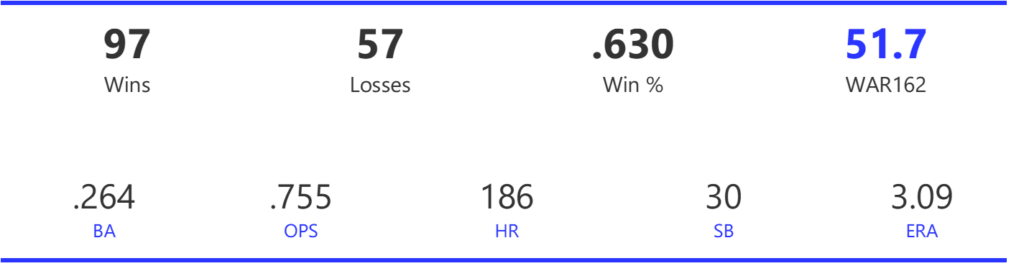
The Giants offense ranked third in runs, well behind both the Cardinals and Dodgers, although they matched the Dodgers with 186 home runs. Their .264 BA and .332 OBP were around league average levels, and even their OPS was a distant third in the NL. This was not a great offensive team, despite the presence of some star players. Pitching carried the Giants in ’54, led by an NL-best 3.09 ERA. The staff ranked third in WHIP, but first in the fewest hits per 9 innings.
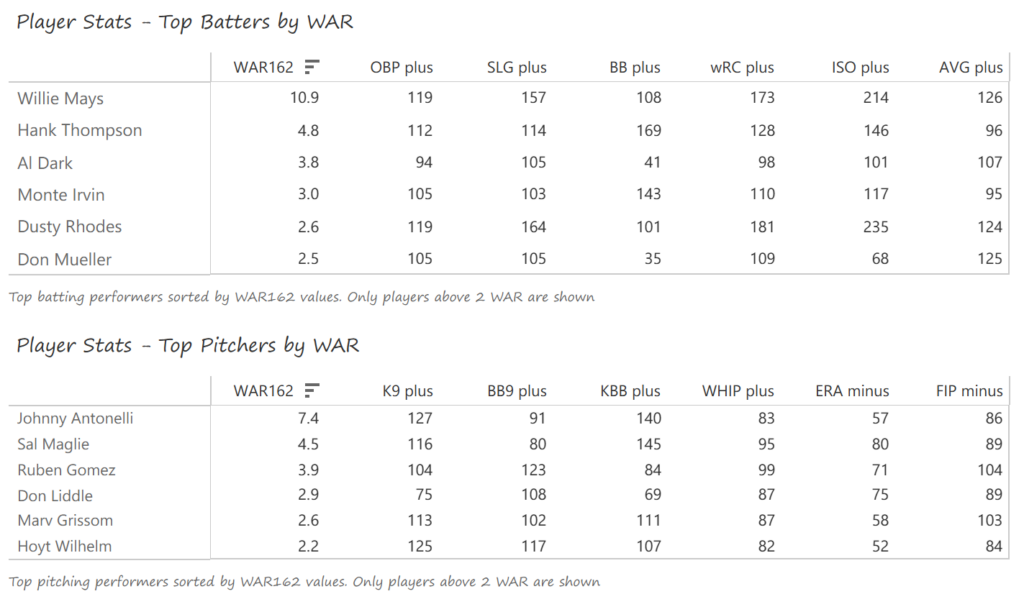
The 23-year-old Willie Mays was now a full-blown star for the Giants, batting .345 with a 1.078 OPS and 13 triples, all topping the league. Mays also launched 41 homers, had 110 RBI, and scored 119 runs while winning the NL MVP award. His supporting cast included Hank Thompson (26 homers, .389 OBP) and Al Dark (.293 BA, 20 homers). Johnny Antonelli was the top pitcher, winning 21 games with NL-bests in ERA (2.30), shutouts (6), and hits per 9 innings (7.3). Veteran Sal Maglie won 14 games at age 37, and Rubén Gómez added 17 wins with a 2.88 ERA.
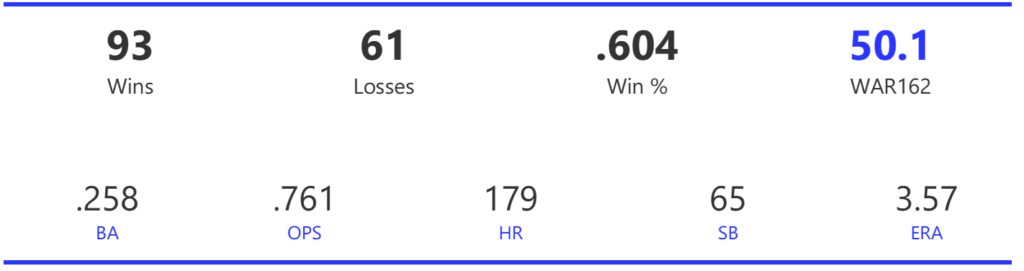
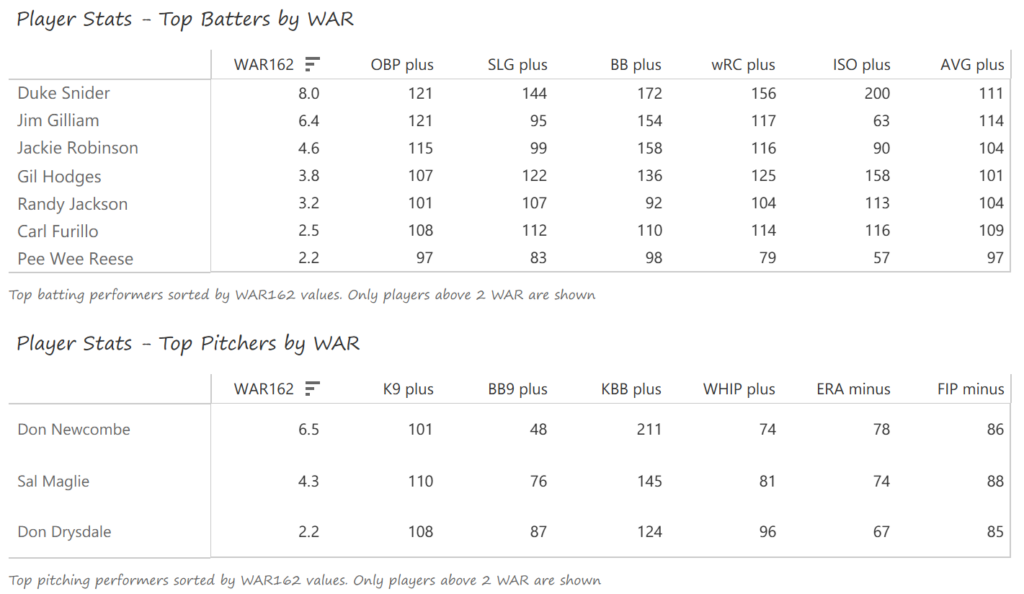
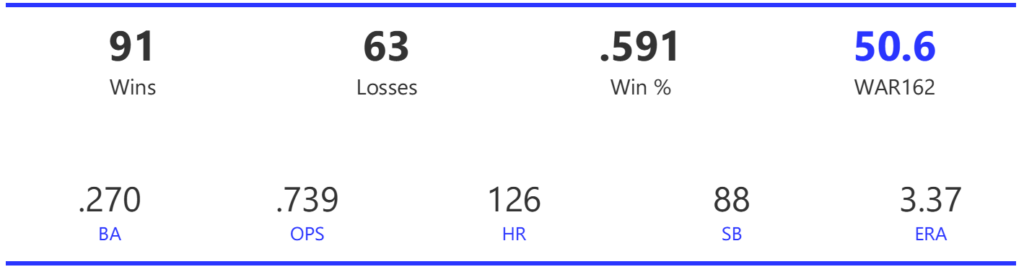
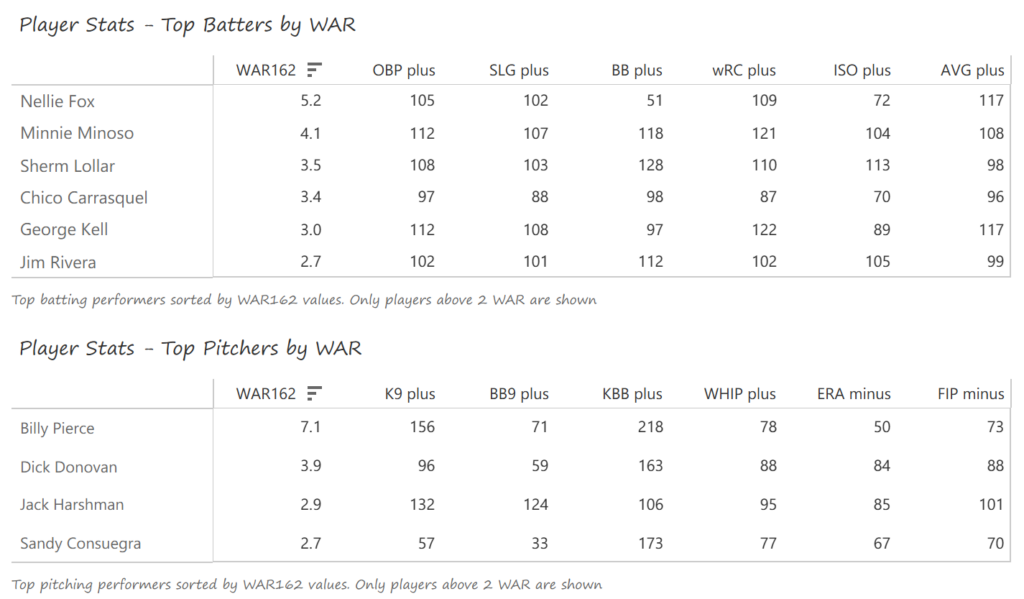
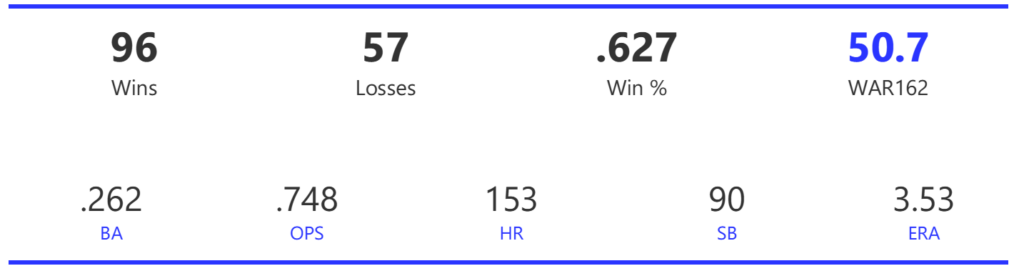
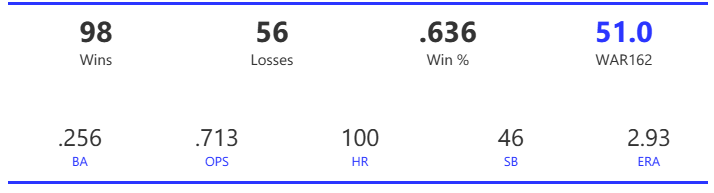
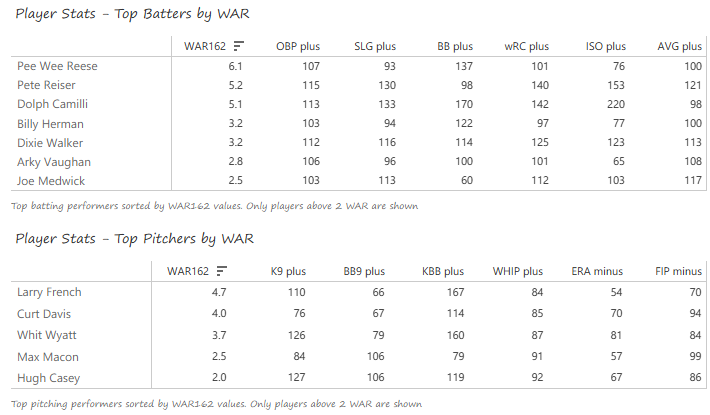
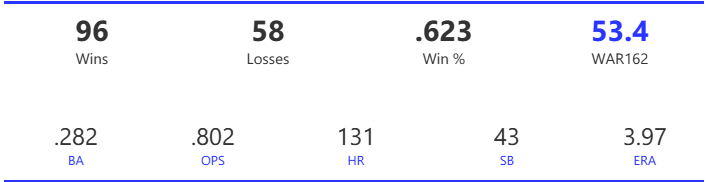
#11: 1951 Brooklyn Dodgers, 52.0 WAR
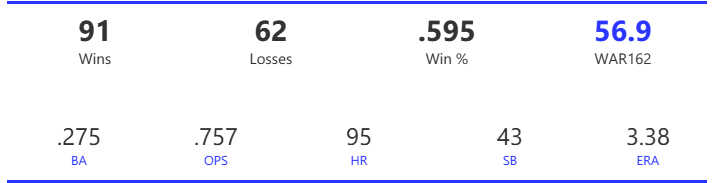
The 1951 Dodgers are famously recalled as the team that lost a tiebreaker game to Bobby Thomson and the Giants after holding a substantial lead late into the season. In WAR162 terms, the Dodgers rank two spots ahead of the Giants; the Giants had a bit more luck on their side in the 1951 season.
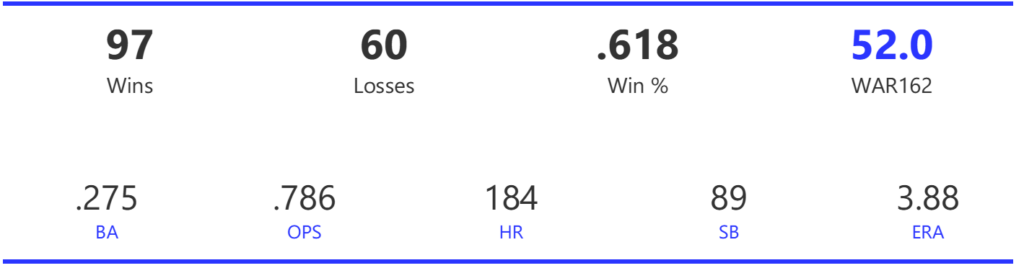
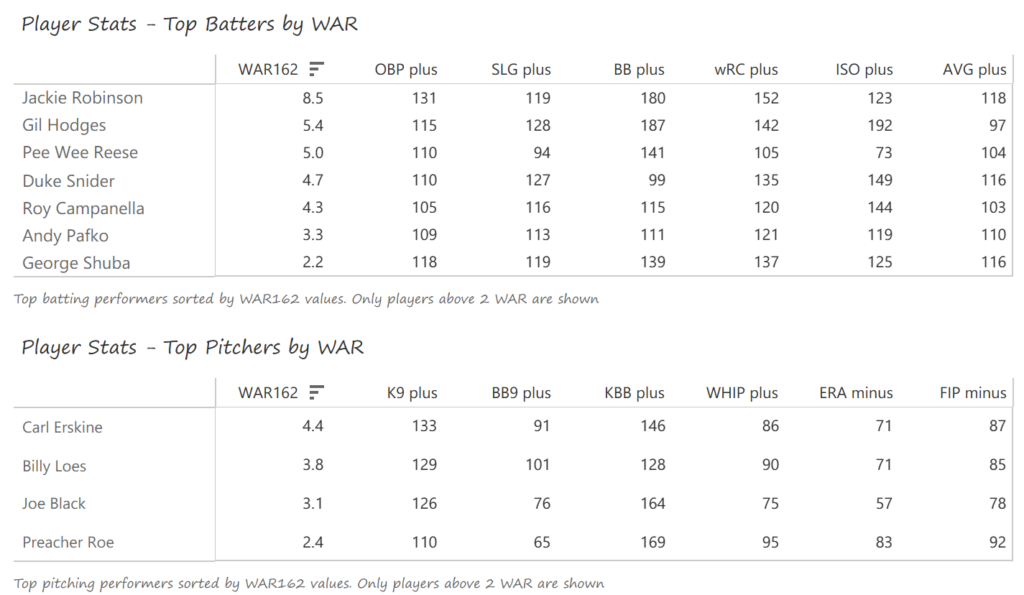
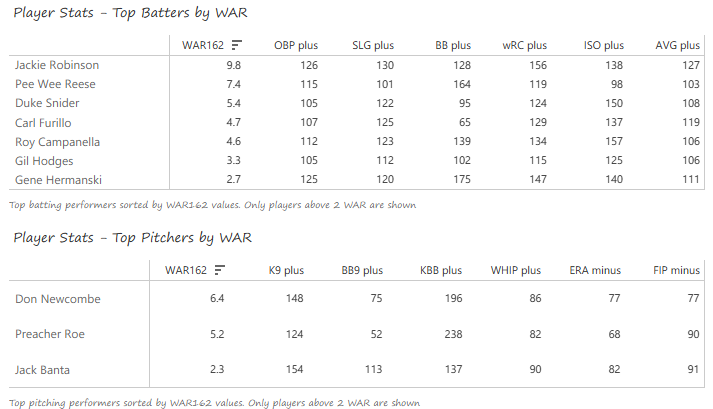
The Dodgers had a high-powered offense, scoring 855 runs to easily top the NL, and also leading the league in doubles, home runs, stolen bases, BA, OBP, and OPS. There were multiple stars on the offensive side of the ball to keep the team in contention. The pitching was not as strong, ranking fifth in ERA and third in WHIP, although they led the NL in strikeouts and had the second best strikeout-to-walk rate.
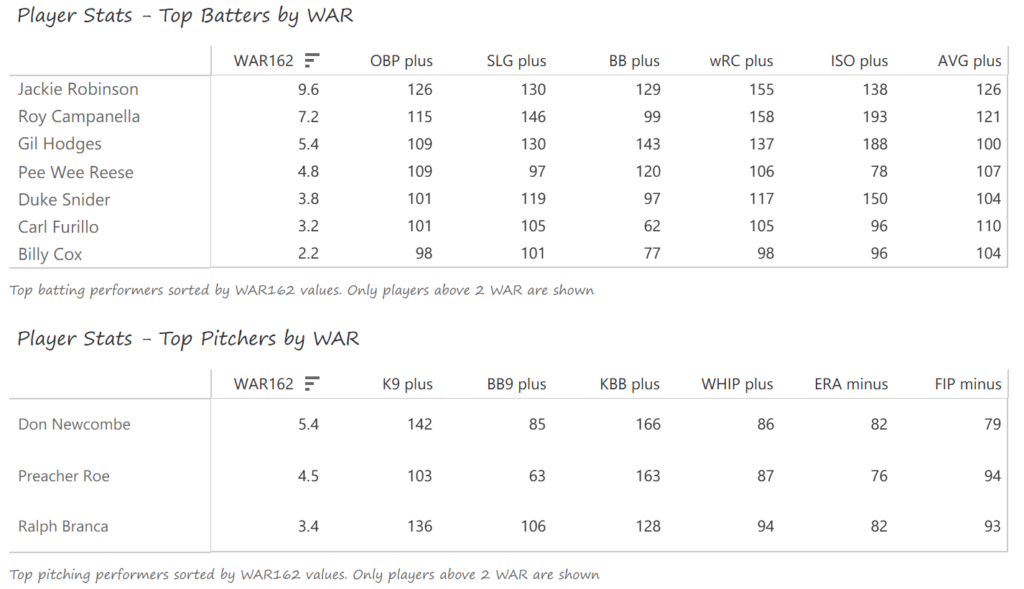
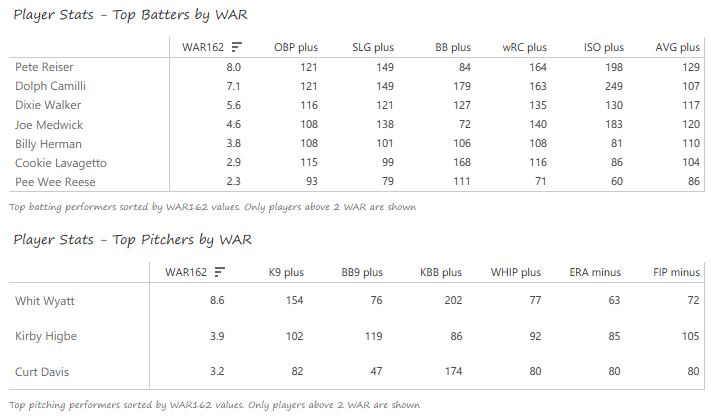
Jackie Robinson had one of his best campaigns, batting .338 with a .429 OBP, 25 steals, and 106 runs scored. Roy Campanella was the NL MVP with 323 homers, 108 RBI, and a .325 BA from his catcher spot, and Gil Hodges launched 40 homers and scored 118 runs. Pee Wee Reese batted .286 while excelling in the field, and Duke Snider belted 29 home runs. On the mound, Don Newcombe won 20 and led the NL with 164 strikeouts, and Preacher Roe went 22-3. Ralph Branca added 13 wins as the Dodgers third starter.
Summary
That’s it for the second entry in our MLB Team Rankings for the 1940s decade! Stay tuned for the countdown from #10 to #6, arriving in a few days. As always, thanks for reading!