Category: Dashboards

baseball dashboards

1990s MLB Team Rankings Countdown: 10 through 6

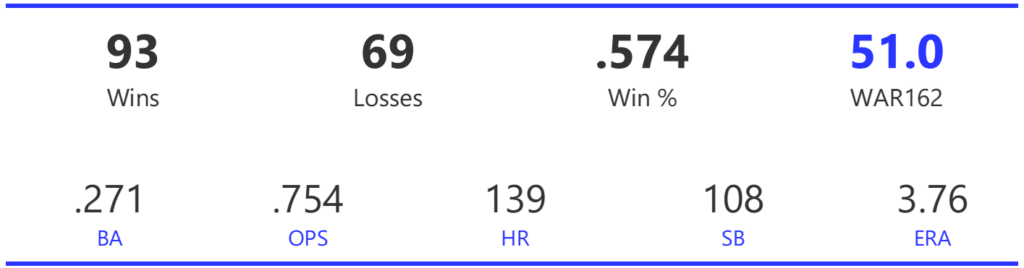
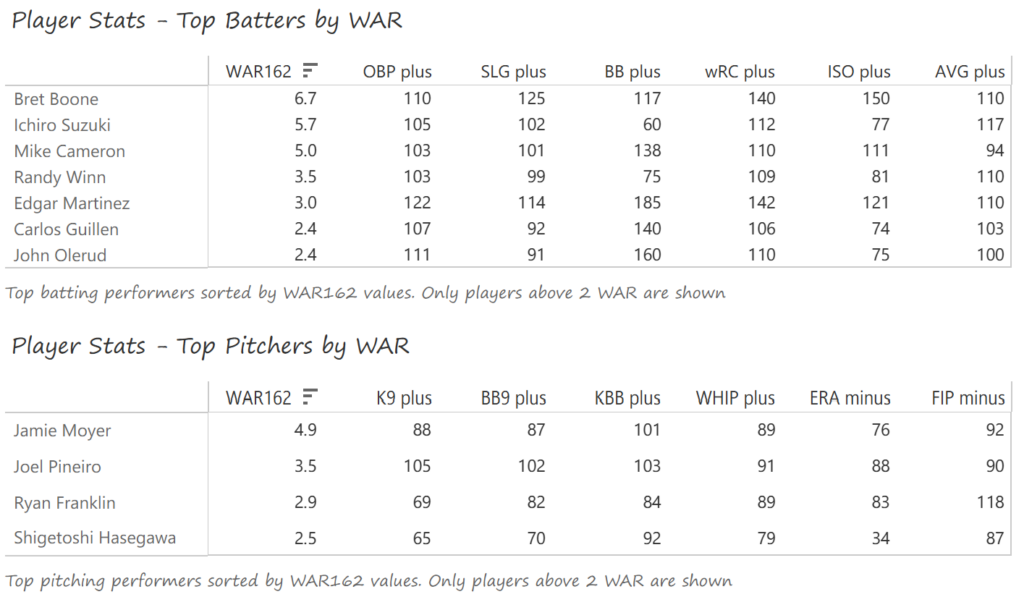
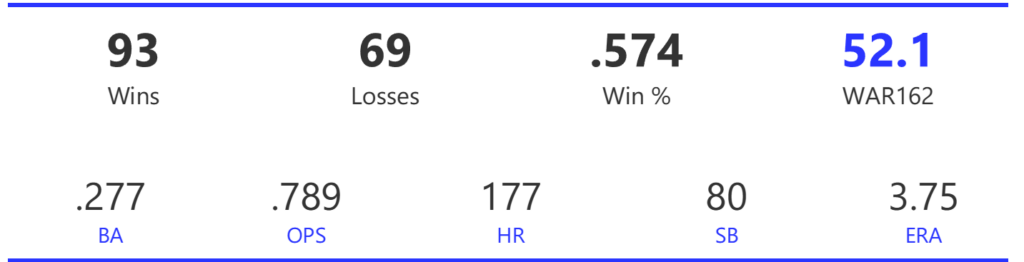
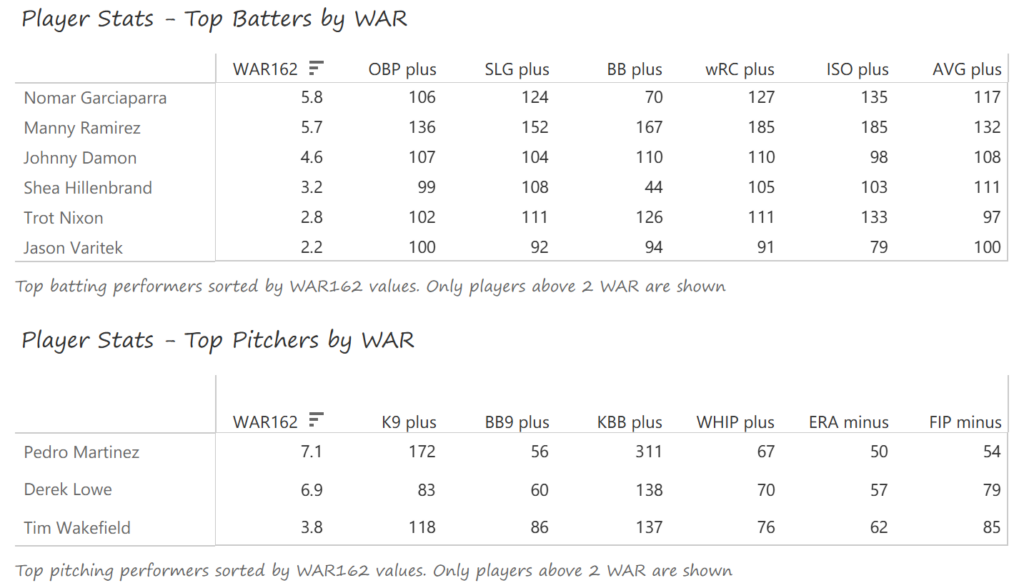
Welcome to the third countdown post in our series of MLB team rankings for the 1990s. As a reminder, the teams are ranked from #20 through #1 based on aggregate WAR162. For the 1990s (1990-1999), a total of 278 team-seasons were eligible, so the top 20 teams are a rather exclusive group – the top 7% for the decade. The 90s were a challenge, with two short seasons due to contract issues. The 1994 season fell well short of the 162-game schedule, with most clubs playing just 115 games. In 1995, most teams played about 140 games. I’ve elected to include both seasons, given that WAR162 adjusts for the number of games played. We’ll summarize each team, including those from 1994-95, and include portions of their team dashboard. Then we’ll explain how they attained their ranking. So, without further ado, here are the teams ranked #10 through #6.

Here’s the interactive dashboard at Tableau Public: 1990s Top 20 MLB Teams Dashboard

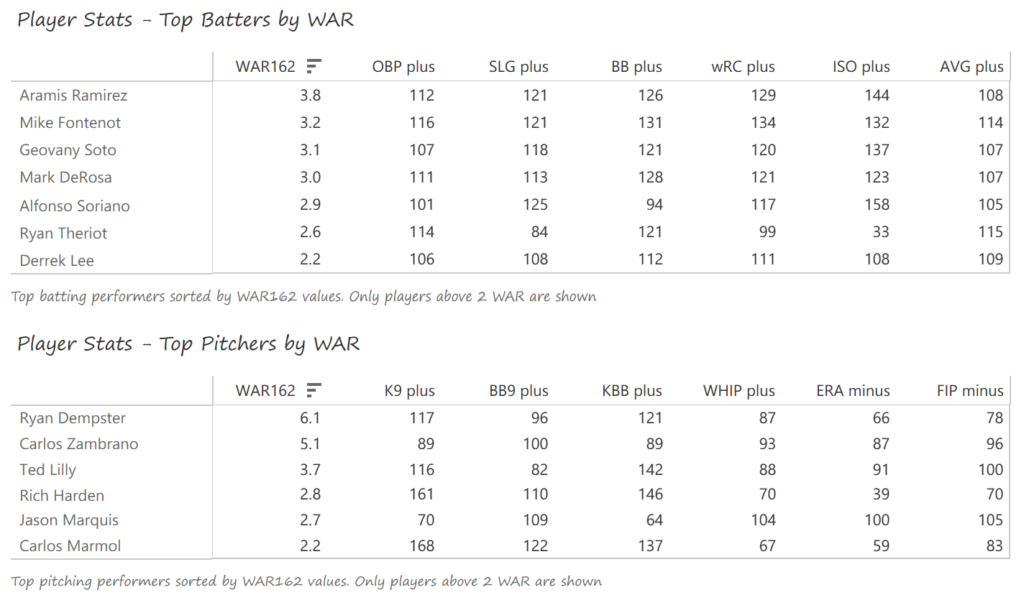
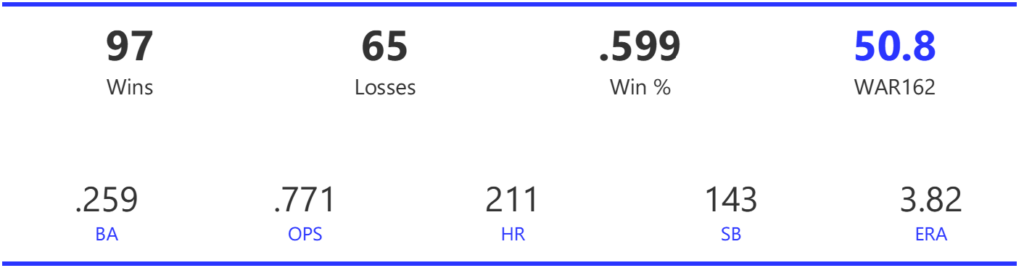
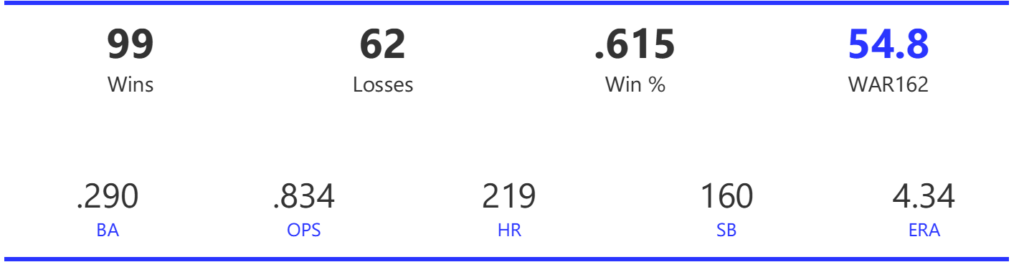
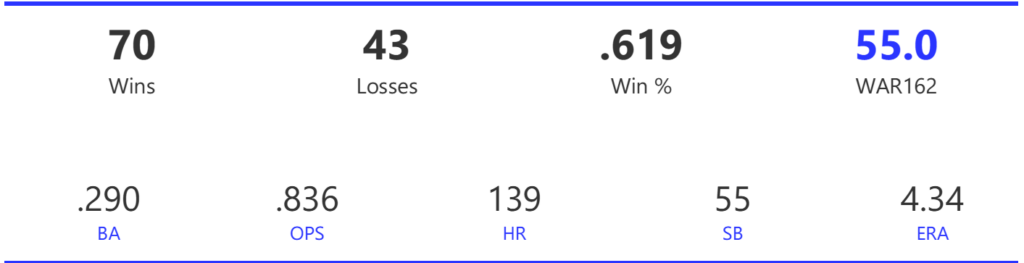
The Indians rolled to the AL Central title, finishing 14.5 games ahead of the White Sox, before being upset by the Orioles in the ALDS round of the playoffs.

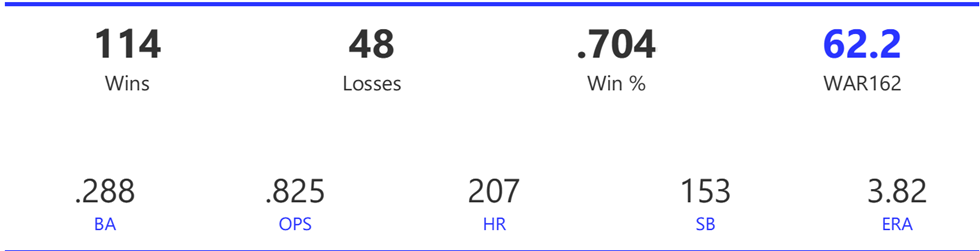
Cleveland featured a very potent offense, scoring 952 runs to trail only the Mariners in the AL rankings. The Tribe ranked second in doubles, stolen bases, OPS, and SLG, while topping the AL in BA and OBP. Their pitching staff led the AL with a 4.34 ERA in the very offense-friendly 1996 season. The Indians also topped the AL in WHIP and strikeout-to-walk rate for the season.

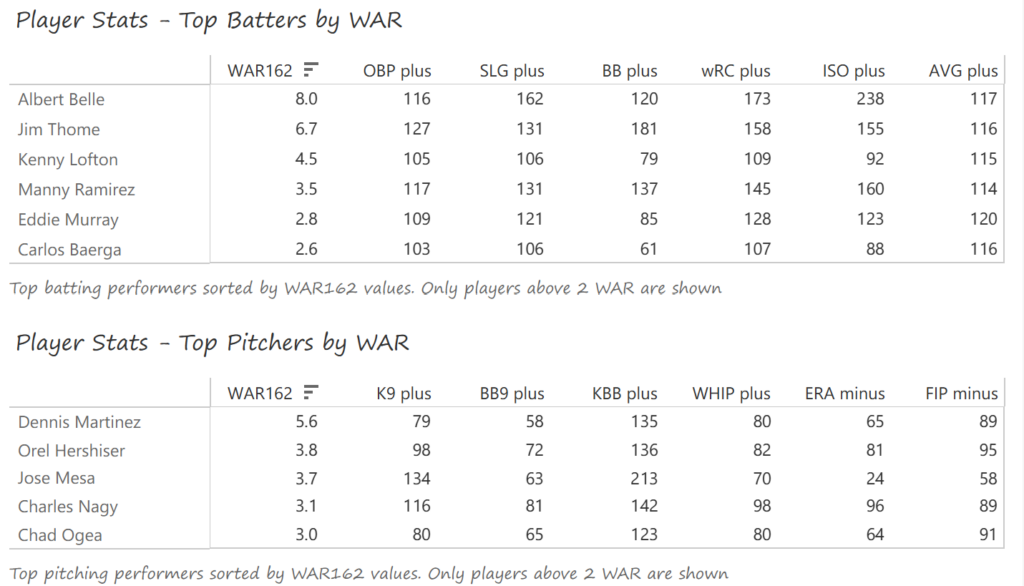
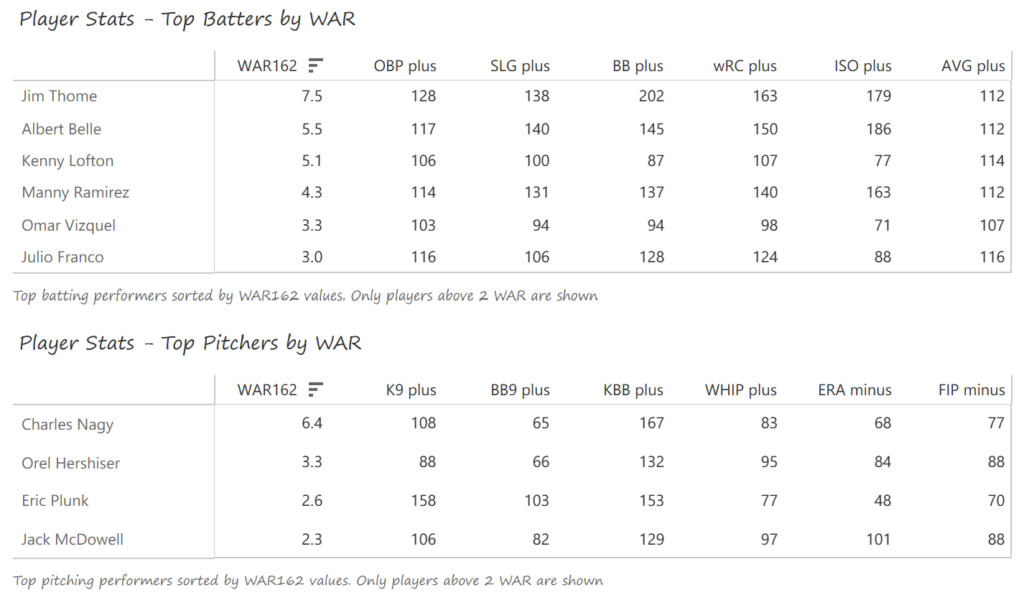
Slugging first baseman Jim Thome had one of his best seasons, launching 38 homers with 116 RBI and 122 runs scored. Thome also drew 123 walks in compiling a .450 OBP. Albert Belle led the league with 148 RBI, whacking 48 home runs and scoring 124 runs, while leadoff batter Kenny Lofton claimed a Gold Glove while batting .317 with an AL-best 75 steals, scoring 132 runs to lead the Indians in that category. Manny Ramirez batted .309 with 33 homers and 112 RBI to round out the Cleveland offense. Charles Nagy led the pitchers with a 17-5 record and 3.41 ERA, backed up by 37-year-old Orel Hershiser‘s 15 wins.

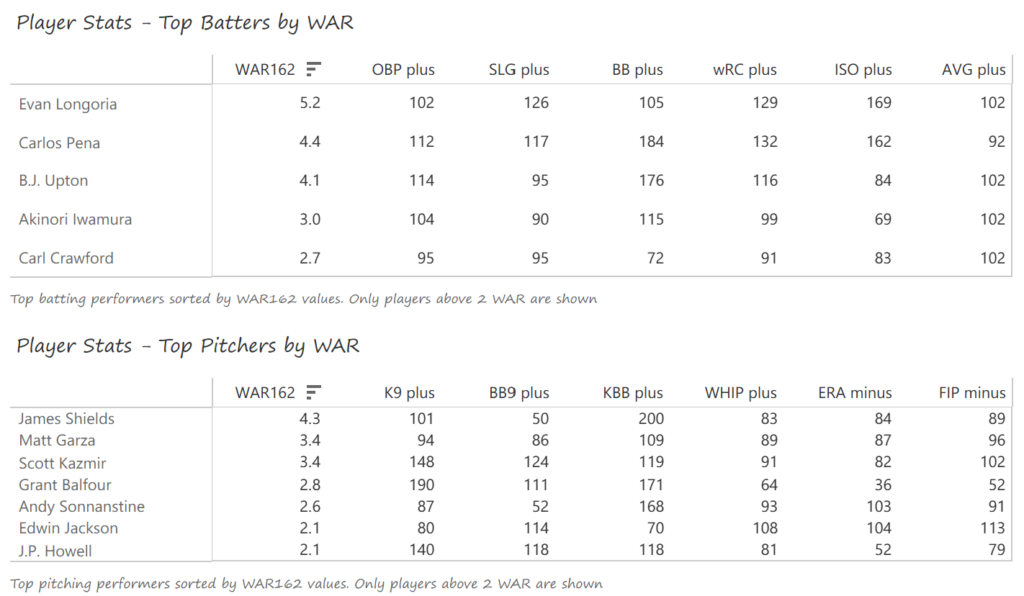
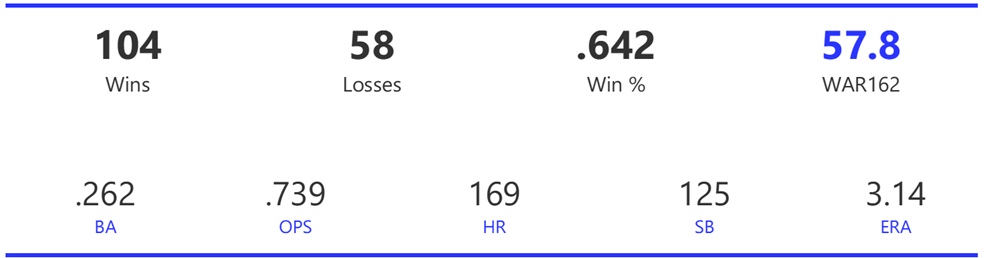
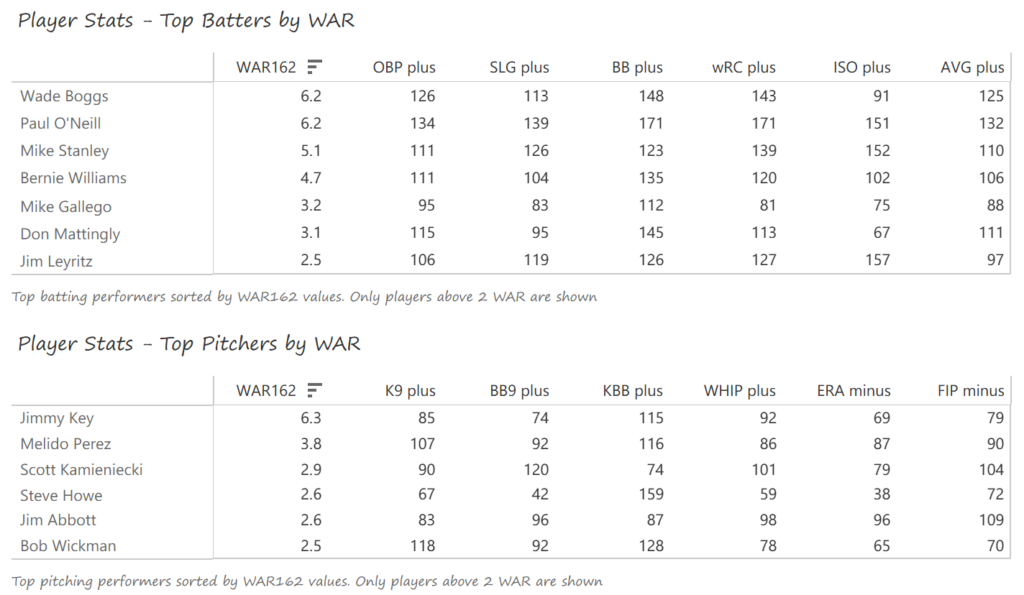
The 1994 Yankees were cruising toward the postseason when the 1994 season ended early due to the MLB labor dispute. There would be no playoffs or World Series at the end of the season.

The Yankees were 6.5 games ahead of the Orioles in the AL East when the season ended, due in part to a strong offense that led the AL in OBP and OPS, and ranking second in runs. The pitching staff was a step behind, placing fourth or fifth in most major categories, including ERA and WHIP.

Wade Boggs and Paul O’Neill were the offensive leaders for a deep Yankees lineup. Boggs batted .342 with a .433 OBP and a Gold Glove Award, and O’Neill topped the AL with a .359 BA and whacked 21 homers with 83 RBI in just 103 games. Mike Stanley batted .300 with 17 home runs out of the catcher spot, and Bernie Williams scored 80 runs with a .384 OBP and solid defense in center field. Left-hander Jimmy Key was the Yankees’ top pitcher on the season, going 17-4 with a 3.27 ERA. Melido Perez (9-4) and Scott Kamieniecki (8-6, 3.76 ERA) provided additional mound support.

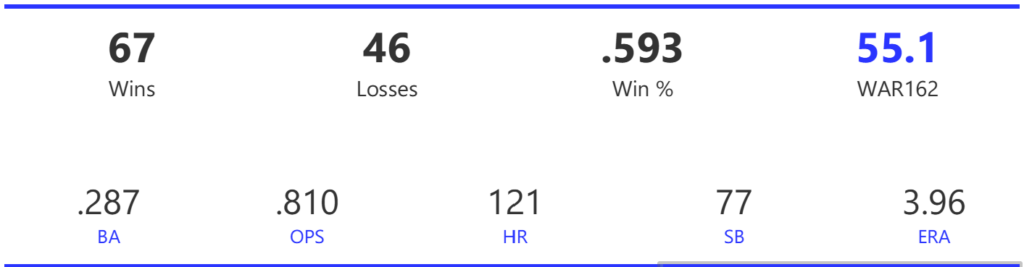
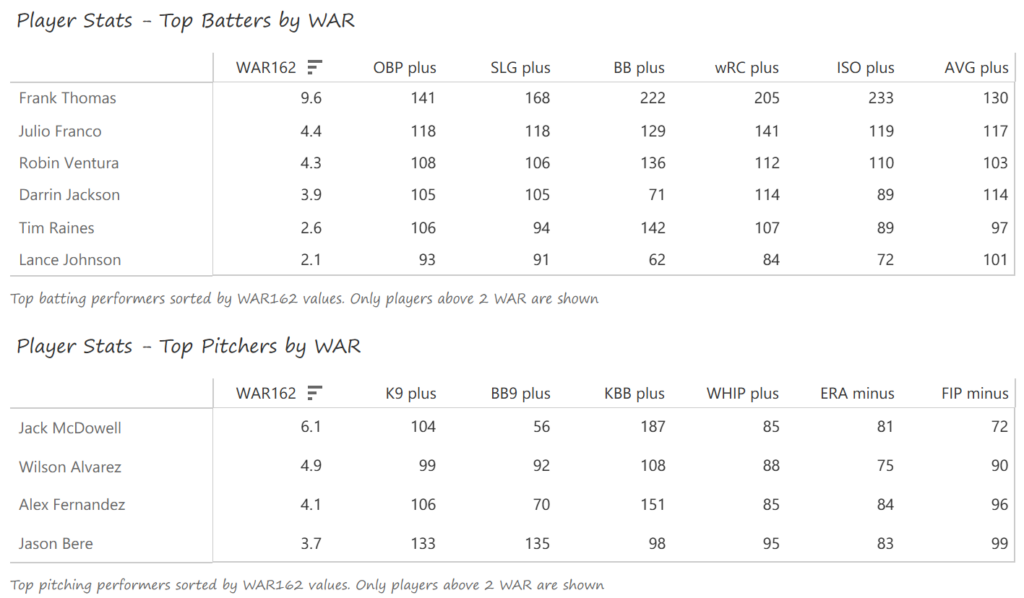
The 1994 White Sox were another team whose playoff hopes were terminated by the short-season labor dispute. The White Sox were a game ahead of the Indians in the AL Central when the season ended prematurely.

The Sox had a very good offense, ranking third in BA and OPS, second in OBP, and fourth in runs for the season. Pitching was the real strength of the team, as Chicago easily topped the AL in the ERA and WHIP categories. The White Sox staff also led the AL in strikeout-to-walk rate, and ranked third in both the strikeout and walks metrics.

Frank Thomas was on his way to a monster season for Chicago, batting .353 with an AL-best .487 OBP, .729 SLG, and 1.217 OPS. He also topped the league in walks (109), runs (106), and belted 38 homers with 101 RBI. Unsurprisingly, these efforts won Thomas the AL MVP Award. His primary support came from Julio Franco (.319 BA, 20 homers, 98 RBI), and Robin Ventura (18 home runs, 78 RBI). Darrin Jackson chipped in with a .312 BA. Jack McDowell led the ChiSox pitching corps, topping the league with a 3.02 strikeout-to-walk rate and 10 wins. Wilson Alvarez (12-8, 3.45 ERA) and Alex Hernandez (11-7) combined to give the White Sox a deep starting rotation.

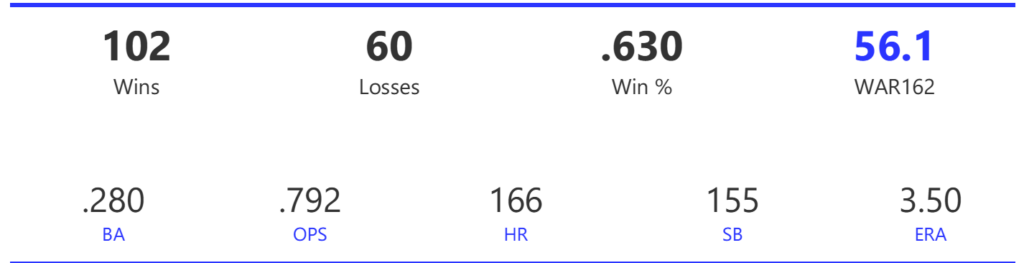
The Astros romped to the NL Central title, 12.5 games ahead of the Cubs. Their season then ended in the NLDS with a four-game defeat at the hands of the Padres.

Houston scored a league-high 874 runs and ranked second in doubles and stolen bases. Their .280 BA also ranked second in the league, and they topped the NL in OBP. The Astros also featured a strong pitching staff, finishing second in both ERA and WHIP behind the Braves. Their staff also issued the fewest walks in the NL, leading to the second-best strikeout-to-walk rate for the season.

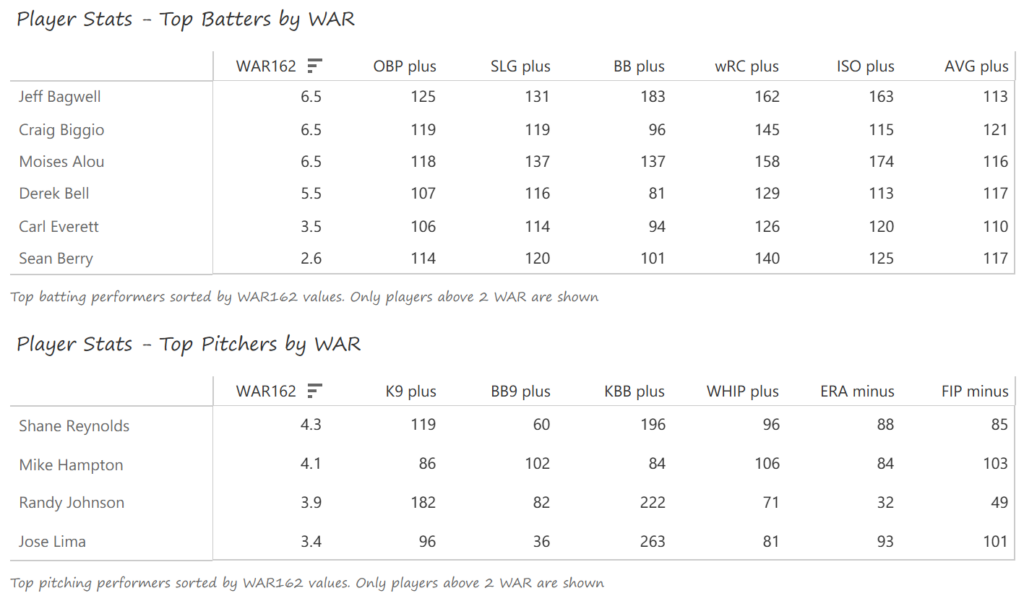
The Astros had four position players top the 5.0 WAR162 threshold, with three of the four exceeding 6.0. Jeff Bagwell batted .304 with a .424 OBP and launched 34 homers with 111 RBI and 124 runs scored in 147 games. Craig Biggio batted .325 with 50 steals, 123 runs scored, and an NL-best 51 doubles, and Moises Alou slugged 38 homers with 124 RBI and a .312 BA. Derek Bell was the fourth big producer, batting .314 with 111 runs and 108 RBI. The pitching staff also featured balance at the top, led by Shane Reynolds (19-8, 3.51 ERA). Mike Hampton posted 11 wins, and Randy Johnson recorded an impressive 1.28 ERA in 84 innings. Jose Lima posted the top strikeout-to-walk rate in the league (5.28) while recording 16 wins.

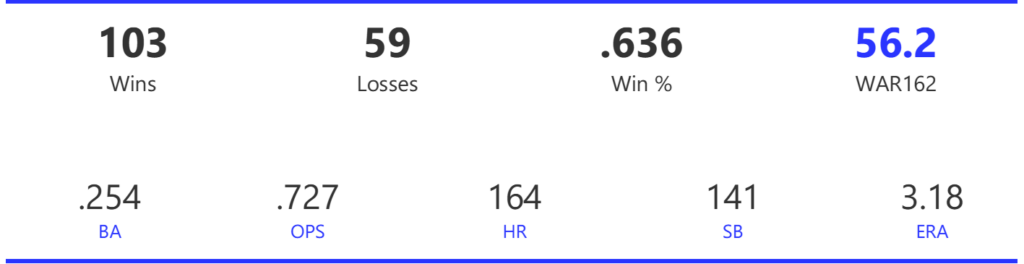
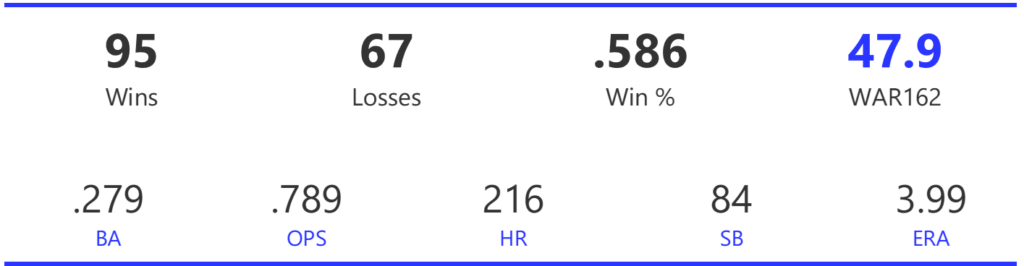
The A’s captured the AL pennant for the third consecutive season, finishing a comfortable 9 games ahead of the White Sox in the AL West. After sweeping the Red Sox in the ALCS, the Athletics were stunned by Cincinnati in a four-game World Series sweep.

Oakland featured a strong offense that ranked third in both runs and home runs for the year. They ranked second in stolen bases, third in OBP, and fourth in OPS, playing in the pitcher-friendly Oakland Coliseum. The A’s pitching staff was dominant in 1990, easily leading the league in ERA and WHIP.

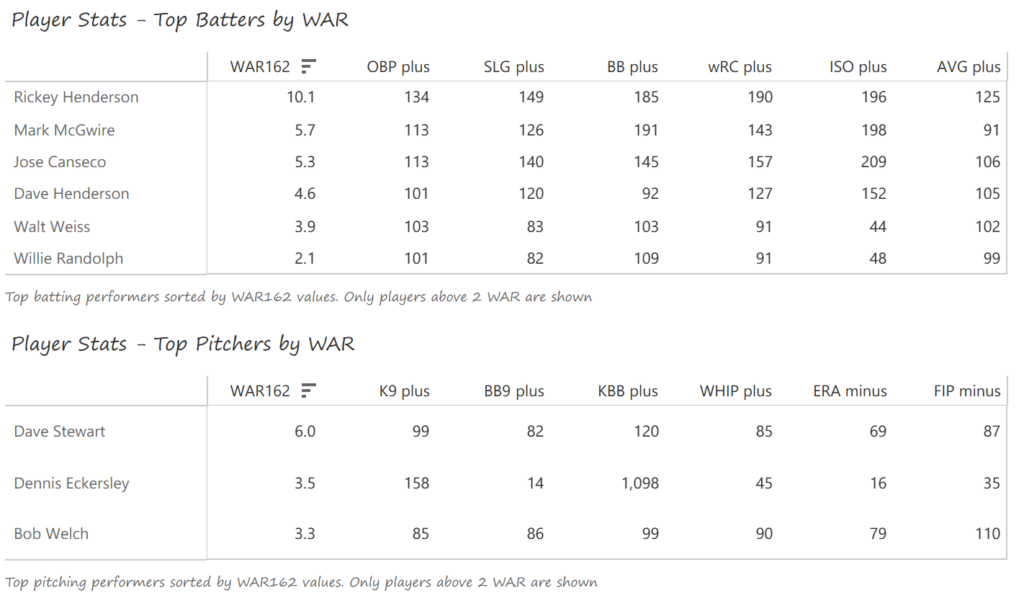
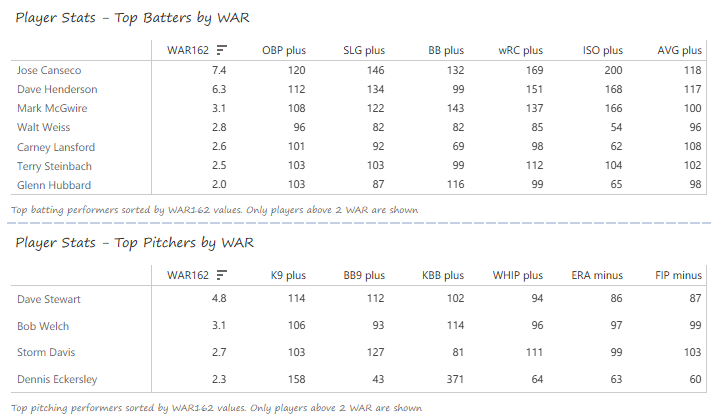
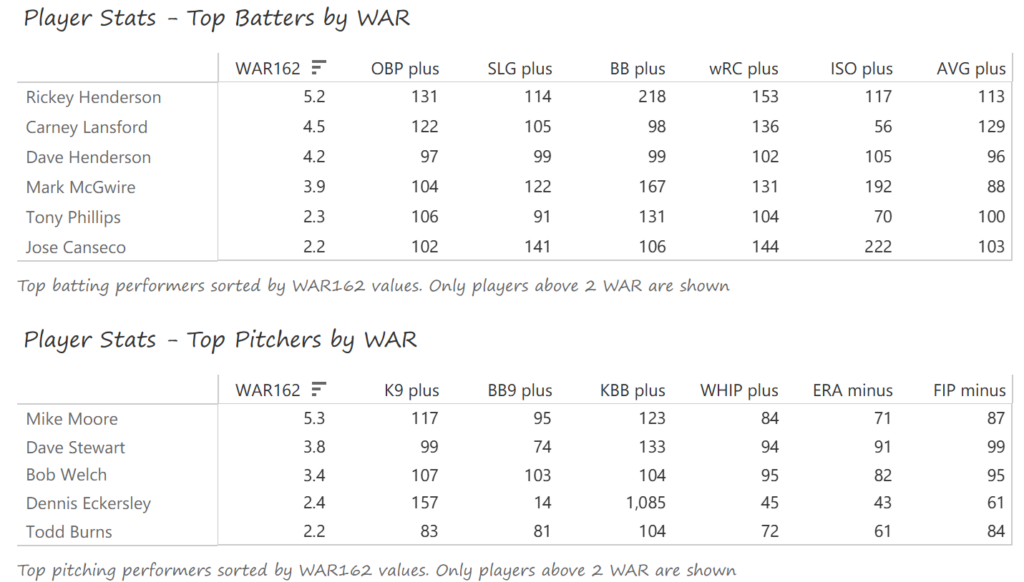
Rickey Henderson was the offensive igniter for Oakland, leading the league in runs (119), stolen bases (65), OBP (.439), and OPS (1.016) in just 136 games. Not surprisingly, these numbers earned him the AL MVP Award. Sluggers Mark McGwire (39 homers, 108 RBI, 110 walks) and Jose Canseco (37 homers, 101 RBI) provided the power for the A’s. Dave Henderson added 20 home runs and strong defense in center field. Dave Stewart (22-11, 2.56 ERA, 11 complete games, 4 shutouts) ranks as the top hurler by WAR162, although his teammate Bob Welch (27-6, 2.95 ERA) claimed Cy Young honors. Closer Dennis Eckersley had a dominant campaign, saving 48 games with a 0.61 ERA and an unheard-of 18.25 strikeout-to-walk rate (73 strikeouts, 4 walks).

Summary

That’s it for the third entry in our MLB Team Rankings for the 1990s decade! Stay tuned for the countdown from #5 to #1, arriving in a few days. As always, thanks for reading!

1990s MLB Team Rankings Countdown: 15 through 11

Welcome to the second countdown post in our series of MLB team rankings for the 1990s. As a reminder, the teams are ranked from #20 through #1 based on aggregate WAR162. For the 1990s (1990-1999), a total of 278 team-seasons were eligible, so the top 20 teams are a rather exclusive group – the top 7% for the decade. The 90s were a challenge, with two short seasons due to contract issues. The 1994 season fell well short of the 162-game schedule, with most clubs playing just 115 games. In 1995, most teams played about 140 games. I’ve elected to include both seasons, given that WAR162 adjusts for the number of games played. We’ll summarize each team, including those from 1994-95, and include portions of their team dashboard. Then we’ll explain how they attained their ranking. So, without further ado, here are the teams ranked #15 through #11.

Here’s the interactive dashboard at Tableau Public: 1990s Top 20 MLB Teams Dashboard

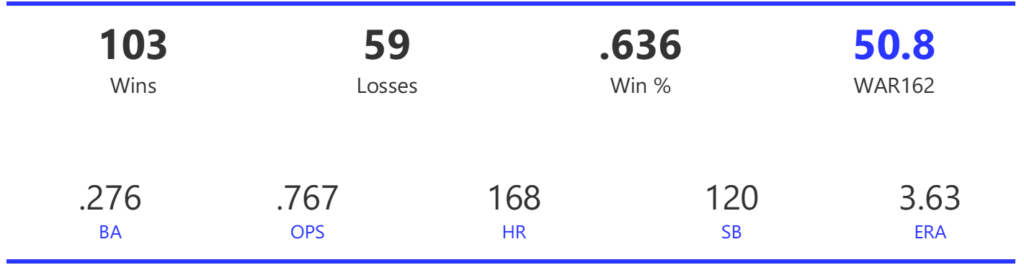
The Giants won 103 games, yet fell a game short of winning the NL West title. Atlanta won 104 games to nose out the San Franciscans, who would have to wait until 1997 to claim the NL West crown.

The Giants were paced by a strong offense that compiled 808 runs, second to the Phillies for the season. The club’s 168 home runs were one long-ball behind the Braves, and they led the NL in BA and SLG. The team’s .767 OPS ranked second behind the Phillies, and their OBP ranked third in the league. The Giants’ pitching was not as robust as their hitting, although it was still upper-tier. A league-best strikeout-to-walk rate highlighted their success, as did a second-place WHIP ranking. Team ERA placed fifth in the 14-team NL.

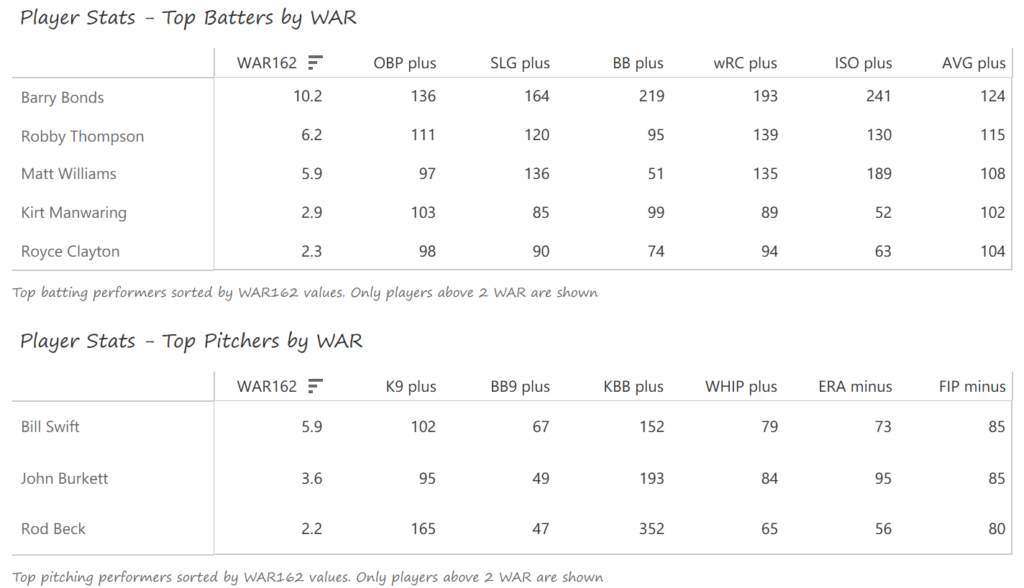
Barry Bonds produced an NL MVP season featuring 46 homers, a 1.136 OPS, and a .458 OBP to go with 123 RBI and 129 runs scored. Bonds also earned a Gold Glove in left field. Robby Thompson (.312 BA, 85 runs scored, Gold Glove Award) and Matt Williams (38 home runs, 110 RBI, Gold Glove) provided ample offensive and defensive support behind Bonds. The pitching staff was led by Bill Swift, who produced a 21-8 record with a 2.82 ERA. John Burkett added 22 more wins, and closer Rod Beck saved 48 games with a 2.16 ERA.

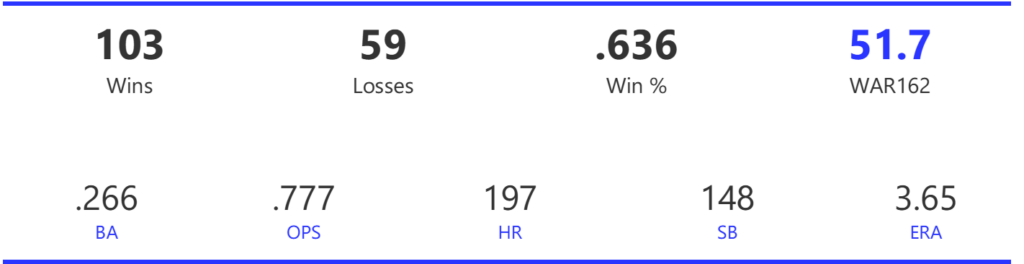
The 1999 Braves claimed the NL East crown by 6.5 games over the Mets before defeating the Astros in the NLDS and the Mets in the NLCS. The season came to a sudden end with a World Series sweep at the hands of the Yankees.

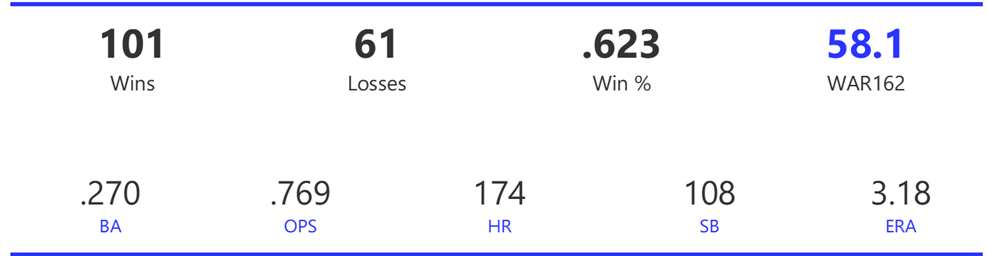
The Braves’ offense was solid in 1999, but not quite up to the level of some rivals. Their 840 runs ranked 7th (out of 16 teams), and their 197 home runs placed 4th in the league. In most offensive categories, the Braves were close to league-average levels. Pitching was a different story – Atlanta led the NL in ERA and WHIP, and ranked 2nd in walks, strikeouts, and strikeout-to-walk rate.

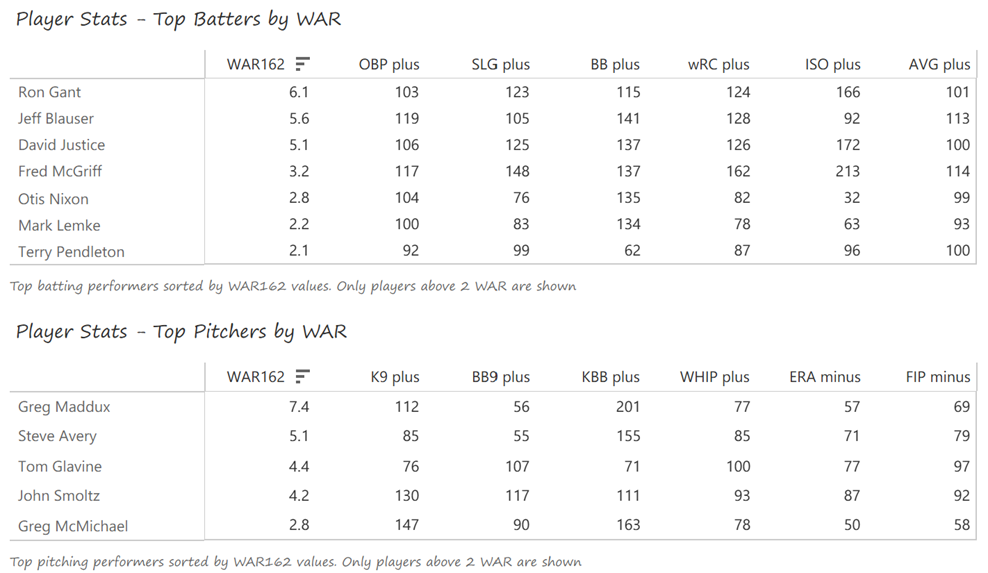
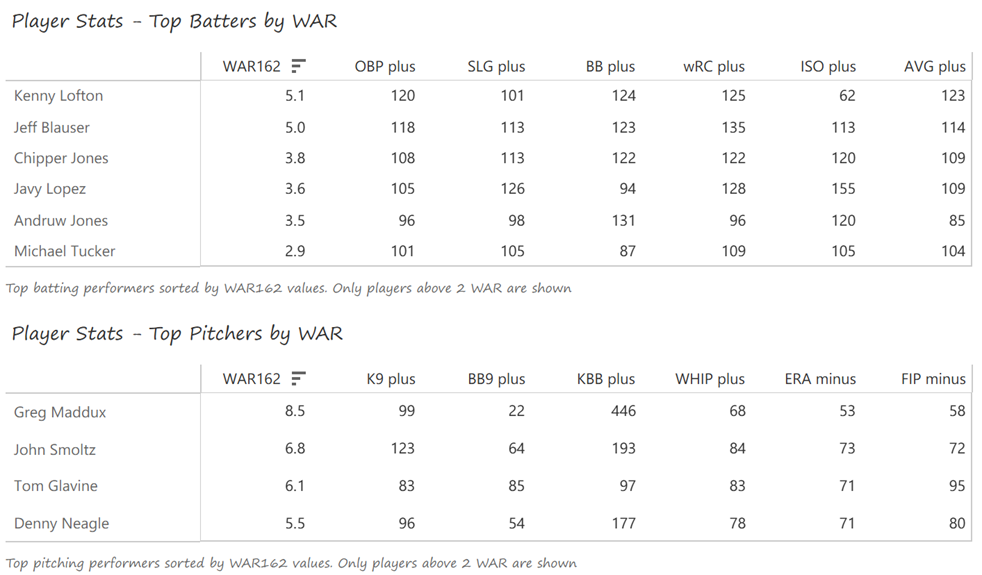
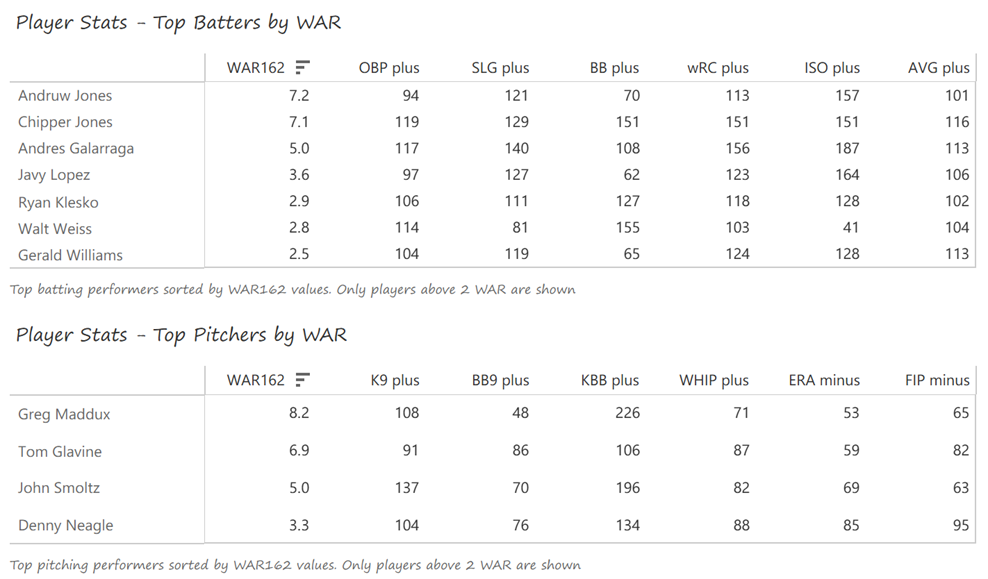
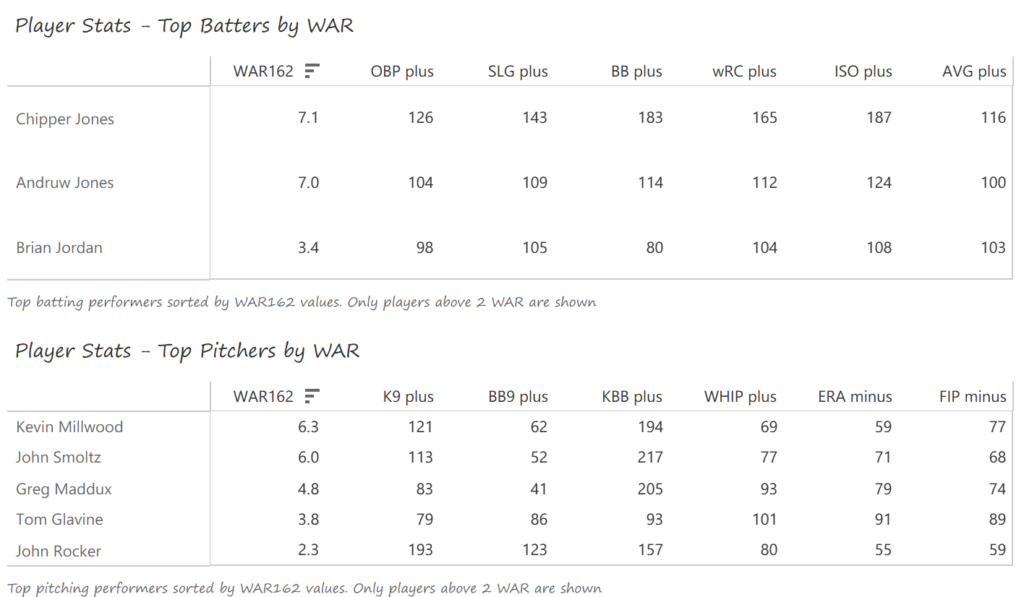
Chipper Jones and Andruw Jones (no relation) were the star positional players for the Braves. Chipper claimed MVP honors with a .319 BA, 45 homers, 110 RBI, 116 runs, 25 stolen bases, and a 1.074 OPS. Andruw won a Gold Glove as the best center fielder in the league at age 22, adding 26 homers, 24 steals, and 84 RBI for good measure. Brian Jordan contributed 23 homers, 115 RBI, and 100 runs scored on the season. Kevin Millwood stood out on a star-studded pitching staff with an 18-7 record and 2.68 ERA, leading the league in WHIP. John Smoltz added 11 wins, and Greg Maddux recorded a 19-9 record. Tom Glavine posted 14 wins, and closer John Rocker added 38 saves and a 2.49 ERA.

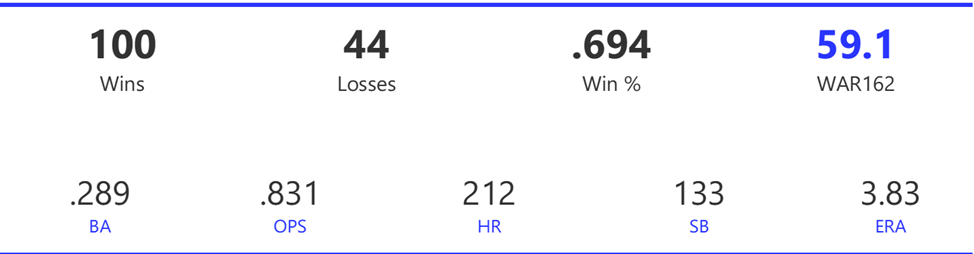
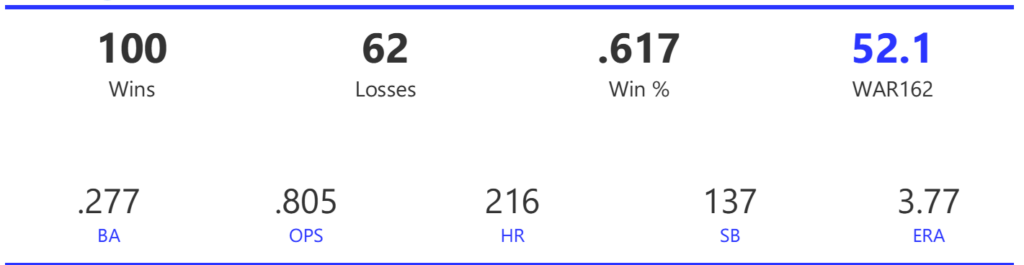
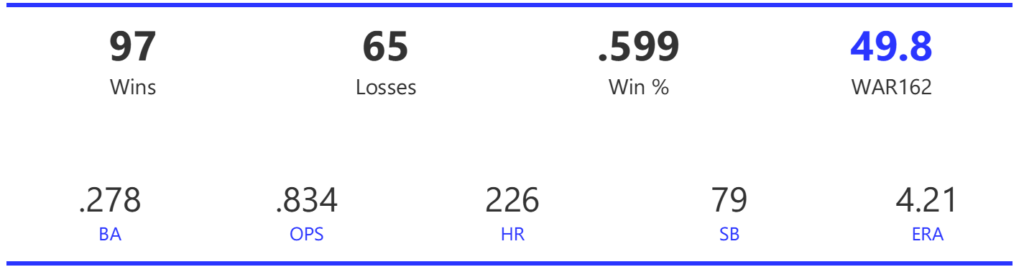
The Diamondbacks completed an amazing 100-win season, finishing 14 games ahead of the Giants in their second year as a franchise. Their season came to an abrupt end with a four-game loss to the Mets in the NLDS round.

Arizona had a high-powered offense that accounted for an NL-best 908 runs, belting 216 home runs (2nd-best) on the season. The Diamondbacks ranked third in BA, and 2nd in SLG and OPS, trailing only the Rockies. Pitching was also a strength, as the DBacks staff posted a 3.77 ERA, 2nd to the Braves, and also ranked 2nd in WHIP, 3rd in strikeouts, and 3rd in strikeout-to-walk rate.

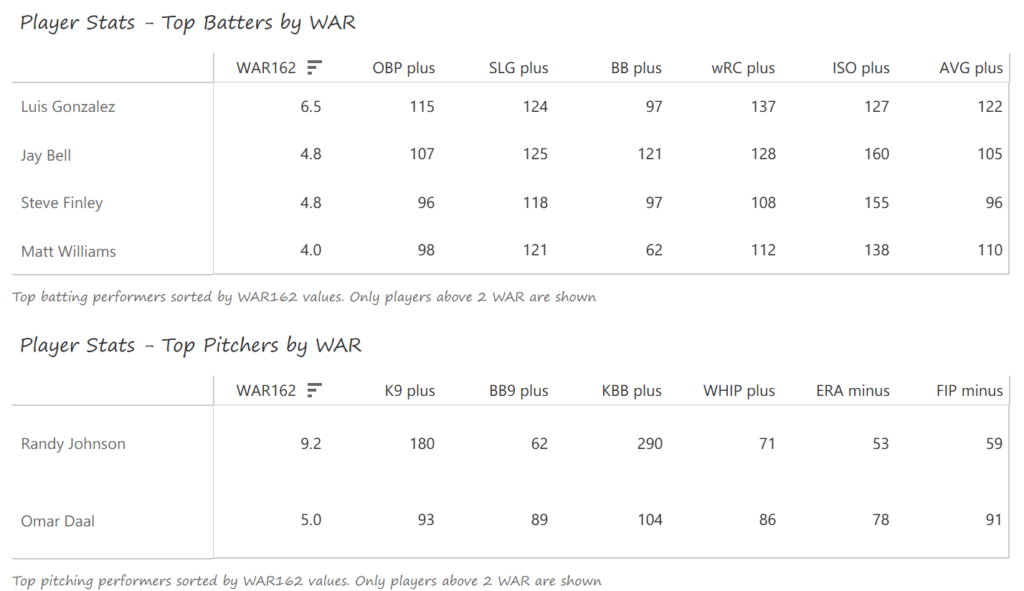
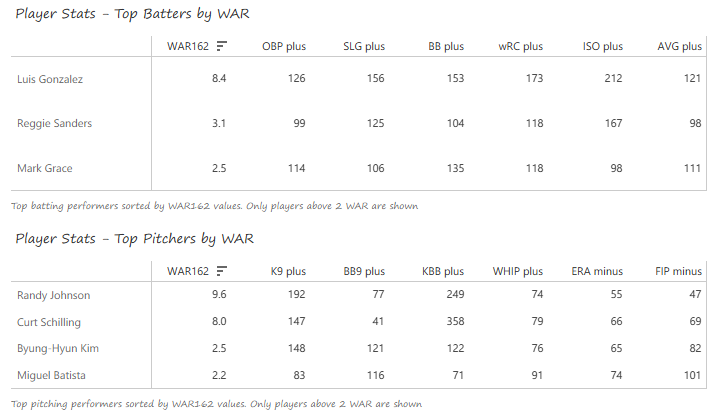
Luis Gonzalez paced the offense, batting .336 with 26 homers and 111 RBI, aided by Jay Bell (38 homers, 112 RBI, 132 runs scored), and Steve Finley (34 home runs, 103 RBI). Veteran third baseman Matt Williams batted .303 and added another 35 homers and 142 RBI. On the mound, Cy Young winner Randy Johnson was a dominant force. Johnson posted a 17-9 record with NL-best numbers for complete games (12), ERA (2.48), and strikeouts (364). Omar Daal was a solid second option in the rotation, recording a 16-9 mark.

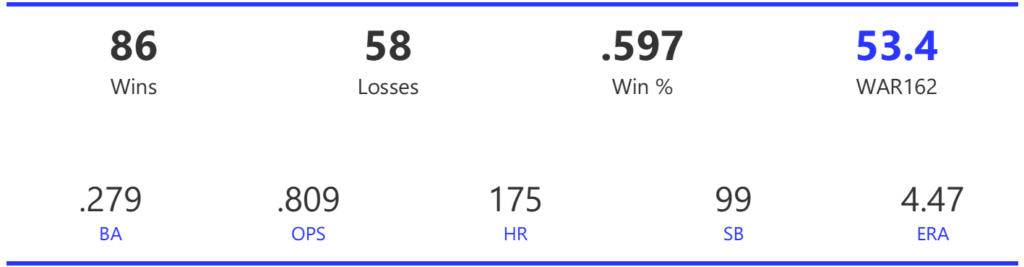
The Red Sox claimed the AL East title by seven games over the rival Yankees, before falling to the Indians in an ALDS sweep.

Boston had a strong offensive core, ranking 4th in runs scored with 791, and also ranked 4th with 175 home runs. In several other categories – BA, OBP, SLG, and OPS- the Red Sox ranked 2nd behind the Indians’ powerful offense. The Sox pitching was solid, if not quite at the level of their hitting. Their staff ranked 3rd IN ERA, 4th in WHIP, 2nd in walks, and 2nd in strikeout-to-walk-rate.

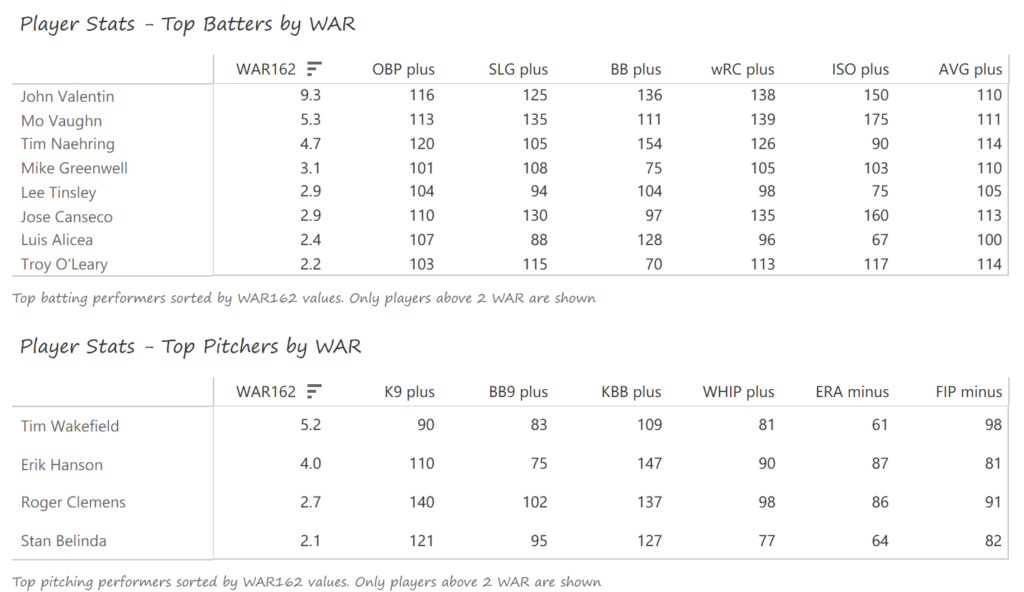
Shortstop John Valentin had a career year to lead the Sox offense, although his teammate Mo Vaughn claimed AL MVP honors. Valentin posted a .399 OBP, hit 27 homers with 102 RBI, scored 108 runs, and stole 20 bases, all in 135 games played. Vaughn belted 39 home runs with an AL-best 126 RBI and .300 BA. Tim Naehring provided a third productive bat with a .307 BA and .415 OBP, and veteran Mike Greenwell batted .297 with 76 RBI. Knuckleballer Tim Wakefield posted a 16-8 mark with a 2.95 ERA to lead the Red Sox mound corps. Erik Hanson added a 15-5 record as the Sox number two option in the rotation.

The Expos were in the midst of their finest season when the 1994 campaign ended early due to labor contract issues. This denied the team a realistic shot at postseason success, given their 6-game lead in the NL East.

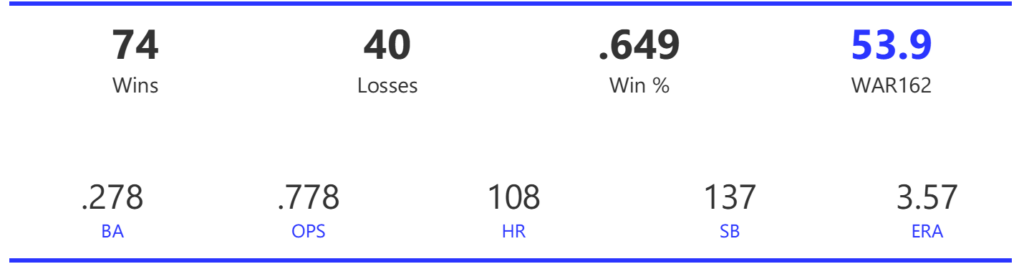
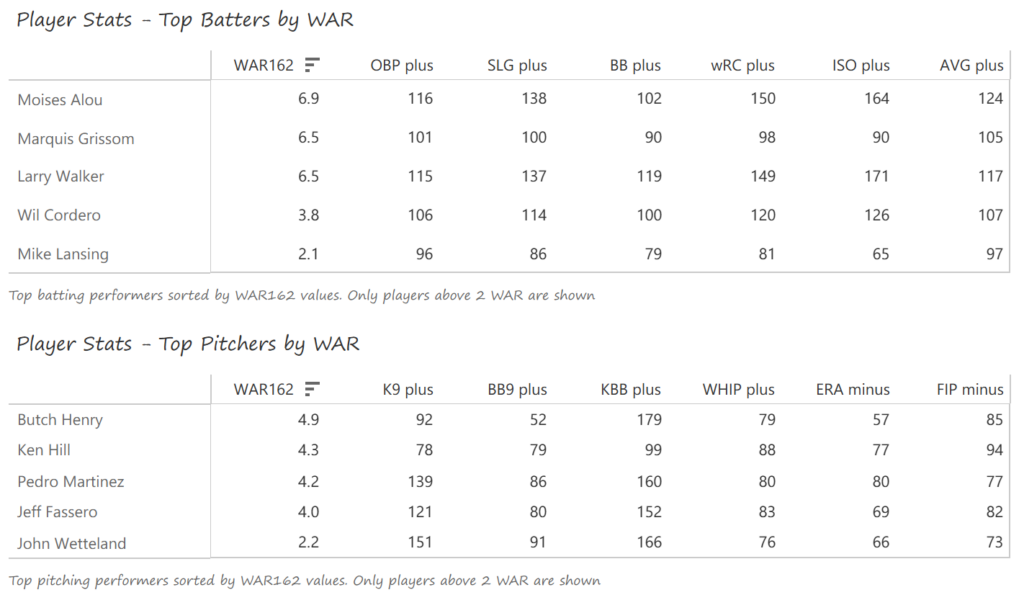
The Expos offense was near the top of the NL for the short season, scoring 585 runs to rank third behind the Reds and Astros. Speed was a major asset for the team, as they ranked first in the NL in stolen bases. Their team BA of .278 was third in the NL, as were their OBP and OPS numbers. The Expos’ pitching was very effective, leading the league in ERA, WHIP, walks, and strikeout-to-walk rate.

Three Expos batters led the charge in 1994, topped by Moises Alou. Alou batted .339 with 22 homers, 78 RBI, and 81 runs in just 107 games. Marquis Grissom stole 36 bases while batting .288 and earning a Gold Glove Award. Larry Walker topped the league with 44 doubles and batted .322 with 19 home runs and 86 RBI. Shortstop Wil Cordero batted .294 with 15 homers and 16 steals to round out a potent offense. Butch Henry posted an 8-3 record with a 2.43 ERA, and Ken Hill topped the NL with 16 wins. A promising 22-year-old Pedro Martinez recorded an 11-5 ledger, and Jeff Fassero added 8 wins with a 2.99 ERA.

Summary

That’s it for the second entry in our MLB Team Rankings for the 1990s decade! Stay tuned for the countdown from #10 to #6, arriving in a few days. As always, thanks for reading!
1990s MLB Team Rankings Countdown: 20 through 16

Welcome to the first countdown post in our series of MLB team rankings for the 1990s. As a reminder, the teams are ranked from #20 through #1 based on aggregate WAR162. For the 1990s (1990-1999), a total of 278 team-seasons were eligible, so the top 20 teams are a rather exclusive group – the top 7% for the decade. The 90s were a challenge, with two short seasons due to contract issues. The 1994 season fell well short of the 162-game schedule, with most clubs playing just 115 games. In 1995, most teams played about 140 games. I’ve elected to include both seasons, given that WAR162 adjusts for the number of games played. We’ll summarize each team, including those from 1994-95, and include portions of their team dashboard. Then we’ll explain how they attained their ranking. So, without further ado, here are the teams ranked #20 through #16.

Here’s the interactive dashboard at Tableau Public: 1990s Top 20 MLB Teams Dashboard

The Reds wound up a half-game ahead of the Astros in the NL Central when the season came to an early ending. With no playoffs or World Series in 1994, the Reds could only wonder what might have happened in a full season.

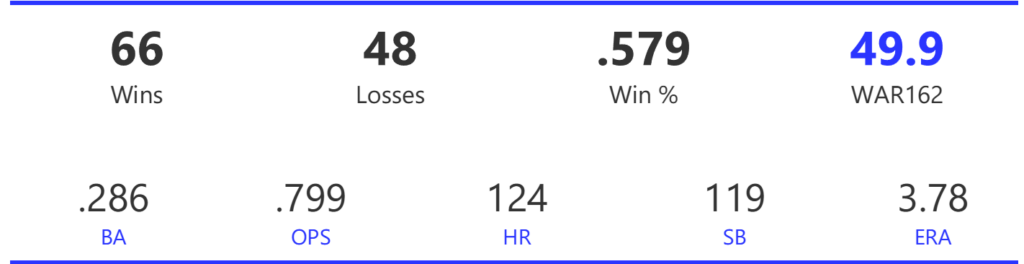
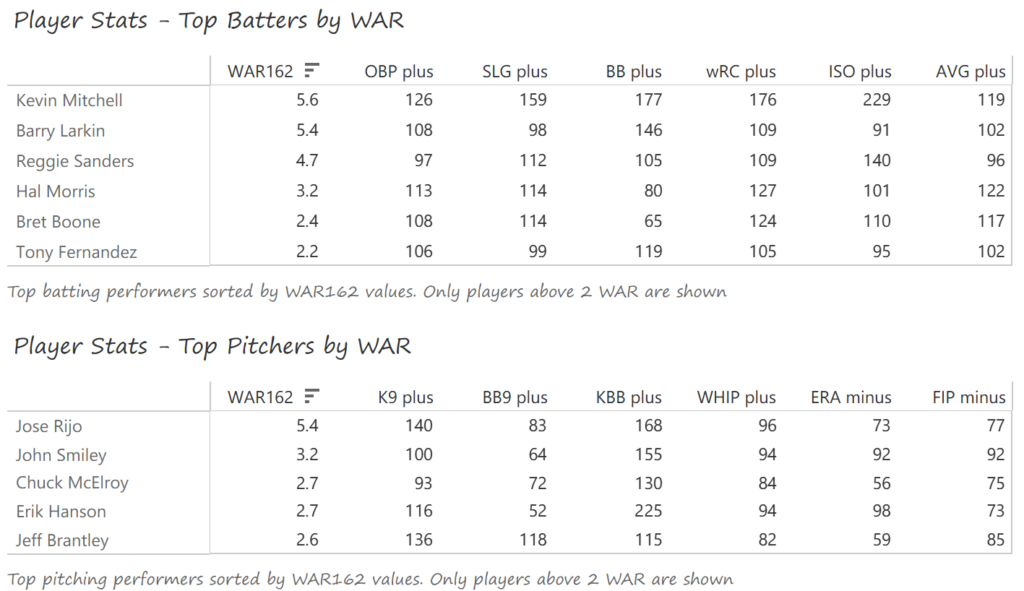
The Reds featured a strong offense, scoring 609 runs in their 114-game season. Their 124 home runs placed third, as did their 119 steals. The team also swept the BA, OBP, SLG, and OPS metrics. The Reds’ pitching was solid if unspectacular. The staff finished third in ERA and WHIP, and second in strikeout-to-walk rate.

Three players set the tone for the Reds’ offense and defense in 1994. Kevin Mitchell clouted 30 homers in just 95 games played, with a .326 BA, .429 OBP, and 1.110 OPS. Barry Larkin batted .279 with 26 steals and a Gold Glove at shortstop, and Reggie Sanders stole 21 bases, rapped 17 home runs, and drove in 62 runs. Jose Rijo (9-6, 3.08 ERA, 171 strikeouts) and John Smiley (11-10) were the Reds top starters. Chuck McElroy and Jeff Brantley (15 saves, 2.48 ERA) provided strong bullpen support.

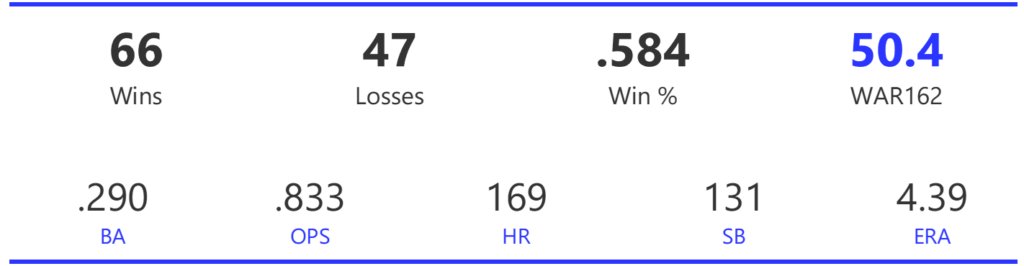
The 1994 Indians provided a glimpse of the future, as they would become one of the dominant AL teams for the remainder of the decade. They wound up one game behind the White Sox in the AL Central when the season ended early.

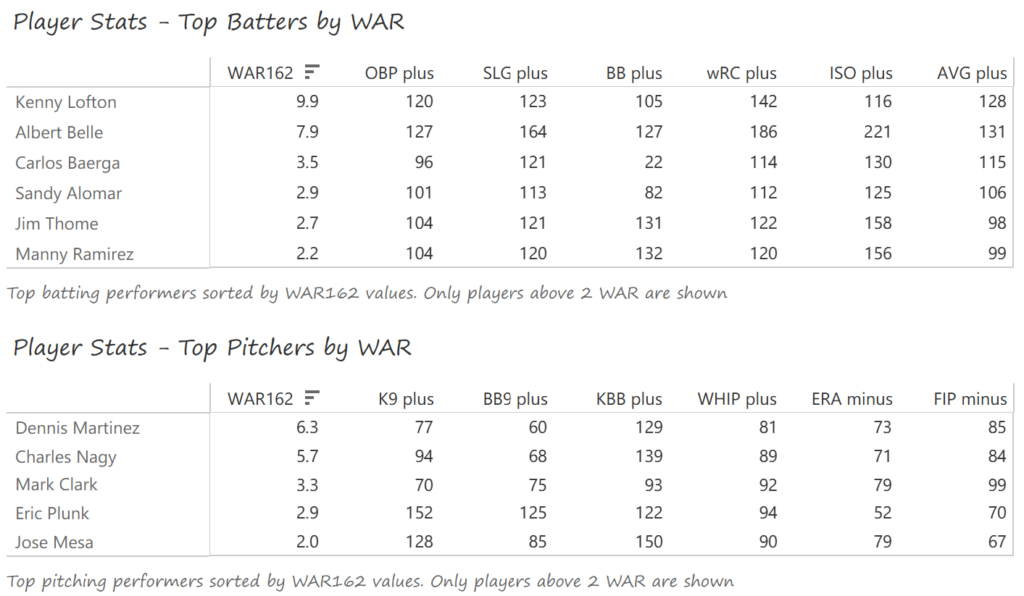
The Indians had a powerful offense, leading the AL in runs, home runs, doubles, and BA, and ranking second in stolen bases and OPS, a hair behind the Yankees. The pitching staff was less dominant, ranking fifth in ERA and sixth in WHIP. However, they surrendered the fewest home runs in the AL, helping to keep games within reach for their powerful offense.

Center fielder Kenny Lofton was dynamic, batting .349, scoring 105 runs, and stealing 60 bases in just 112 games. Lofton also claimed a Gold Glove Award. Albert Belle provided the power, slugging 36 homers with 101 RBI and a .357 BA across 106 games. Second baseman Carlos Baerga batted .314 with 32 doubles, 19 home runs, and 80 RBI to round out the Indians’ top three. Dennis Martinez had a splendid age-40 season, posting an 11-6 record with 3 shutouts. Charles Nagy recorded a 10-8 record with a solid 3.45 ERA in the high-scoring 1994 environment. Mark Clark added an 11-3 record for the Indians.

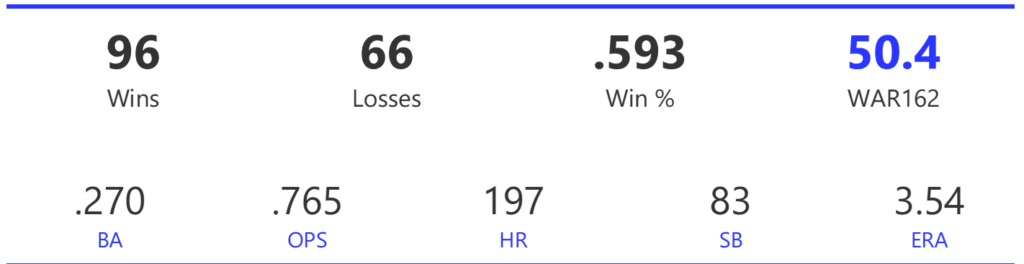
The 1996 Braves captured the NL East title by 8 games over the Expos. They went on to sweep the Dodgers in the NLDS round and defeated the Cardinals in a seven-game NLCS. Their run came to an end with a six-game World Series defeat at the hands of the Yankees.

The Braves scored 773 runs on the season, good for 4th place, and just 5 runs behind the second-ranked Reds. Their 197 homers ranked second, as did their .270 BA and .765 OPS. Pitching is where Atlanta distanced itself from most rivals, with a staff that ranked first in WHIP, strikeouts, walks, and strikeout-to-walk rate. They also ranked a close second to the Dodgers in ERA.

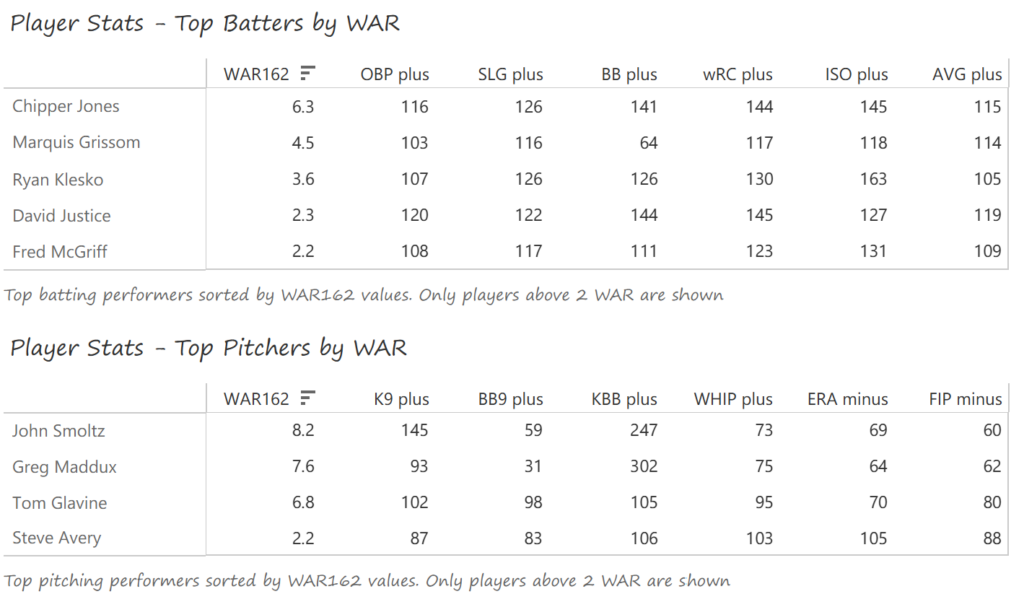
Third baseman Chipper Jones paced the offense, batting .309 with 30 homers, 110 RBI, and 114 runs scored. Marquis Grissom (.308 BA, 28 steals, 23 homers, 106 runs) won a Gold Glove in addition to his offensive numbers. Slugger Ryan Klesko launched 34 homers with 93 RBI as the third member of the Braves offensive nucleus. On the mound, John Smoltz earned the NL Cy Young Award with a 24-8 record and 276 strikeouts, both tops in the league. Greg Maddux went 15-11 with a 2.72 ERA and issued the fewest walks per inning in the NL, and Tom Glavine posted a 15-10 mark and 2.98 ERA.

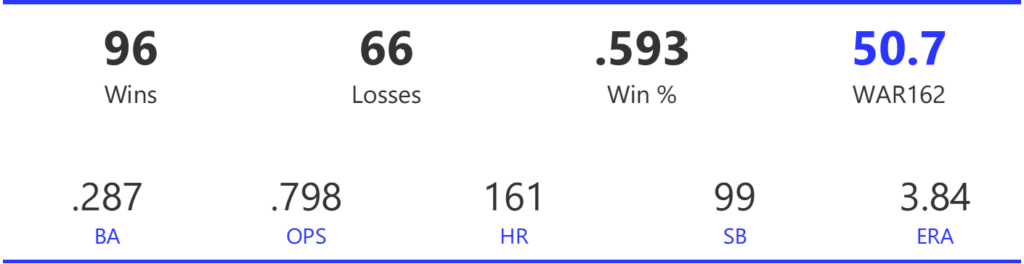
The Yankees finished two games behind the Orioles in the AL East, earning a wild-card berth in the playoffs, where they were defeated in five games by the Indians. Their Pythagorean win projection was 100 victories, so they were actually slightly unlucky during the regular season.

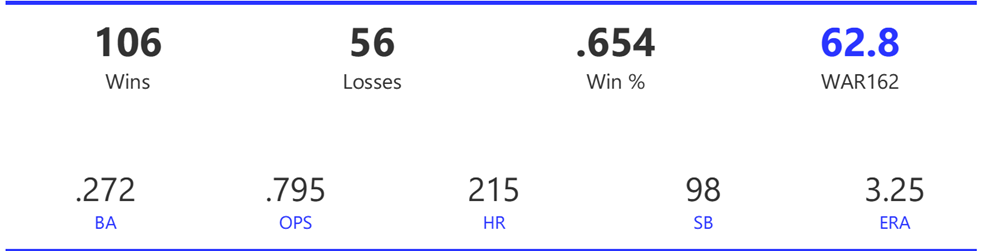
The Yankees rode a high-scoring offense to 96 wins; their 891 runs trailed only Seattle. The Yankees ranked second in BA on the season, first in OBP, and fourth in OPS in the 14-team American League. On the pitching side of the ledger, the New Yorkers ranked first in ERA, second in strikeouts and strikeout-to-walk rate, and third in WHIP for the 1997 season.

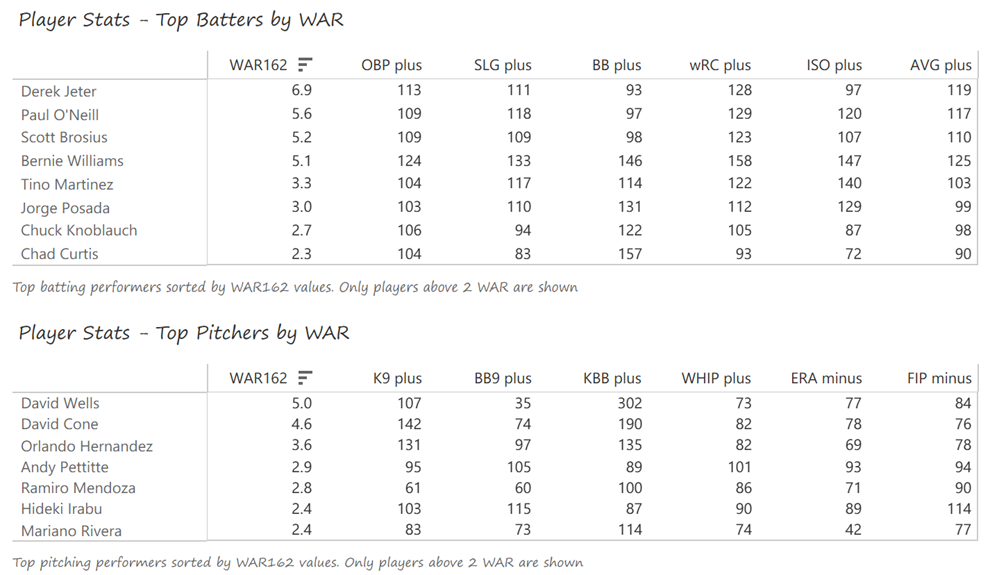
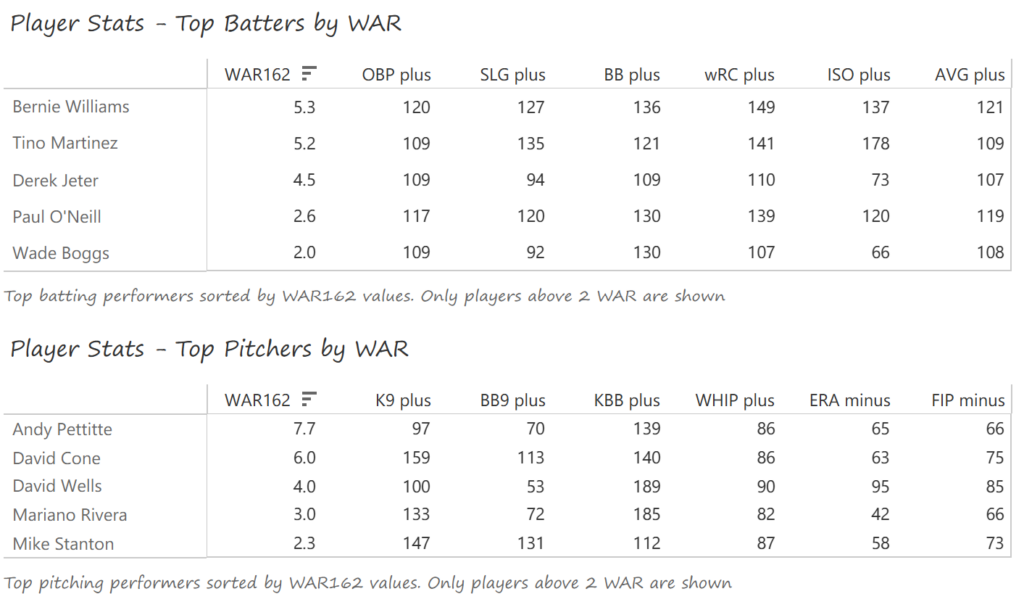
Bernie Williams, Tino Martinez, and Derek Jeter spearheaded the Yankees offensive efforts. Williams batted .328 with 21 home runs, 100 RBI, and 107 runs scored while winning a Gold Glove in center field. Martinez batted .296 with 44 homers and 141 RBI, and Jeter batted .291 with 116 runs scored and 23 steals. The Yankees had a strong starting rotation, led by lefty Andy Pettitte, who assembled an 18-7 record with a 2.88 ERA. Veteran David Cone posted a 12-5 mark with 10.2 strikeouts per 9 innings, and David Wells added 16 wins. Closer Mariano Rivera saved 43 games with a 1.88 ERA to support the rotation.

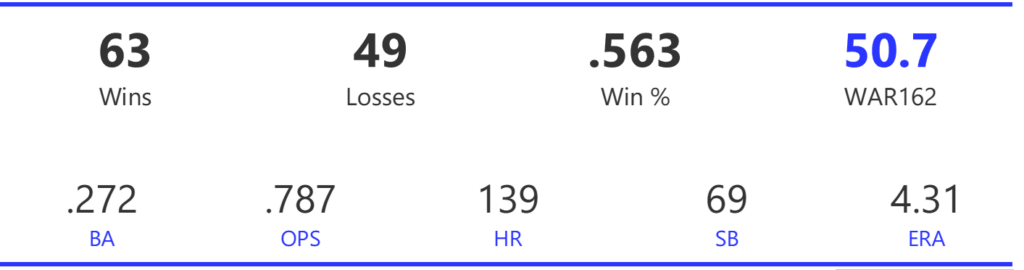
The Orioles were another of the 1994 clubs left to wonder what could have happened in a full season. At the time of the early stoppage, they were 6.5 games behind the Yankees in the AL East.

The Orioles’ offense was somewhat ordinary in 1994, ranking 7th in runs scored and tied for 4th in home runs at the end of the season. They had similar ranks in BA (6th), OBP (6th), and OPS (6th). Pitching was a strong suit, with the Orioles staff ranking third in ERA, second in WHIP and strikeout-to-walk rate, and first in issuing the fewest walks.

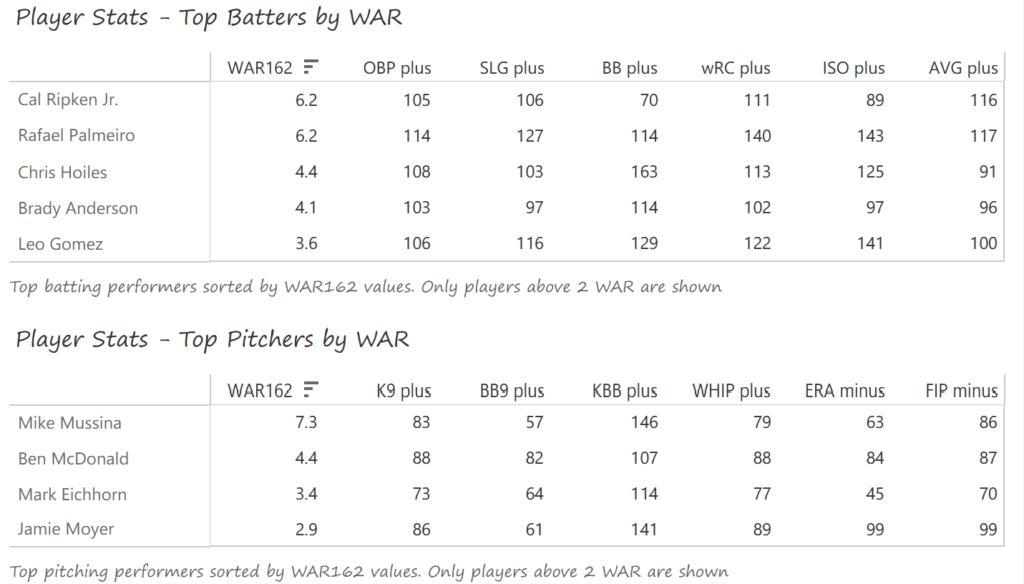
Cal Ripken, Jr. enjoyed a fine age-33 season, batting .315 with 13 homers and 75 RBI in 112 games. Rafael Palmeiro slugged 23 homers and batted .319, while catcher Chris Hoiles added 19 homers in 99 games. Brady Anderson stole 31 bases (in 32 attempts) and scored 78 runs for Baltimore. Mike Mussina posted a 16-5 record in 24 starts, and Ben McDonald added 14 more wins. Reliever Mark Eichorn recorded a 2.15 ERA across 43 appearances in the shortened season.

Summary

That’s it for the first entry in our MLB Team Rankings for the 1990s decade! Stay tuned for the countdown from #15 to #11, arriving in a few days. As always, thanks for reading!

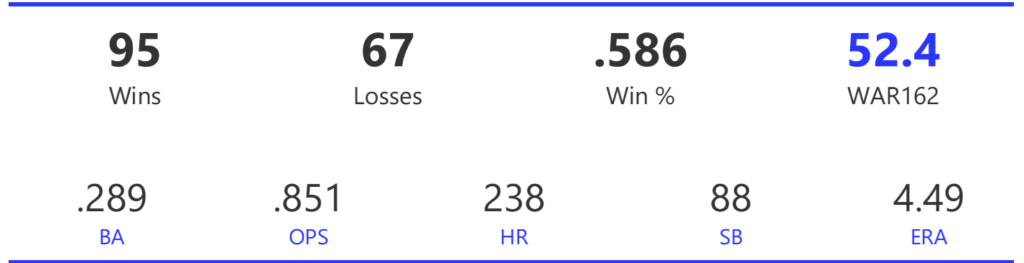
1980s MLB Team Rankings Countdown: 5 through 1

Welcome to the final countdown post in our series of MLB team rankings for the 1980s. As a reminder, the teams are ranked from #20 through #1 based on aggregate WAR162. For the 1980s (1980-1989), a total of 280 team-seasons were eligible, so the top 20 teams are a rather exclusive group – the top 7% for the decade. We’ll summarize each team, including portions of their dashboards, and explain how they attained their rankings. So, without further ado, here are the teams ranked #5 through #1.

Here’s the interactive dashboard at Tableau Public: 1980s Top 20 MLB Teams Dashboard

The 1987 Blue Jays were caught by the Tigers in the final week of the 1987 season. The Jays ultimately fell two games short of the AL East title after dropping their final 7 games.

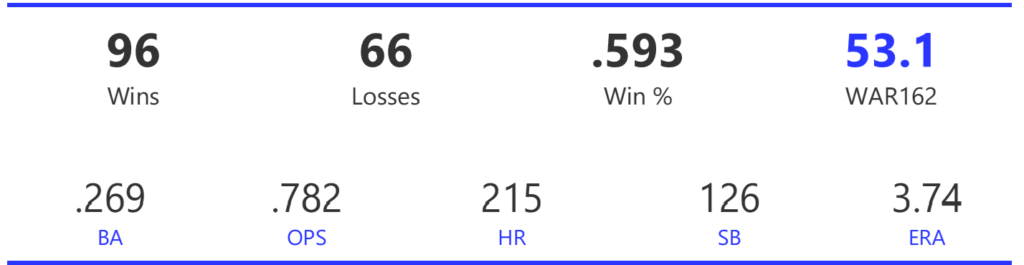
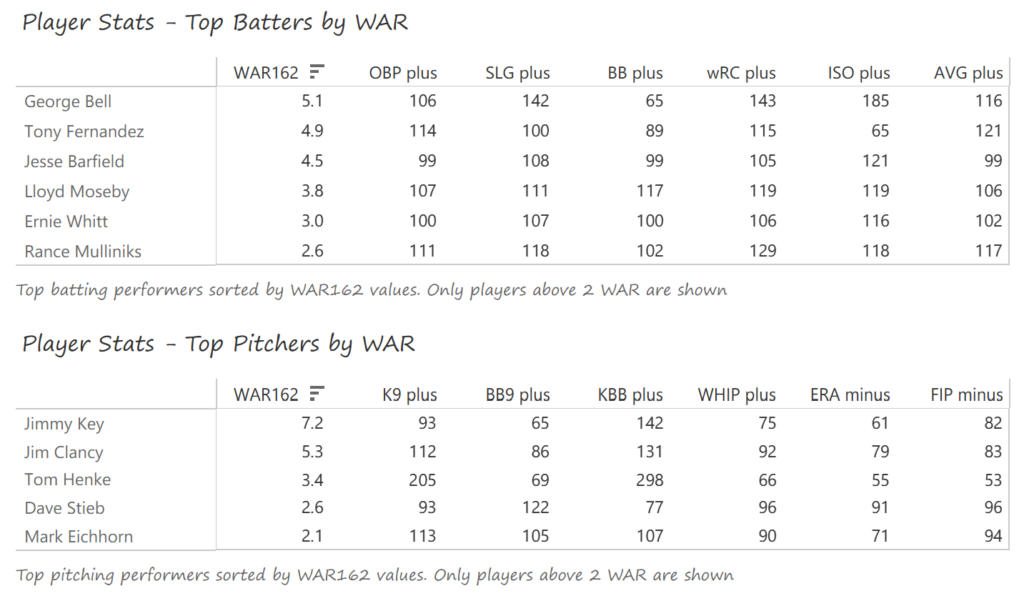
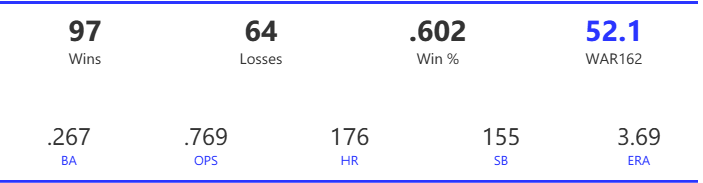
The Jays had a potent offense, finishing second in the league with 215 homers and third with 845 runs. Their team OPS of .782 was also good for second, trailing only the Tigers. Toronto’s pitching staff led the AL in ERA and WHIP in the high-scoring 1987 season, and ranked second in strikeouts.

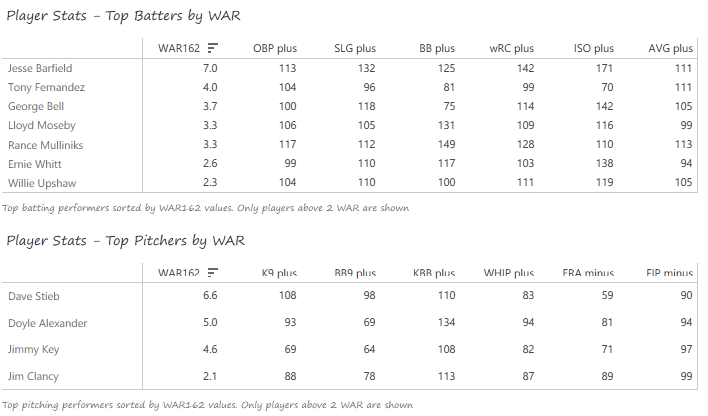
George Bell claimed AL MVP honors with an AL-best 134 RBI and added 47 home runs and a .308 BA. Shortstop Tony Fernandez (.322 BA, 32 steals, Gold Glove Award), and right fielder Jesse Barfield (28 home runs, 84 RBI, Gold Glove Award) were Bell’s primary support. Lloyd Moseby also had a fine season, batting .282 with 26 homers, 96 RBI, and 39 steals. Lefty Jimmy Key led the mound staff, topping the AL in ERA and WHIP while winning 17 games. Jim Clancy added 15 wins, and closer Tom Henke had an AL-best 34 saves with a 2.49 ERA.

The 1985 Cardinals topped the NL East by three games over the Mets. They then defeated the Dodgers in a six-game NLCS. The Cards’ run ended with a seven-game World Series defeat at the hands of the cross-state Royals.

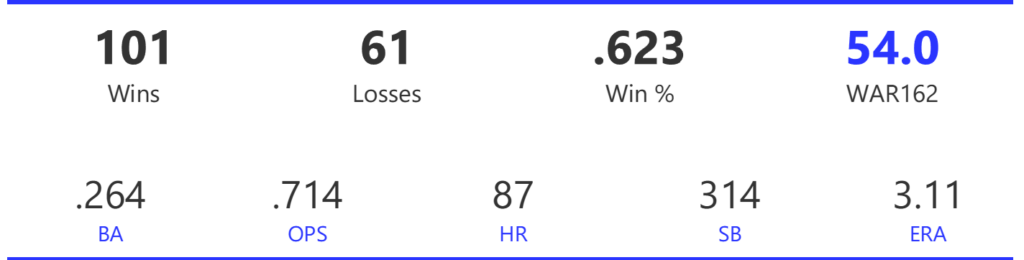
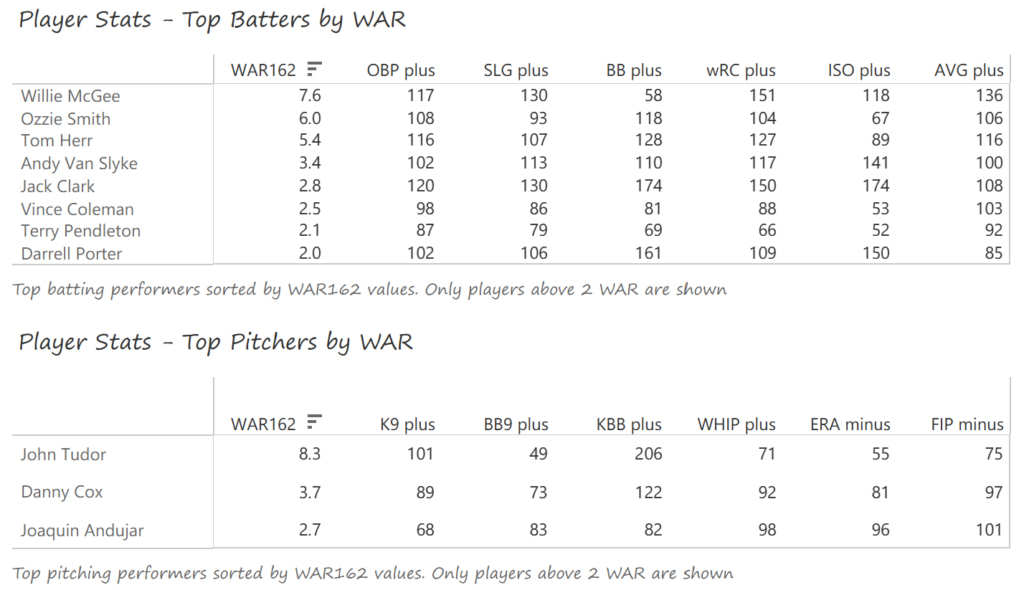
The Cardinals’ offense was built on speed, as they compiled an astonishing 314 stolen bases, 132 more than their nearest rival. This speed propelled them to an NL-best 747 runs despite hitting just 87 homers, the second fewest in the league. The Cards led the NL in BA, OBP, and OPS (lots of doubles & triples) on their way to 101 wins. The pitching staff ranked second in ERA and third in WHIP, providing strong support for their potent offense.

NL MVP Willie McGee was the Cardinals’ offensive spark via his NL-best .353 BA coupled with 56 steals and 114 runs scored. Shortstop Ozzie Smith batted .276 with 31 steals while providing exceptional Gold Glove defense, and Tom Herr batted .302 with 31 steals, 38 doubles, and 110 RBI. Andy Van Slyke (13) and Jack Clark (22) combined for 35 of the team’s 87 dingers, and rookie Vince Coleman swiped 110 bases on the season. John Tudor was the ace on the mound, tossing 10 shutouts with a 1.93 ERA and a 21-8 record. Tudor also led the NL in WHIP in a career-best season. Danny Cox (18-9, 2.88 ERA) and Joaquin Andujar (21-12) gave the Cardinals a strong rotation behind Tudor.

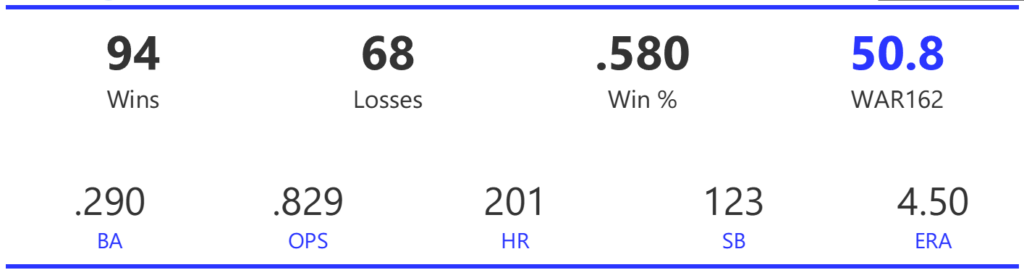
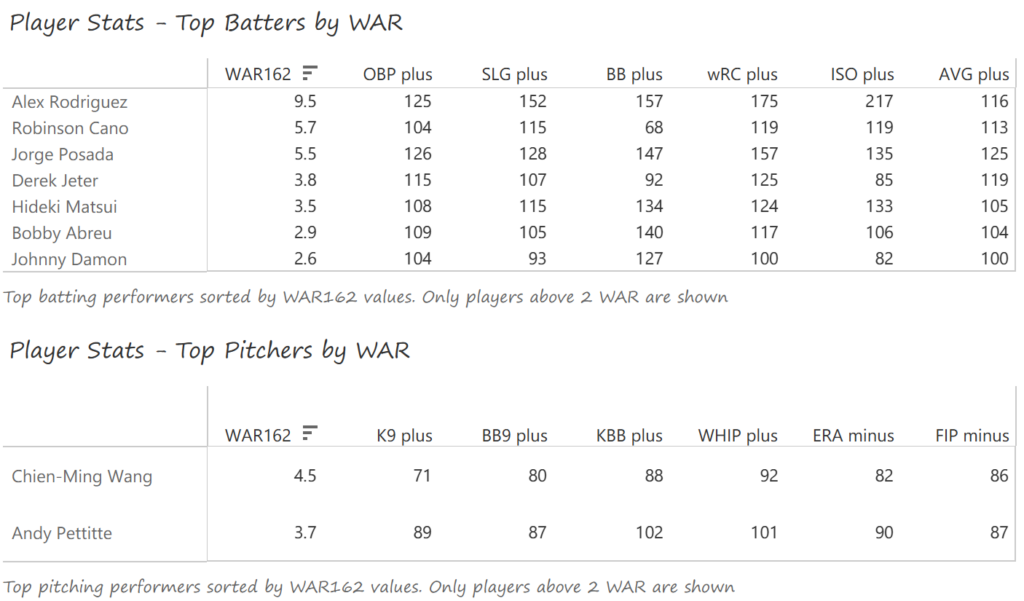
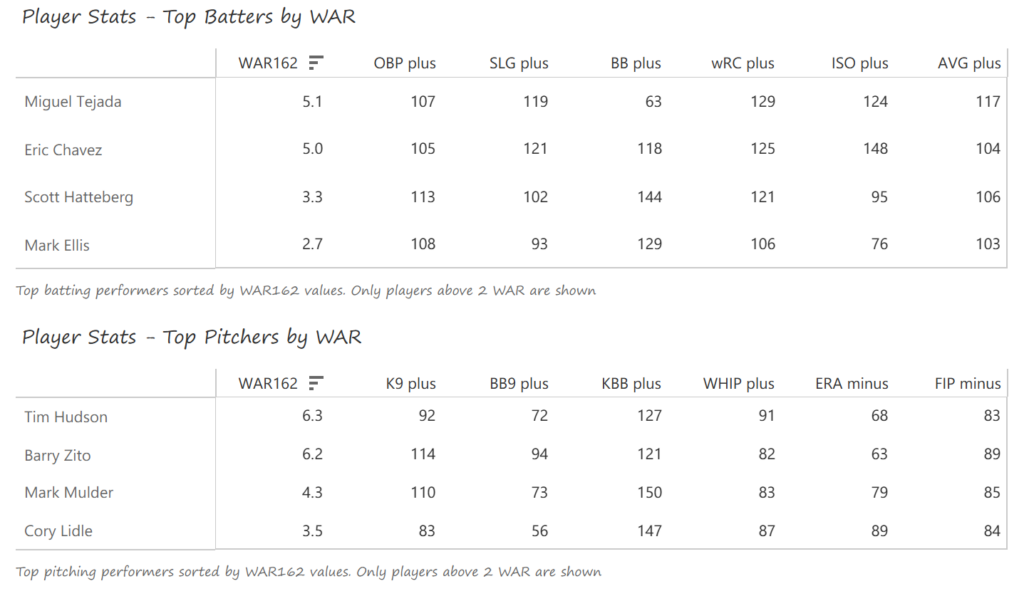
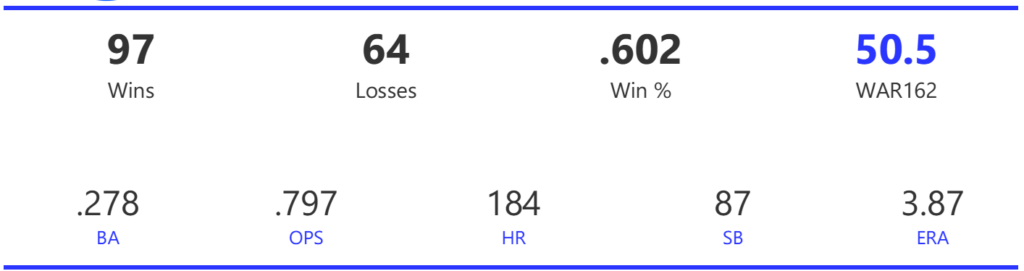
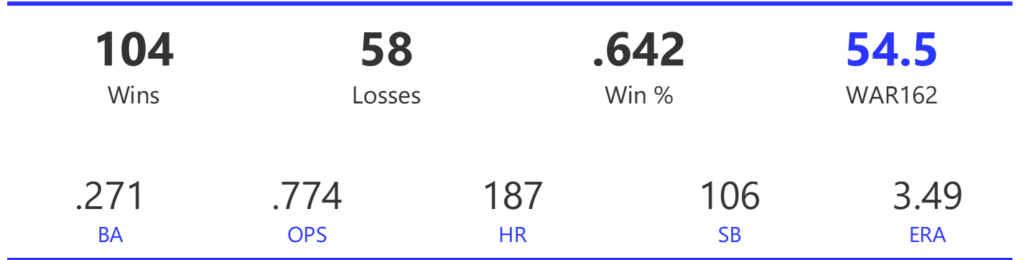
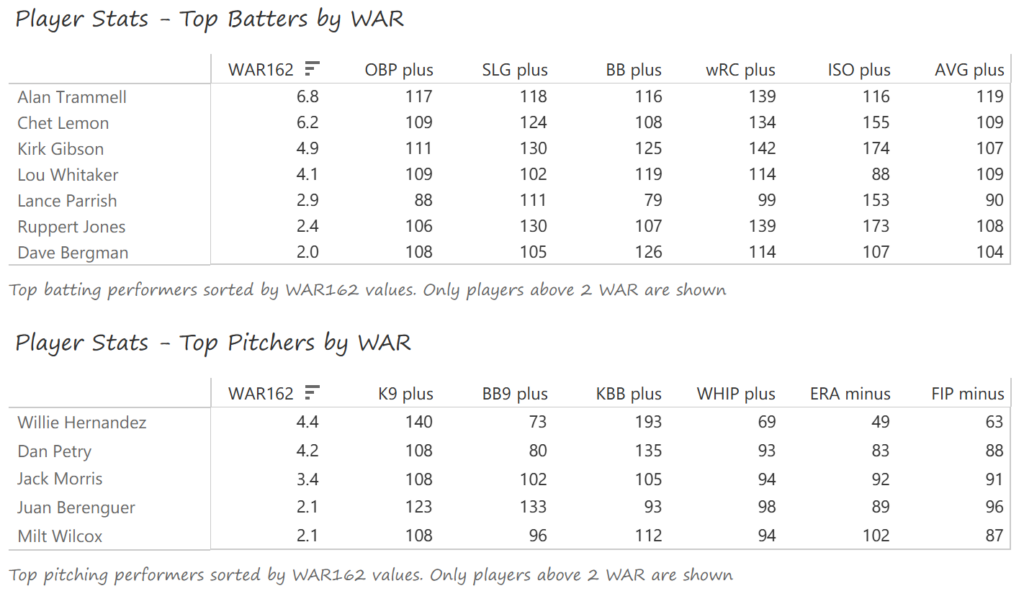
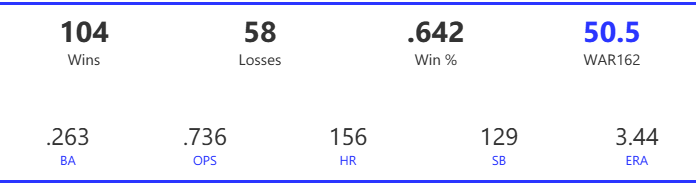
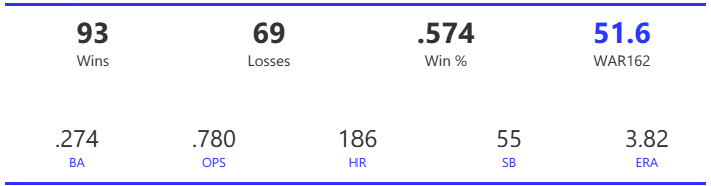
The 1984 Tigers raced out to a 35-5 record and then coasted to the AL East title with a 15-game margin over the Blue Jays. The Tigers then swept the Royals in the ALCS before defeating the Padres in five games in the World Series.

The Tigers had a dynamic offense that led the AL in runs and OBP, and ranked second in OPS behind the Red Sox, getting strong contributions from the top of the batting order. The starting pitching was solid, and was supported by a strong bullpen. The Tigers staff led the AL in ERA, WHIP, and saves, while posting the second-best strikeout-to-walk rate.

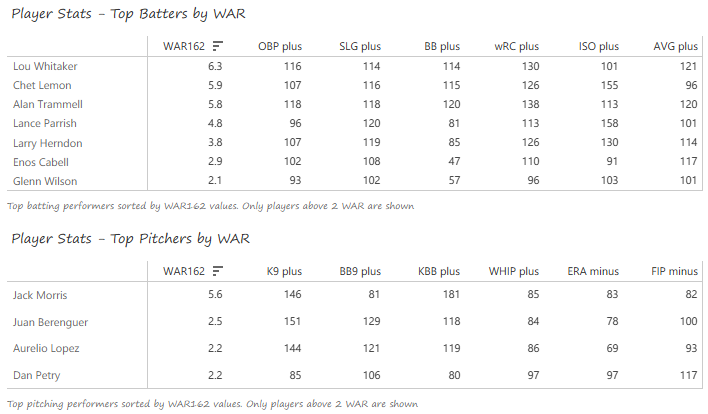
Alan Trammell keyed the Tigers’ lineup in 1984, batting .314 with 85 runs scored and a Gold Glove Award at shortstop. Chet Lemon played an outstanding center field and launched 20 homers with 76 RBI and a .287 BA. Kirk Gibson swiped 29 bases and homered 27 times with 91 RBI, and Lou Whitaker batted .289, scored 90 runs, and earned a Gold Glove at second base. Lance Parrish belted 33 homers with 98 RBI while claiming a Gold Glove behind the plate. Willie Hernandez had a Cy Young season out of the bullpen, earning 32 saves with a 1.92 ERA, appearing in an AL-best 80 games. Dan Petry (18-8) and Jack Morris (19-11) were the top starters for the Tigers.

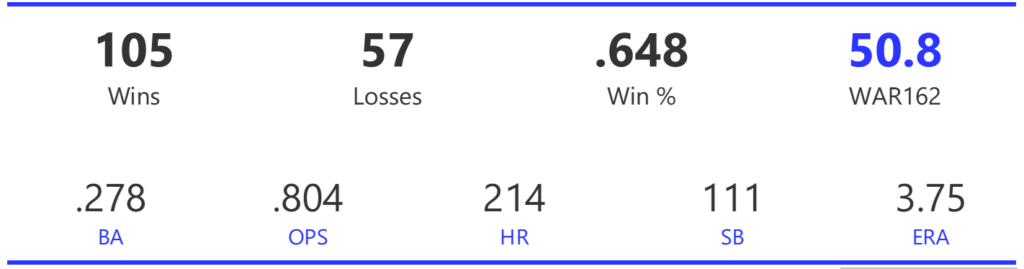
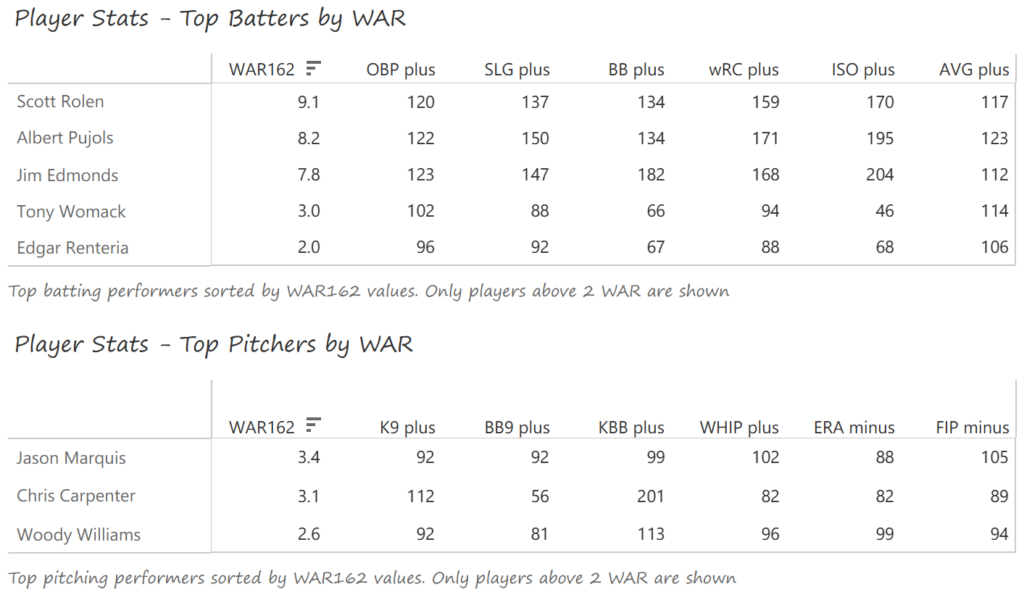
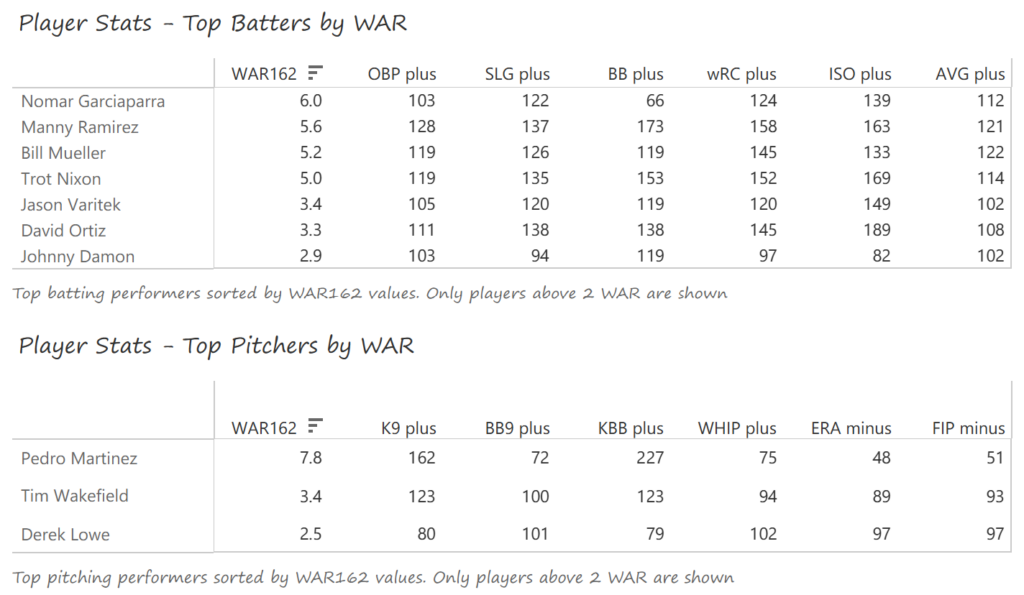
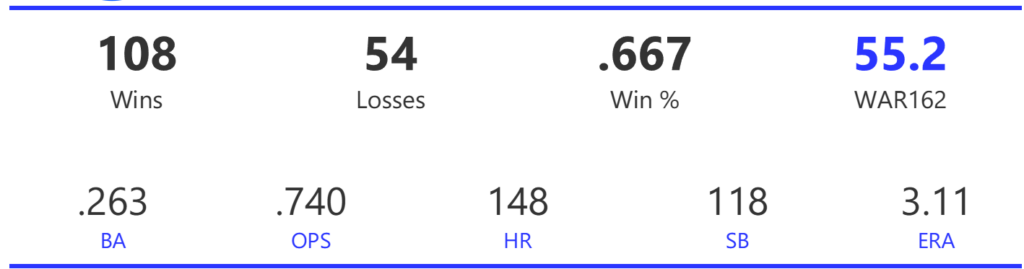
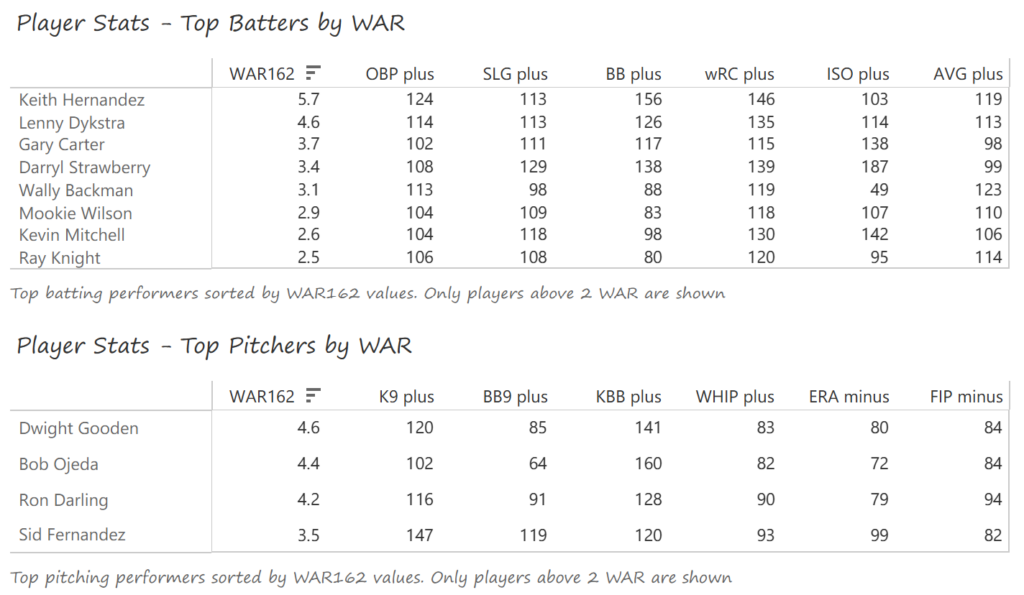
The 1986 Mets ran away with the NL East, topping the Phillies by a whopping 21.5 games. They then took down the Astros in six games for the NL pennant before defeating the Red Sox in a dramatic seven-game World Series. While the Mets’ win projection was for a slightly lower 103 wins, they would have still easily won the NL East.

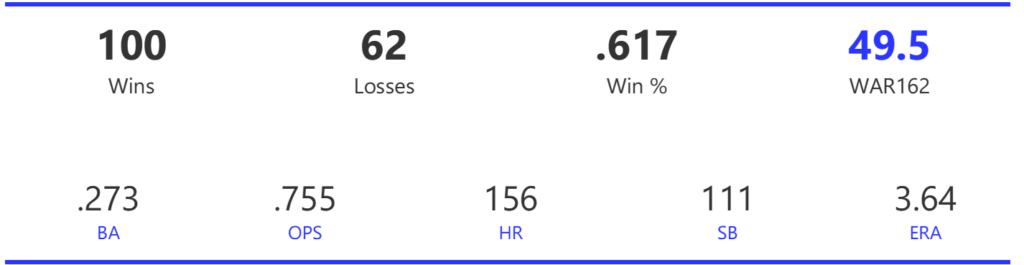
The Mets scored an NL-high 783 runs, batting .263 with a .339 OBP and .740 OPS to top the league. They also ranked third in home runs and fourth in doubles. The Mets’ pitching topped the NL in ERA and ranked second in WHIP, and also ranked high in saves, strikeout-to-walk rate, complete games, and shutouts.

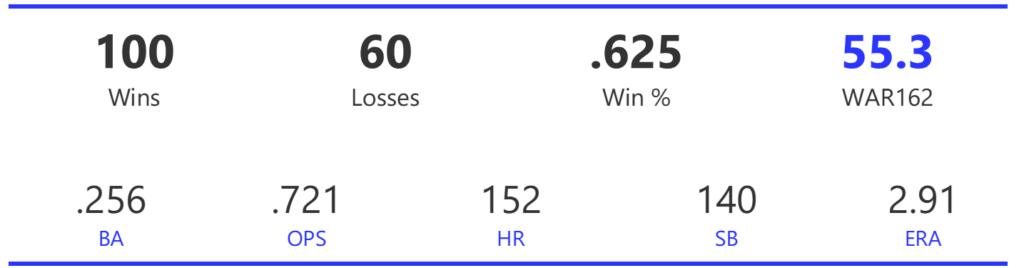
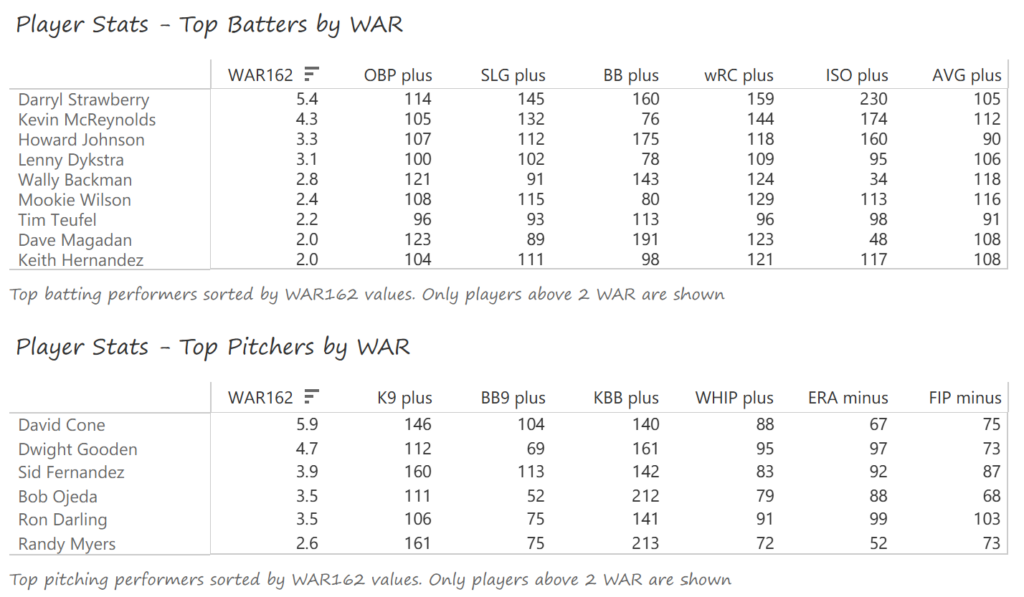
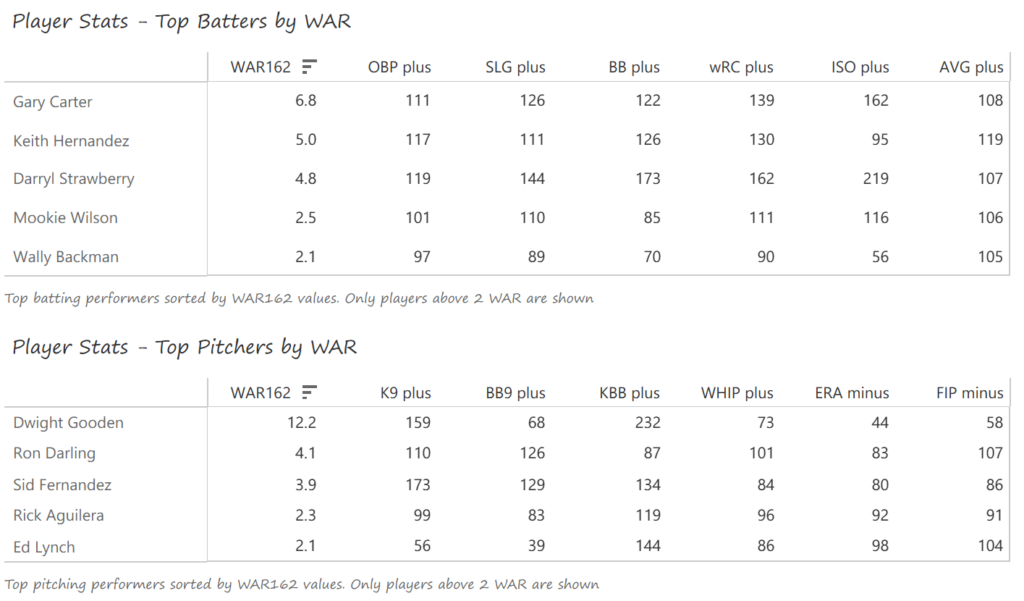
First baseman Keith Hernandez had an excellent season, batting .310, drawing an NL-best 94 walks, scoring 94 runs, and winning a Gold Glove. Lenny Dykstra batted .295 with 31 steals, Gary Carter swatted 24 homers with 105 RBI, and Darryl Strawberry launched 27 homers with 93 RBI. Dwight Gooden (17-6, 2.84 ERA) and Bob Ojeda (18-5, 2.57 ERA) topped the Mets staff. Close behind were Ron Darling (15-6, 2.81 ERA) and Sid Fernandez (16-6), giving the Mets a formidable starting rotation.

The 1988 Mets won the NL East, topping the Pirates by 15 games, before being upset by the Dodgers in a seven-game NLCS defeat.

The Mets easily led the NL in runs, home runs, OBP, and OPS, while ranking second in BA. It was a very strong offensive performance for the season. The team also had dominant pitching in 1988, ranking first in ERA, WHIP, strikeout, and strikeout-to-walk rate while placing second in saves.

Darryl Strawberry led the Mets offense with an NL-best 39 homers, 101 RBI, and a league-best .911 OPS. Kevin McReynolds added 27 home runs and 99 RBI, and Howard Johnson launched 24 homers and stole 23 bases. Lenny Dykstar stole 30 bases in 126 games, and Wally Backman batted .303 on the year. On the mound, David Cone had a splendid 20-3 record with a 2.22 ERA, followed by Dwight Gooden with 18 wins and 10 complete games. Sid Fernandez yielded the fewest hits per 9 innings in the NL and won 12 games. Bob Ojeda (10) and Ron Darling (17) contributed 27 more wins for the Mets.

Summary

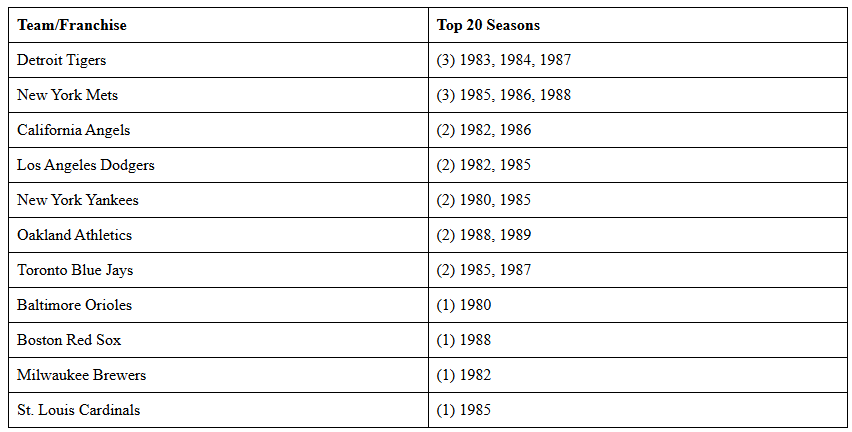
That’s it for the final entry in our MLB Team Rankings for the 1980s decade! Here’s a summary of the most dominant franchises of the 1980s:

1980s MLB Team Rankings Countdown: 10 through 6

Welcome to the third countdown post in our series of MLB team rankings for the 1980s. As a reminder, the teams are ranked from #20 through #1 based on aggregate WAR162. For the 1980s (1980-1989), a total of 280 team-seasons were eligible, so the top 20 teams are a rather exclusive group – the top 7% for the decade. We’ll summarize each team, including portions of their dashboards, and explain how they attained their rankings. So, without further ado, here are the teams ranked #10 through #6.

Here’s the interactive dashboard at Tableau Public: 1980s Top 20 MLB Teams Dashboard

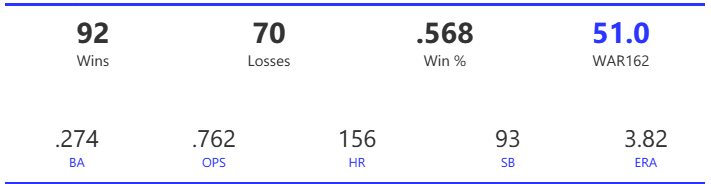
The 1988 Athletics cruised to the AL West title by 13 games over the Twins and then swept the Red Sox in four games to claim the AL pennant. Then they ran into an upstart Dodgers team that upset them in a five-game World Series.

The A’s boasted a strong, but not dominant offense in 1988. Their 800 runs scored ranked second to the Red Sox, and they placed 4th or better in BA, OBP, and OPS. The team’s 156 home runs were just two shy of the Blue Jays for the top AL spot. Oakland also had a talented mound staff, with the AL’s top ERA and 3rd-best WHIP, and easily led the AL with 64 saves.

Jose Canseco posted some big offensive numbers to lead the team, bashing an AL-best 42 homers with 124 RBI while also stealing 40 bases. Canseco claimed AL MVP honors for his exploits. Dave Henderson had a career year with a .304 BA, 24 homers, and 94 RBI, and Mark McGwire added 32 home runs and 99 RBI. Dave Stewart was the A’s top pitcher, recording 21 wins with a league-best 14 completed games, and Bob Welch added 17 wins. Storm Davis won 16, and closer Dennis Eckersley topped the AL with 45 saves, finishing second in Cy Young voting.

The Tigers were a year away from dominating the AL, but were clearly on the way to the top in 1983. While they finished six games behind the Orioles, they were the better team based on WAR162.

The Tigers’ offense was very good, finishing a close 4th with 789 runs, and ranking third in BA and second in OPS on the season. Their 156 home runs ranked 4th, just 12 behind the AL-best Orioles. The Tigers’ pitching was solid, placing 4th in ERA and 2nd in WHIP, benefiting from strong defense across multiple positions.

Lou Whitaker helped ignite the Tigers’ offense, batting .320 with 40 doubles, and also claimed a Gold Glove Award at second base. Center fielder Chet Lemon flashed exceptional defense while stroking 24 homers, and Gold Glove shortstop Alan Trammell batted .319 with 30 stolen bases. Catcher Lance Parrish also earned a Gold Glove, and stroked 27 homers with 114 RBI. Larry Herndon batted .302 with 20 homers to round out the team’s offense. Jack Morris was the ace on the mound, winning 20 games and leading the league in innings and strikeouts. After Morris, there was some drop-off, although Dan Petry won 19 games and Aurelio Lopez was effective as a late-inning reliever.

The 1982 Angels won the AL West title by three games over the Royals before losing a five-game ALCS to the Brewers, denying them a shot at their first World Series.

The Angels featured a strong offense that accounted for 814 runs, second to Milwaukee. Their 186 home runs also ranked second, and they ranked 1st in OBP, 2nd in OPS, and 3rd in BA on the season. They also had solid pitching, trailing only the Tigers in ERA while leading the league in WHIP.

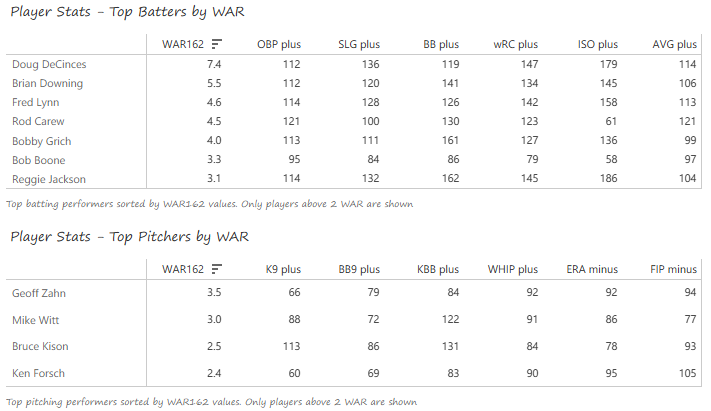
Third baseman Doug DeCinces had a career year, batting .301 with 30 homers, 97 RBI, 94 runs scored, and strong defense. Brian Downing batted .281 with 28 homers, and Fred Lynn batted .299 with 21 home runs. Rod Carew (.319 BA, 88 runs) and Bobby Grich (19 homers, 82 walks) helped round out the team’s offense. On the mound, Geoff Zahn won 18 games while 21-year-old Mike Witt posted an 8-5 record. Bruce Kison (10) and Ken Forsch (13) combined for 23 more wins.

The 1985 Blue Jays won the franchise’s first AL East title, topping the Yankees by two games before falling to the Royals in a seven-game ALCS.

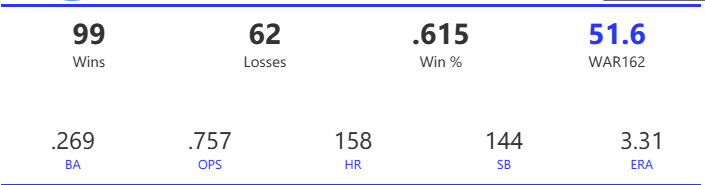
Toronto featured a good offense, scoring 759 runs, 4th in the 14-team American League. Their 144 stolen bases ranked second, as did their .269 team BA. The Jays ranked 4th in OPS and 5th in OBP for the season. Toronto had a very effective pitching staff, with an AL-best 3.31 ERA. They also led the league in WHIP and finished second with 47 saves.

Right fielder Jesse Barfield had a big season, batting .289 with 27 home runs and 22 steals, and providing excellent glove work. Shortstop Tony Fernandez batted .289 with 31 doubles, and George Bell swatted 28 homers with 95 RBI and 21 steals. Lloyd Moseby (92 runs, 37 steals) and Rance Mulliniks (.383 OBP) also contributed offensively. On the mound, Dave Stieb had a stellar campaign, winning 14 games with a league-best 2.48 ERA. Doyle Alexander posted a 17-10 record, and lefty Jimmy Key went 14-6 on the season.

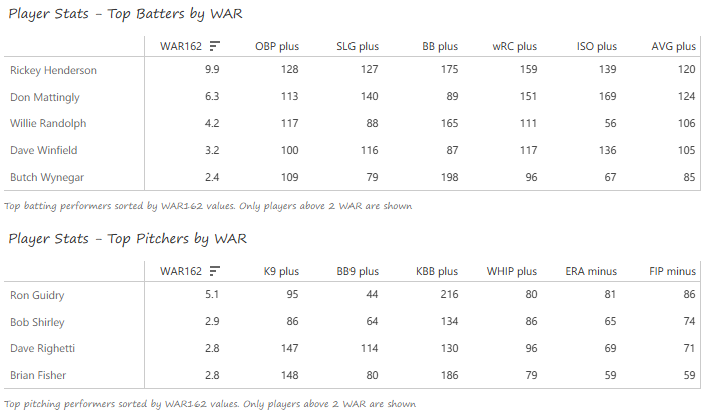
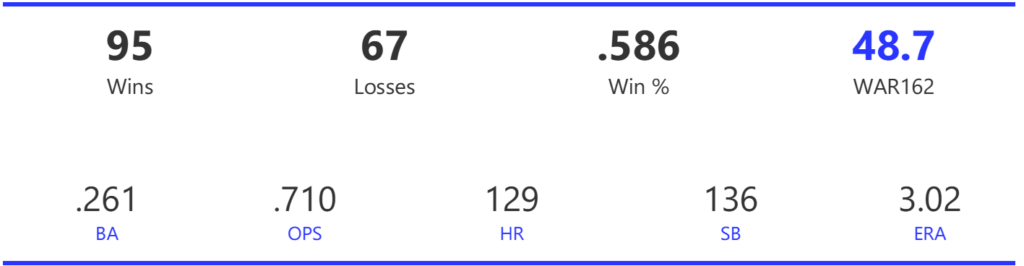
The 1985 Yankees lost out by a scant two games to the Blue Jays in a competitive AL East race.

The Yankees had a very potent offense, with their 839 runs easily topping the league. The team possessed both speed and power, leading the AL in stolen bases and placing 3rd in home runs. The New Yorkers ranked 3rd in BA and 2nd in both OBP and OPS, trailing only the Red Sox. Pitching was also effective, if not to the level of the offense. The Yankees ranked 3rd in ERA and 4th in WHIP for the 1985 campaign.

Rickey Henderson had a monster season for New York, scoring an AL-best 146 runs and leading the league with 80 stolen bases. He also batted .319 with a .419 OBP to ignite the Yankees’ offense. Don Mattingly (.324 BA, AL-best 48 doubles and 145 RBI) claimed the AL MVP award, and Willie Randolph (.382 OBP) provided additional offensive support. Ron Guidry led the pitching staff with a 22-6 record, aided by a strong bullpen corps. Bob Shirley (2.64 ERA), Dave Righetti (29 saves, 2.78 ERA), and Brian Fisher (2.38 ERA, 14 saves) led an excellent Yankees bullpen.

Summary

That’s it for the third entry in our MLB Team Rankings for the 1980s decade! Stay tuned for the countdown from #5 to #1, arriving in a few days. As always, thanks for reading!

MLB Team Rankings Countdown: 15 through 11

Welcome to the second countdown post in our series of MLB team rankings for the 1980s. As a reminder, the teams are ranked from #20 through #1 based on aggregate WAR162. For the 1980s (1980-1989), a total of 280 team-seasons were eligible, so the top 20 teams are a rather exclusive group – the top 7% for the decade. We’ll summarize each team, including portions of the team’s dashboard, and explain how they attained their ranking. So, without further ado, here are the teams ranked #15 through #11.

Here’s the interactive dashboard at Tableau Public: 1980s Top 20 MLB Teams Dashboard

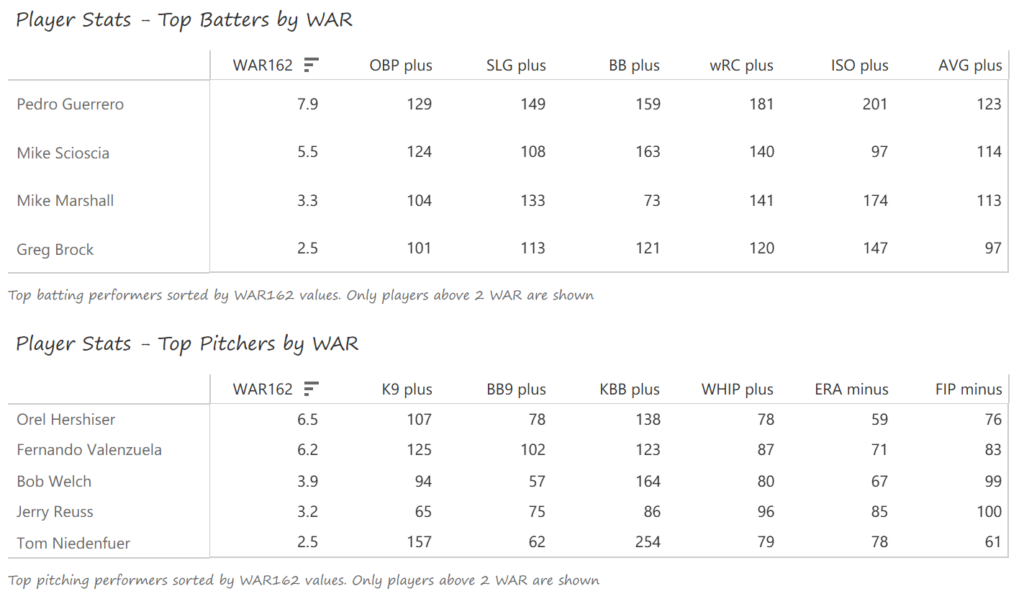
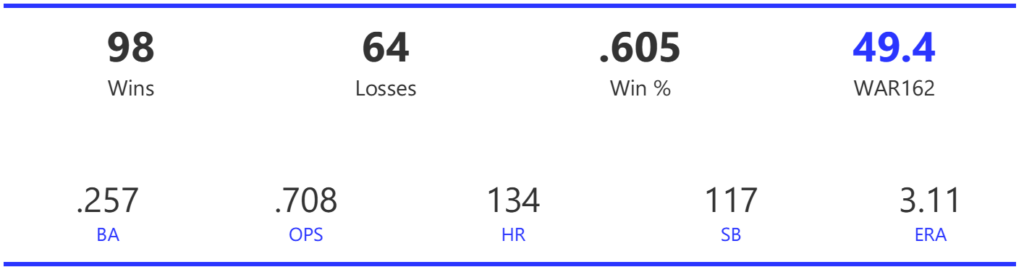
The 1985 Dodgers topped the NL West by 5.5 games over the Reds before falling to the Cardinals in a six-game NLCS.

The Dodgers finished 5th in runs, playing half their games in pitcher-friendly Dodger Stadium. The offense had modest power and speed by league standards, but they did manage to rank 2nd in BA and OBP, and 3rd in OPS. The pitching staff was excellent, even given the friendly home ballpark, ranking first in ERA, WHIP, and strikeout-to-walk rate.

Pedro Guerrero had one of his best seasons, leading the NL with a .422 OBP and .999 OPS while batting .320 with 33 homers. Catcher Mike Scioscia had a fine season, batting .296 with a .407 OBP and stellar defense. Mike Marshall added 238 home runs and 95 RBI while batting .293. Orel Hershiser (19-3, 2.03ERA) and Fernando Valenzuela (17-10, 2.45 ERA) topped the pitching staff, with solid support from 14-game winners Bob Welch and Jerry Reuss.

The 1985 Mets won 98 games but fell three games short of the Cardinals for the NL East title. Nonetheless, this team was one of several strong Mets teams in the mid- to late-1980s.

The Mets had a solid offense, finishing 3rd in runs and home runs, and 4th in both BA and OPS. Pitching was a strong suit, as the Mets staff placed 3rd in ERA and 2nd in WHIP and strikeout-to-walk rate.

Gary Carter led the Mets offensively while playing strong defense behind the plate. Carter batted .281 with 32 home runs and 100 RBI. Keith Hernandez won a Gold Glove at first base while batting .309 with 91 RBI, and Darryl Strawberry homered 29 times with 79 RBI in just 111 games. On the mound, Dwight Gooden assembled one of the best seasons ever by a pitcher, winning the Cy Young with a 24-4 record and 1.53 ERA. Gooden received strong support from Ron Darling (16-6, 2.90 ERA) and Sid Fernandez, who topped the NL in strikeout rate while yielding the fewest hits per 9 innings.

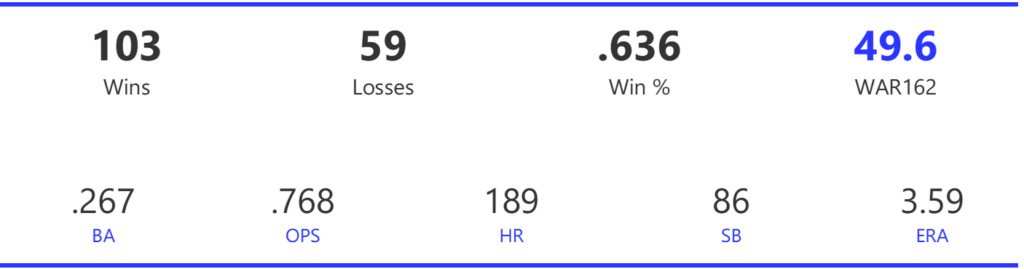
The 1980 Orioles claimed 100 wins but fell three games behind the Yankees in the AL East, a season after playing in the World Series.

The Orioles ranked 5th in runs with 805, just 25 behind the league-leading Tigers, and placed 4th with 156 home runs. In most other offensive categories, they ranked between 4th and 6th in the 14-team American League. Their pitching was a bit stronger, placing 3rd in ERA and WHIP, 4th in strikeout-to-walk rate, and 5th in saves.

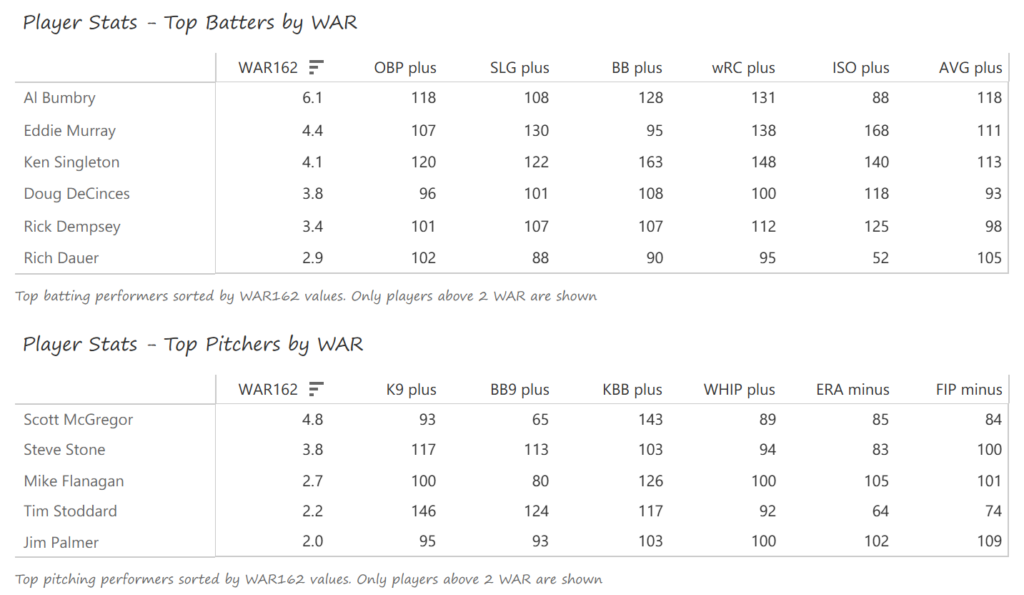
Al Bumbry compiled the O’s highest positional WAR162, batting .318 with 118 runs scored, and 44 stolen bases. Eddie Murray slugged 32 homers with 116 RBI and a .300 BA, while Ken Singleton added 24 homers and 104 RBI. Third Baseman Doug DeCinces added 16 homers to go with excellent defense, and catcher Rick Dempsey had a solid overall season. Lefty Scott McGregor won 20 games, while veteran righty Steve Stone went 25-7 to claim the AL Cy Young Award.

The 1980 Yankees finished three games ahead of the Orioles to claim the AL East, but were swept by the Royals in three games in the ALCS.

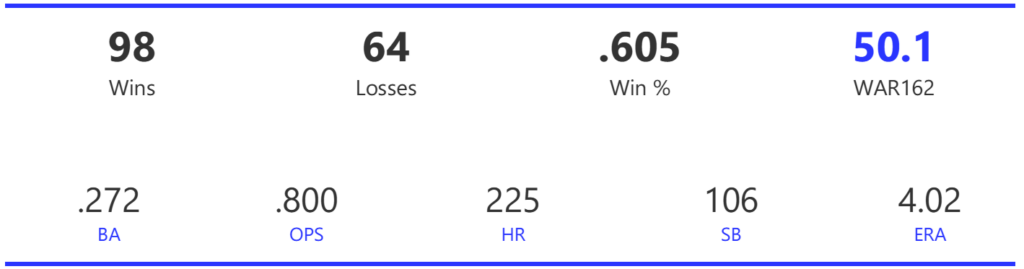
The Yankees boasted a potent offense, scoring 820 runs (10 behind the Tigers), and slugging 189 home runs to rank second in both categories. The New Yorkers ranked 3rd in OPS and 4th in OBP for the season. Pitching was again a strength for the Yankees, with the 2nd-best performance in both ERA and WHIP. The staff also boasted the top strikeout-to-walk rate and tossed the most shutouts in the AL.

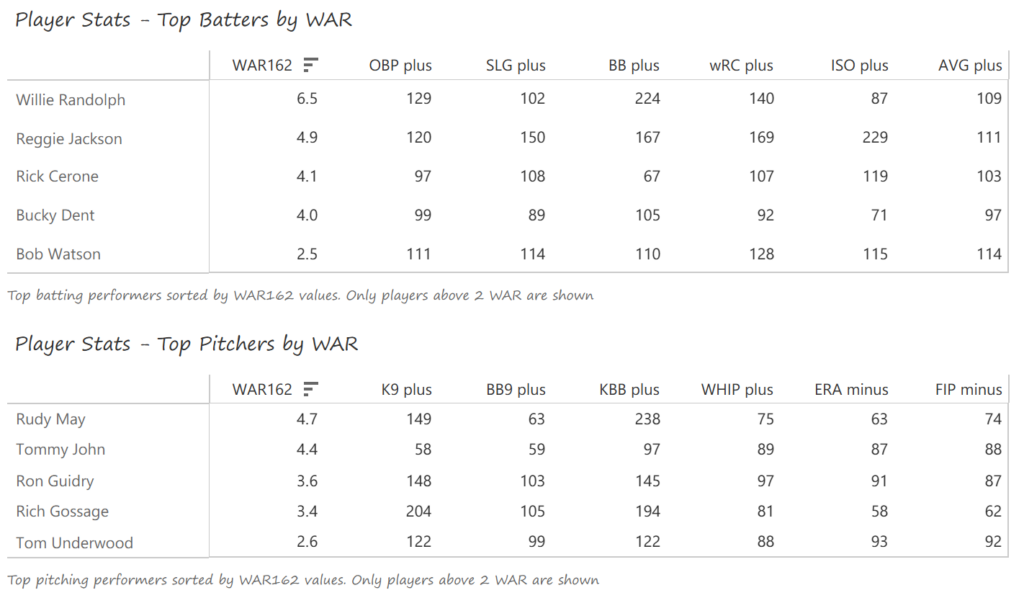
Willie Randolph posted one of his best seasons, drawing an AL-best 119 walks on his way to a .427 OBP. He also stole 30 bases and scored 99 runs. Reggie Jackson led the AL with 41 homers while batting .300 with 111 RBI, and catcher Rick Cerone had a fine season with 14 home runs and 85 RBI. Bucky Dent had a strong all-around performance at shortstop for the season. 35-year-old Rudy May had a fine season, splitting duties between starting and relieving, racking up 15 wins with an AL-best 2.46 ERA across 175 innings. Tommy John led the AL with 6 shutouts at age 37, winning 22 games, and Ron Guidry added 17 wins with another 3 shutouts. Closer Goose Gossage topped the AL with 33 saves and a 2.27 ERA.

The 1987 Tigers tracked down the Blue Jays in the final week of the season to claim the AL East crown. Unfortunately for Detroit, they were upset by the Twins in a five-game ALCS defeat.

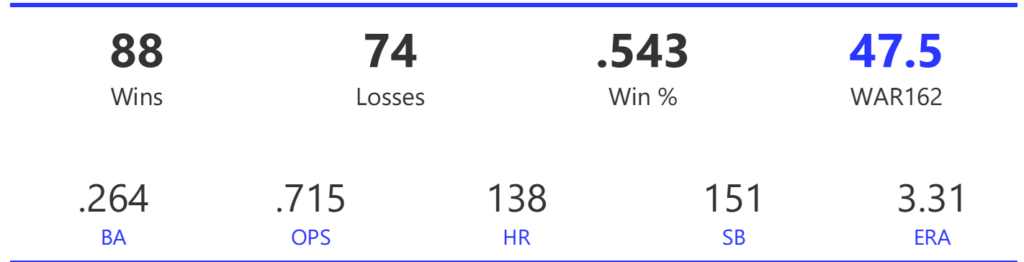
The Tigers had a strong offense in 1987, totaling 896 runs to top the league, and belting an AL-best 225 homers. The Detroiters ranked 3rd in BA, 2nd in OBP, and 1st in OPS, with an OPS of .800. Detroit’s pitching was above average, if not at the level of the offense. The Tigers staff ranked 3rd in ERA and 5th in WHIP in the high-scoring 1987 season.

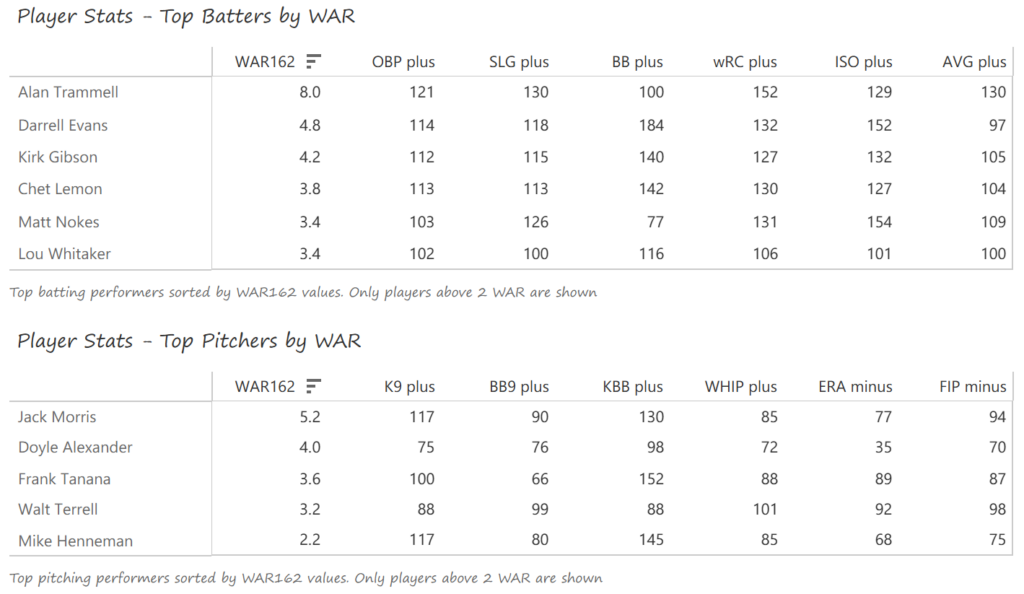
Shortstop Alan Trammell had the best season of his long career, batting .343 with 28 homers, 105 RBI, and 109 runs scored. 40-year-old Darrell Evans launched 34 home runs with 99 RBI and also drew 100 walks. Kirk Gibson stole 26 bases and hit 24 homers in just 128 games, and Chet Lemon added 20 home runs while playing a strong center field. Jack Morris led the mound crew with 18 wins, aided by Doyle Alexander, who put together a memorable stretch run with a 9-0 record and 1.53 ERA. Veteran Frank Tanana added another 15 wins, while Walt Terrell posted a 17-10 record.

Summary

That’s it for the second entry in our MLB Team Rankings for the 1980s decade! Stay tuned for the countdown from #10 to #6, arriving in a few days. As always, thanks for reading!
1980s MLB Team Rankings Countdown: 20 through 16

Welcome to the first countdown post in our series of MLB team rankings for the 1980s. As a reminder, the teams are ranked from #20 through #1 based on aggregate WAR162. For the 1980s (1980-1989), a total of 280 team-seasons were eligible, so the top 20 teams are a rather exclusive group – the top 7% for the decade. We’ll summarize each team, including portions of their team dashboard, and explain how they attained their ranking. So, without further ado, here are the teams ranked #20 through #16.

Here’s the interactive dashboard at Tableau Public: 1980s Top 20 MLB Teams Dashboard

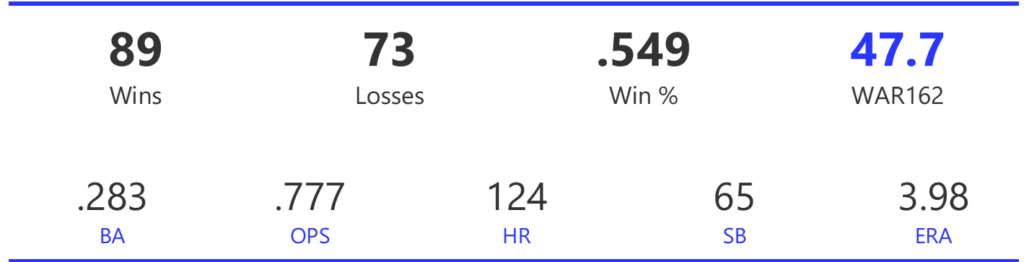
The 1982 Dodgers finished a single game behind the Braves in the NL West race, despite a Pythagorean projection five games better than Atlanta.

The Dodgers were a solid offensive club, ranking 3rd (out of 14) in runs, OPS, OBP, and BA. Their 138 homers trailed only the Braves. On the mound, the Dodgers topped the NL in ERA, WHIP, and shutouts.

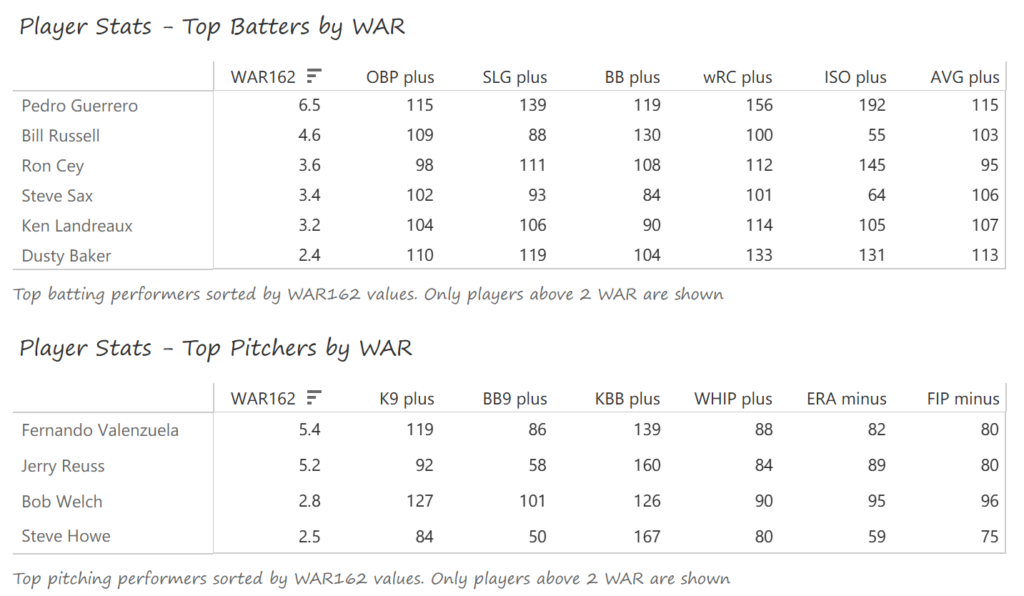
Pedro Guerrero was the offensive stalwart in 1982, batting. 304 with 32 home runs, 100 RBI, and 22 steals. Veteran shortstop Bill Russell had one of his best campaigns, batting .274 with solid defense. Ron Cey added 24 homers and 79 RBI. Steve Sax (.282 BA, 49 steals, Rookie of the Year) and Ken Landreaux (.284 BA, 31 steals) rounded out the top offensive producers for the Dodgers. 21-year-old lefty Fernando Valenzuela was the pitching story, posting a 19-13 record with a 2.87 ERA. Jerry Reuss added 18 wins for a formidable 1-2 punch.

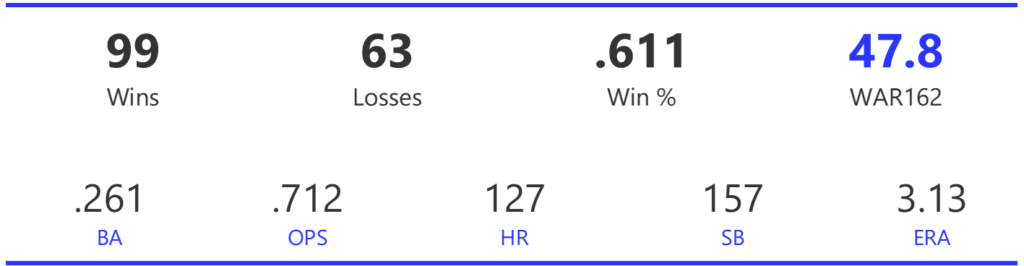
The Red Sox topped the AL East, winning the division by a single game over the Tigers in a hotly contested 4-team race. Boston’s season ended in a 4-game ALCS sweep by the Athletics in a one-sided ALCS.

The Red Sox got things done on the offensive side of the ball, leading the league in runs, doubles, BA, OBP, and OPS. The pitching staff was less impressive, ranking 7th in both ERA and WHIP, although they ranked first in strikeouts and strikeout-to-walk rate.

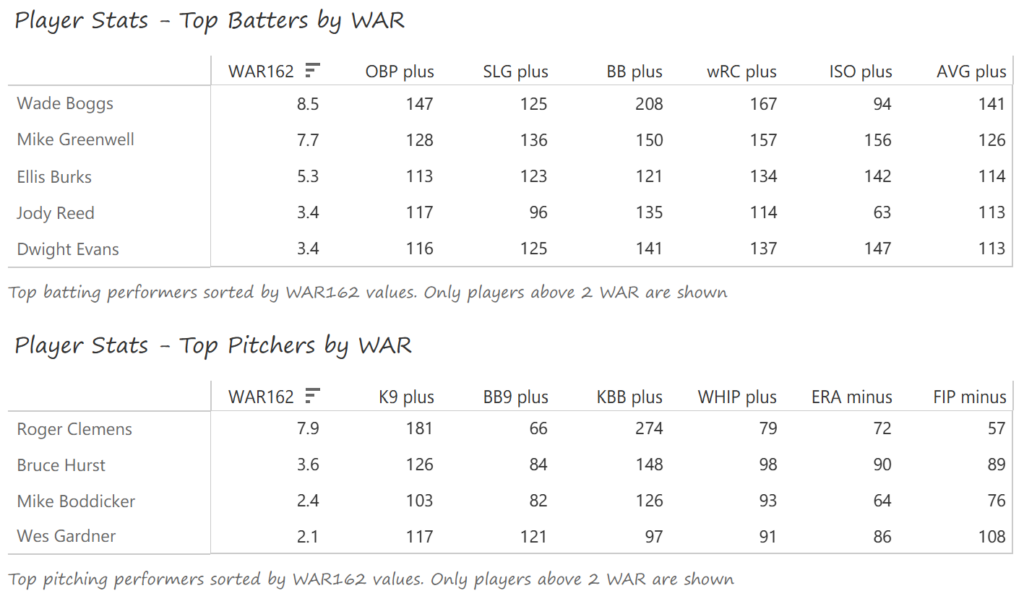
Wade Boggs had a stellar season for the Sox, leading the league in BA (.366), OBP (.476), walks, OPS, doubles, and runs (128). Mike Greenwell had a career season for Boston, batting .325 with 22 homers and 119 RBI. Ellis Burks was a strong third option, batting .294 with 25 stolen bases. On the mound, Roger Clemens led the AL in strikeouts, complete games, and shutouts while winning 18 games. Lefty Bruce Hurst was a capable second starter, posting 18 wins. After the top two, the Sox pitching fell sharply, making the team lean heavily on outscoring opponents.

The 1989 Athletics easily won the AL West by 7 games over the Royals. They then topped the Blue Jays in five games and the Giants in four to claim the World Series crown.

The A’s offense was limited in 1989, placing 4th in runs and OBP, and just 6th in BA and OPS. The team ranked 2nd with 157 stolen bases, helping the Athletics’ manufacturer runs. The pitching staff performed well, leading the AL in ERA and WHIP, and tying for first with 20 shutouts.

Rickey Henderson was the offensive sparkplug, batting .294 with 52 steals in just 85 games. Carney Lansford batted .336 with 37 stolen bases, and Dave Henderson added 15 homers and 80 RBI, along with strong defense. Mark McGwire launched 33 homers to help diversify the A’s offense. Mike Moore (19-11, 2.62 ERA) and Dave Stewart (21-9) combined for 40 wins at the top of the rotation, with Bob Welch adding 17 more wins.

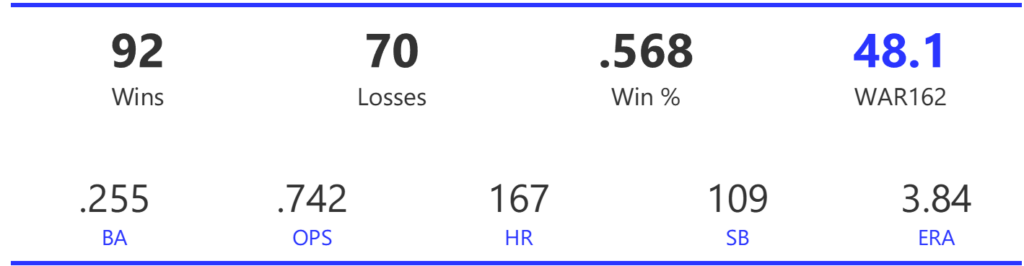
The 1982 Brewers beat out the Orioles by a single game for the AL East title, then defeated the Angels in a 5-game ALCS. Their good fortune ran out in the World Series, where they lost to the Cardinals in seven games.

The Brewers rode a powerful offense to the top of the AL, scoring 891 runs on the season. They also launched 216 home runs, 30 more than their closest rival. The club finished second in BA and first in OPS to rank as the league’s most dominant offense. Pitching was merely average (at best), as the Brewers ranked 6th in ERA and 10th in WHIP out of 14 AL teams.

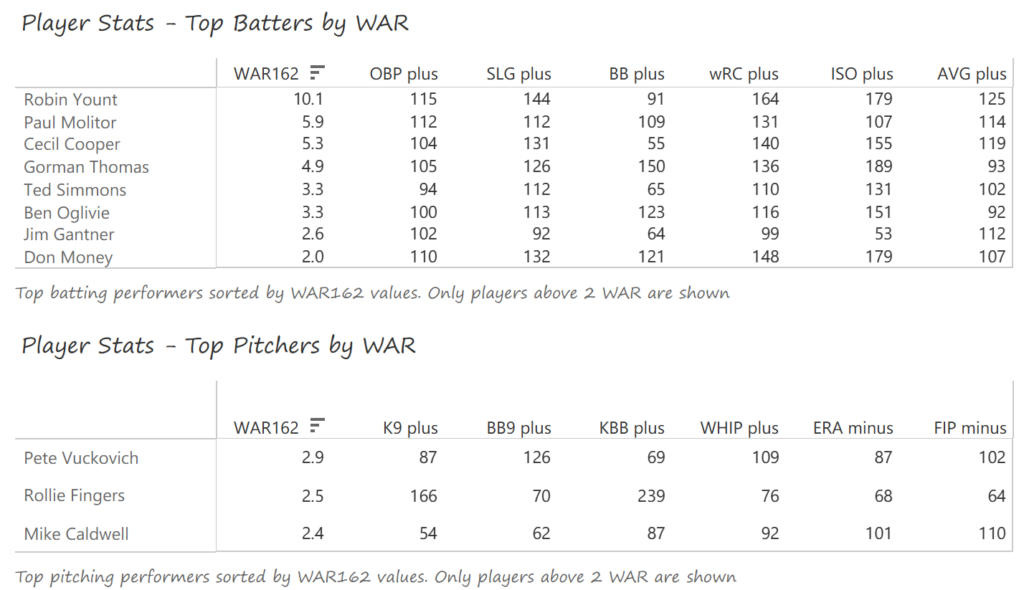
Robin Yount led the offense with an MVP season, totaling 46 doubles, a .957 OPS, and a .331 BA with 210 hits. He also claimed the Gold Glove Award at shortstop. Paul Molitor topped the league with 136 runs scored while posting a .302 BA, and Cecil Cooper slugged 32 homers with 121 RBI and a .313 BA. Gorman Thomas added additional pop with an AL-best 39 home runs. Pete Vuckovich won the AL Cy Young Award based on his 18-6 record, and Rollie Fingers saved 29 games.

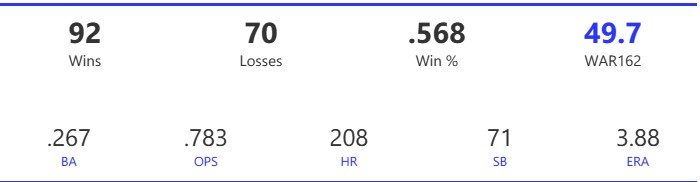
The 1986 Angels topped the AL West, beating the Rangers by five games before losing a dramatic five-game ALCS to the Red Sox.

The Angels had a rather ordinary offense in 1986, finishing 6th in runs, 7th in homers, and 9th in BA. They were adept at drawing walks, leading the AL with 671 walks, which boosted their OBP to third in the league. Pitching was a strength, as the Angels staff led the league in WHIP and ranked second in ERA behind the Royals.

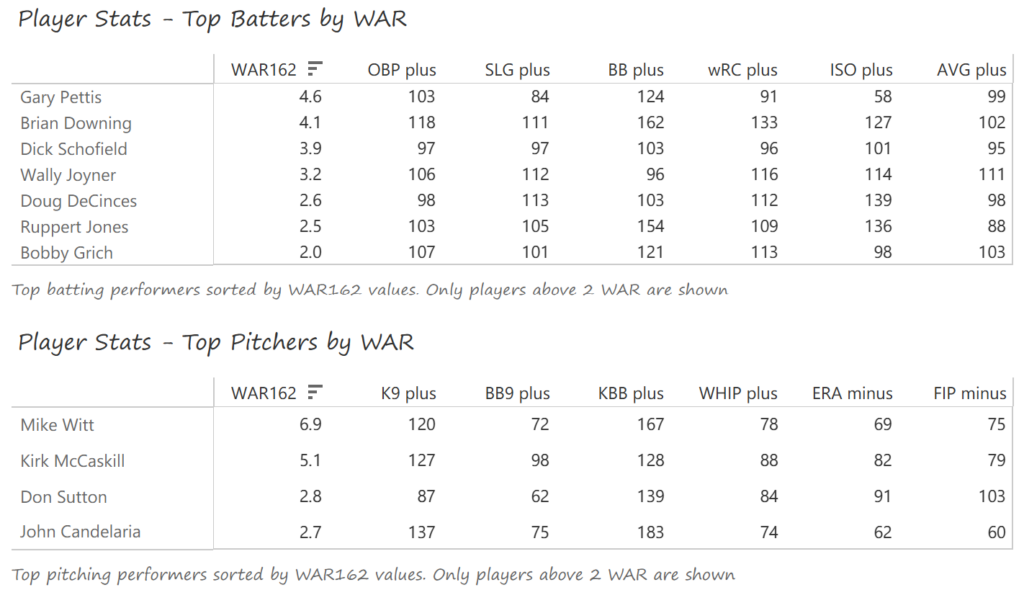
Garry Pettis stole 50 bases, scored 93 runs, and earned a Gold Glove for his defensive work in center field. Brian Downing posted a .389 OBP with 20 homers and 95 RBI, and Dick Schofield stole 23 bases and provided strong defense at shortstop. Mike Witt was the Angels’ ace on the mound, posting an 18-10 record with a 2.84 ERA, aided by Kirk McCaskill, who logged a 17-10 mark on the season.

Summary

That’s it for the first entry in our MLB Team Rankings for the 1980s decade! Stay tuned for the countdown from #15 to #11, arriving in a few days. As always, thanks for reading!
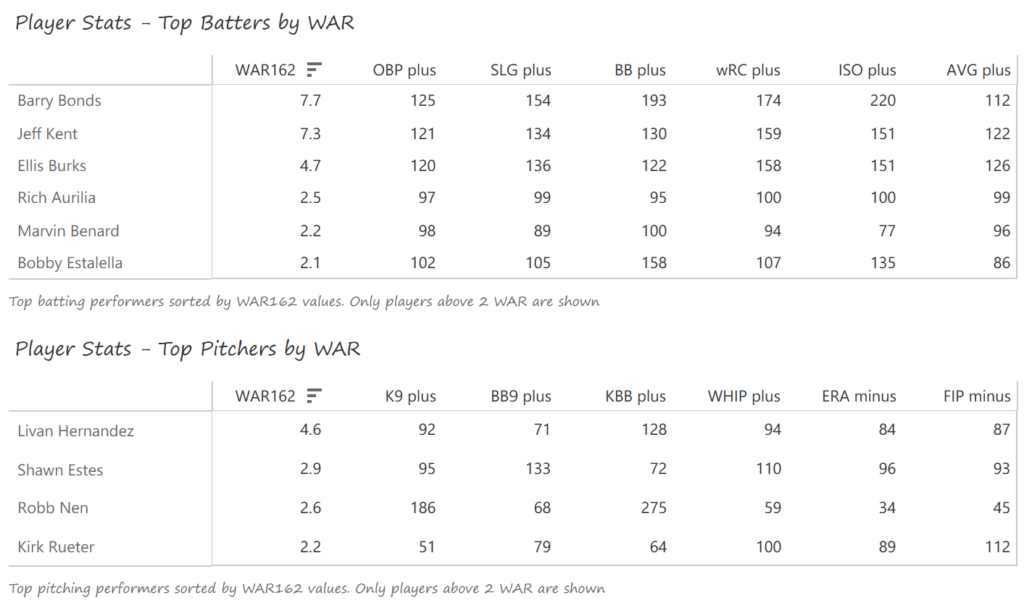
1970s MLB Team Rankings Countdown: 5 through 1

Welcome to the third countdown post in our series of MLB team rankings for the 1970s. Expansion continued in the 1970s, with four new teams added for the 1977 season, adding to the four that started play in the 1969 season. As a reminder, the teams are ranked from #20 through #1 based on aggregate WAR162. For the 1970s (1970-1979), a total of 252 team-seasons were eligible, so the top 20 teams are a rather exclusive group – the top 8% for the decade. We’ll summarize each team, including portions of their team dashboard, and explain how they attained their ranking. So, without further ado, here are the teams ranked #5 through #1.

Here’s the interactive dashboard at Tableau Public: 1970s Top 20 MLB Teams Dashboard

The Reds and Orioles own the top five spots in our 1970s rankings. The list starts with the 1975 Reds, who posted a gaudy 108 wins before sweeping the Pirates in the NLCS. They then defeated the Red Sox in a classic seven-game World Series.

The Reds had an impressive offense in 1975, scoring 840 runs, 105 more than their closest rival. Their 124 homers ranked third, and their 168 stolen bases topped the NL. The team ranked second in BA and first in OBP and OPS. The Reds’ pitching staff was less notable, but still quite effective, ranking third in ERA, fourth in WHIP, and second in walks issued.

Joe Morgan had a sensational season en route to NL MVP honors. Morgan batted .327, and led the NL with 132 walks, a .466 OBP, and a .974 OPS. He also stole 67 bases, scored 107 runs, and earned a Gold Glove at second base. Johnny Bench assembled a big season as well, swatting 28 homers with 110 RBI and a Gold Glove. George Foster added 23 homers and a .300 BA, while Pete Rose batted .317 with NL-bests in doubles (47) and runs (112). Dave Concepcion (.274 BA, 33 steals, Gold Glove) and Cesar Geronimo (Gold Glove) were also major contributors for the Big Red Machine. Gary Nolan and Don Gullett (2.42 ERA) each won 15 games for a balanced Reds pitching staff.

The Reds were back in 1976, once again claiming the NL West title and the NL pennant, before sweeping the Yankees in the World Series.

The Reds’ offense was again fearsome, scoring an NL-best 857 runs, 87 more than the Phillies. Their 271 doubles, 63 triples, and 141 homers all topped the NL; they also swept the BA, OBP, SLG, and OPS rankings. Once again, their pitching lacked big-name stars, but was up to the task. The Reds’ staff ranked fifth (out of 12) in both ERA and WHIP.

Joe Morgan repeated as the NL MVP, batting .320 and leading the league in OBP, SLG, and OPS. He also stole 60 bases, scored 113 runs, and had 11 RBI, plus another Gold Glove Award. Pete Rose had a fine age-35 season, batting .323 and leading the NL in runs, hits, and doubles. George Foster belted 29 homers, had a .306 BA, and topped the NL with 121 RBI. Johnny Bench’s offensive output dipped from prior seasons, but he still managed 74 RBI, a .348 OBP, and another Gold Glove Award. Dave Concepcion (.281 BA, Gold Glove) and Ken Griffey (.336 BA, 34 steals) added offensive and defensive efficiency to the team. Pat Zachry posted a 14-7 record with a 2.74 ERA to capture NL Rookie of the Year honors, while the rest of the pitching staff was solid rather than spectacular.

The 1971 Orioles cruised to the AL East title, leaving the Tigers 12 games behind. They then swept the Athletics in the ALCS before falling to the Pirates in a seven-game World Series.

The Orioles topped the AL in BA, OBP, and OPS while scoring a league-leading 742 runs (despite playing four fewer games). They ranked fourth in homers, but only the Tigers hit more per game. Pitching was an Orioles strength in the 1969-73 era, and 1971 was no exception. The Birds led the AL in ERA and placed second in WHIP.

Brooks Robinson (18 homers, 94 RBI, Gold Glove Award) and Merv Rettenmund (.322 BA, 18 home runs in just 385 plate appearances) led the way for the Orioles. Don Buford had another fine season with a .406 OBP and 99 runs scored, and Mark Belanger played his usual exceptional defense at shortstop. Davey Johnson batted .281 and earned a Gold Glove Award at second base, and Boog Powell slugged 35 homers with 114 RBI to claim AL MVP honors. On the mound, the Orioles had four 20-game winners, led by Jim Palmer (20-9, 2.68 ERA), Pat Dobson (20-8, 2.90 ERA), and Dave McNally (21-5, 2.89 ERA). Veteran lefty Mike Cuellar posted a 20-9 mark to complete the dominant starting rotation.

The 1970 Orioles easily won the AL East, finishing 15 games ahead of the Yankees. They then dominated the postseason, sweeping the Twins and the ALCS and beating the Reds in a five-game World Series.

The Orioles featured a potent offense that ranked first in the AL in runs, third in BA, first in OBP, and second in OPS. Their pitching staff led the AL in ERA, WHIP, and strikeout-to-walk rate. This team could win either with offense or by shutting down the opposition.

Paul Blair and Boog Powell led the Orioles in positional WAR162 in 1971, albeit via very different means. Blair batted .262 while playing exceptional Gold Glove defense, and Powell belted 22 homers with 92 RBI and drew 82 walks. Merv Rettenmund batted .318 with 15 steals as a fourth outfielder, while veteran star Frank Robinson had 28 homers and 99 RBI in his age-35 season. Don Buford (.413 OBP, AL-best 99 runs), Brooks Robinson (20 homers, 92 RBI, Gold Glove), and Davey Johnson (.282 BA, Gold Glove) all provided significant offensive and defensive support for the Orioles.

The 1973 Orioles claimed their 4th AL East title in 5 years, but were upended by the Athletics in a 5-game ALCS. The Orioles Pythagorean win projection was 102, a full five games better than their actual result.

The Orioles again had a diverse offense, albeit one with more speed and less power than in recent years. The O’s 146 steals easily led the AL, while the team ranked third in BA and OPS, and first in OBP. Their 754 runs were just 4 behind the A’s league-leading 758. Pitching remained a strong suit for Baltimore, as its staff topped the AL in ERA and WHIP.

Second baseman Bobby Grich had a career WAR year in 1973, scoring 82 runs, drawing 107 walks, and playing Gold Glove defense. Paul Blair claimed another Gold Glove while batting .280 with 18 steals, and Merv Rettenmund had a .378 OBP and 59 runs scored in 390 plate appearances. Al Bumbry was the AL Rookie of the Year, batting .337 with 23 steals and an AL-best 11 triples. Jim Palmer had another great season on the mound, posting a 22-9 record with a 2.40 ERA in winning the Cy Young Award. Dave McNally won 17 games in support of Palmer.

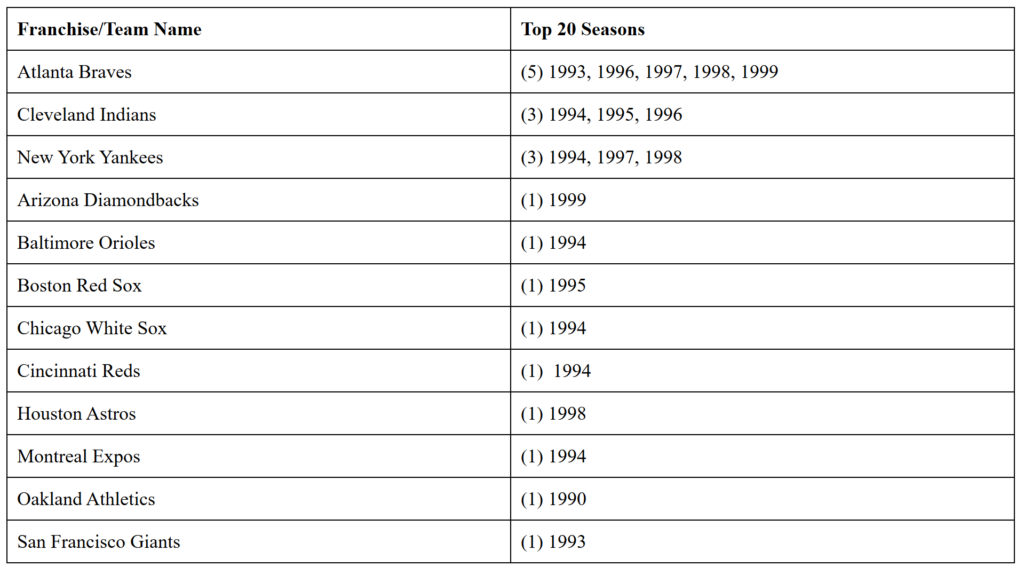
That’s it for the final entry in our MLB Team Rankings for the 1970s decade! Here’s a summary of the most dominant franchises of the 1970s:

1970s MLB Team Rankings Countdown: 10 through 6

Welcome to the third countdown post in our series of MLB team rankings for the 1970s. Expansion continued in the 1970s, with four new teams added for the 1977 season, adding to the four that started play in the 1969 season. As a reminder, the teams are ranked from #20 through #1 based on aggregate WAR162. For the 1970s (1970-1979), a total of 252 team-seasons were eligible, so the top 20 teams are a rather exclusive group – the top 8% for the decade. We’ll summarize each team, including portions of their team dashboard, and explain how they attained their ranking. So, without further ado, here are the teams ranked #10 through #6.

Here’s the interactive dashboard at Tableau Public: 1970s Top 20 MLB Teams Dashboard

The 1972 Pirates ran away with the NL East title, finishing a comfortable 11 games ahead of the Cubs. They then fell to the Reds in a 5-game NLCS series.

The Pirates had a solid offense, finishing third in runs while leading the NL in doubles and triples. Their .274 team BA easily led the league, and they ranked first in OPS by a narrow margin. The Pirates’ pitching staff had a strong season, finishing second in ERA, WHIP, and saves.

Richie Hebner had a fine season, batting .300 with 19 homers and 72 RBI from his third base position. Roberto Clemente batted .312 in 102 games, and Willie Stargell launched 33 homers with 112 RBI and a .293 BA. Manny Sanguillen (.298 BA, 71 RBI) and Dave Cash (.282 BA) provided additional support for a balanced offense. The pitching was led by Steve Blass (19-8, 2.42 ERA) and Bob Moose (13 wins, 2.91 ERA)

The 1977 Yankees prevailed in a tight three-team AL race, finishing 2.5 games ahead of both the Orioles and Red Sox. They then went on to defeat the Royals in the ALCS and the Dodgers in a six-game World Series.

The Yankees had a very respectable offense, finishing fourth in runs, third in BA and OBP, and second in OPS. The pitching staff was similarly strong, ranking third in ERA, first in shutouts, and third in WHIP.

Graig Nettles led a deep Yankees offense, mashing 37 home runs with 107 RBI while earning a Gold Glove at third base. Speedy Mickey Rivers stole 22 bases and batted .326, while Reggie Jackson whacked 32 home runs with 110 RBI and 93 runs scored. Thurman Munson posted a .308 BA with 18 homers and 100 RBI, and Willie Randolph batted .274 and played strong defense in his age-22 season. Ron Guidry was the Yankees’ ace, posting a 16-7 record with a 2.82 ERA. Ed Figueroa (16-11) and Sparky Lyle (13-5, 2.17 ERA, 26 saves, and the Cy Young Award) provided ample support from the mound.

The Orioles cruised to an 8-game margin over the Brewers to claim the AL East. They went on to defeat the Angels in the ALCS before bowing to the Pirates in a seven-game World Series.

The Baltimoreans were not an impressive offensive team in 1979, ranking just 8th (out of 14 teams) in runs scored. They did flash some power, ranking third in home runs, and placed 5th in OPS. Pitching carried the O’s, as their staff easily topped the AL in ERA and WHIP.

Ken Singleton led a balanced offensive attack with a .295 BA, 35 home runs, and 111 RBI. Eddie Murray, a switch-hitter like Singleton, also batted .295 and added 25 homers and 99 RBI in his age-22 season. Gary Roenicke added another 25 home runs in just 133 games. Lefty Mike Flanagan (23-9, 5 shutouts, Cy Young winner) and righty Dennis Martinez (15 wins, AL-best 18 CG) led the pitching staff, supported by 13-game winner Scott McGregor, who led the league in WHIP.

The 1976 Yankees cruised to the AL East title by 10.5 games over the Orioles before defeating the Royals in a five-game ALCS. Their season came to an abrupt end in the World Series, as the Reds swept them in four games.

The Yankees had an offense that ranked in the top three in many categories – 2nd in runs, 3rd in homers, 3rd in stolen bases, 3rd in BA, 2nd in OBP, and 3rd in OPS. Their pitching was also quite effective, ranking 1st in both ERA and WHIP for the season.

Third baseman Graig Nettles had a career year, belting 32 homers with 93 RBI and exceptional defense. Mickey Rivers stole 43 bases to go with a .312 BA, and Roy White led the AL with 104 runs scored while stealing 31 bases. Catcher Thurman Munson claimed the AL MVP with a .302 BA, 17 homers, and 105 RBI. 21-year-old Willie Randolph gave the Yankees another threat on the basepaths, piling up 31 steals. The pitching staff was balanced, without any standouts. Ed Figueroa posted a 19-10 mark with a 3.02 ERA, and Catfish Hunter added 17 wins.

The 1974 Dodgers defeated the Reds by 4 games in a competitive NL West race before defeating the Pirates to claim the NL pennant. The World Series was a different story, with the Athletics defeating the Dodgers in five games.

The Dodgers had a potent offense that led the NL in runs, home runs, and OPS, while ranking second in BA and OBP. Pitching was also a relative strength, with 2nd-place rankings in WHIP, strikeout-to-walk rate, and strikeouts. The team also featured a strong pitching staff that led the NL in ERA, WHIP, walks, strikeouts, and strikeout-to-walk rate.

Veteran Jim Wynn had a terrific season, batting .271 with a .387 OBP (108 walks), 32 homers, 108 RBI, and 104 runs scored. Ron Cey (18 homers, 97 RBI), Steve Garvey (.312 BA, 21 homers, 11 RBI, NL MVP), and Davey Lopes (59 steals, 95 runs) led a deep supporting cast. Andy Messersmith posted a 20-6 mark with a 2.59 ERA to lead the Dodgers pitchers. Mike Marshall won the Cy Young Award with 15 wins, 21 saves, and a 2.42 ERA in an incredible 106 games. Don Sutton went 19-9 with five shutouts as an effective second starter in the rotation.

That’s it for the third entry in our MLB Team Rankings for the 1970s decade! Stay tuned for the countdown from #5 to #1, arriving in a few days. As always, thanks for reading!
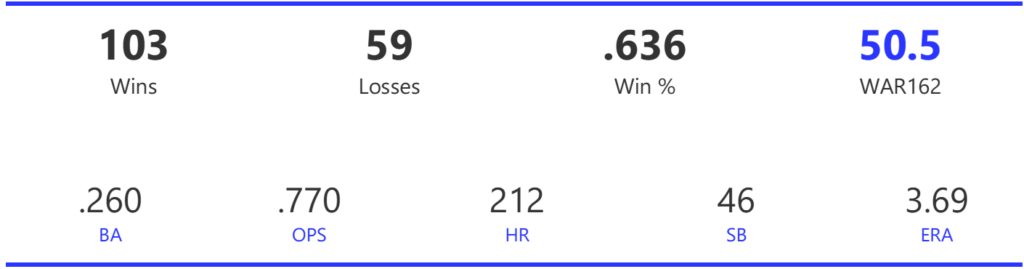
1970s MLB Team Rankings Countdown: 15 through 11

Welcome to the second countdown post in our series of MLB team rankings for the 1970s. Expansion continued in the 1970s, with four new teams added for the 1977 season, adding to the four that started play in the 1969 season. As a reminder, the teams are ranked from #20 through #1 based on aggregate WAR162. For the 1970s (1970-1979), a total of 252 team-seasons were eligible, so the top 20 teams are a rather exclusive group – the top 8% for the decade. We’ll summarize each team, including portions of their team dashboard, and explain how they attained their ranking. So, without further ado, here are the teams ranked #15 through #11.

Here’s the interactive dashboard at Tableau Public: 1970s Top 20 MLB Teams Dashboard

The 1975 Orioles finished second in the AL East, 5 games behind the Red Sox. The Orioles may have been better than their record, as their Pythagorean win projection was 95, 5 games above their actual result.

The Orioles had a mediocre offense, even given Memorial Stadium’s pitching-friendly confines in 1975. The Birds ranked below league average in most key offensive categories, relying on pitching and defense to carry the team. Their pitching staff led the AL in ERA, shutouts, and WHIP, while their defense featured four Gold Glove winners.

Bobby Grich had perhaps the best season of his long career, with a .389 OBP (with 107 walks), 81 runs scored, and Gold Glove defense. Ken Singleton batted .300 with a .415 OBP (with 115 walks) and 88 runs scored, and Mark Belanger coupled Gold Glove defense with 16 steals. On the mound, Cy Young winner Jim Palmer posted a 23-11 record, 2.09 ERA, and 10 shutouts, all AL-best numbers. His primary support came from Mike Torrez (20-9 record).

The Royals experienced quick success by expansion standards, with the 1977 team rating as their best team of the 1970s. Kansas City’s 102 wins were enough to win the AL West by 8 games. Unfortunately, their season ended with a 5-game loss to the Yankees in the ALCS.

The Royals’ 822 runs ranked 5th in the 14-team AL, and they led the league in both doubles and triples. Their offense also ranked 5th in BA and 4th in OPS. The pitching staff produced some excellent results, ranking first in ERA, second in WHIP, and third in strikeout-to-walk rate.

George Brett was the offensive leader at age 24, with a .312 BA, 22 homers, 88 RBI, and 13 triples. Al Cowens also batted .312, and launched 23 home runs with 112 RBI. Hal McRae batted .298 with an AL-best 54 doubles. Dennis Leonard had an outstanding season on the mound, with a 20-12 record and 5 shutouts. He was backed up by Paul Splittorff (16-6) and Jim Colborn (18-14).

The 1972 Athletics became the first of three consecutive AL pennant winners and World Series champs from Oakland. The A’s outlasted the White Sox by 5.5 games in a strike-shortened season, then beat the Tigers in a 5-game ALCS win, and the Reds in a 7-game World Series triumph.

The Oakland club didn’t overwhelm teams offensively, ranking second in runs, first in home runs, sixth in BA and OPS, and fourth in OPS, playing home games in the pitcher-friendly Oakland Coliseum. The Athletics’ pitching staff was quite effective, ranking second in ERA, WHIP, and strikeout-to-walk rate, while topping the league with 23 shutouts.

Joe Rudi led the way for the A’s with a .305 BA, 19 home runs, 75 RBI, and 94 runs scored. He was followed closely by a cluster of teammates – Reggie Jackson (25 homers, 75 RBI), Sal Bando (78 walks, 77 RBI), Mike Epstein (26 homers, 70 RBI), and Bert Campaneris (AL-best 52 steals). Catfish Hunter led the pitching staff with a 21-7 record and 2.04 ERA, followed by left-hander Ken Holtzman (19-11, 2.51 ERA).

The 1977 Dodgers returned to the top of the NL West after two years of domination by the Reds, topping Cincinnati by 10 games. They went on to beat the Phillies in a 4-game NLCS before falling in a 6-game World Series to the Yankees.

The Dodgers had a capable offense in 1977, finishing 3rd in runs, 1st in homers, 5th in BA, and 3rd in both OBP and OPS. Pitching is what separated the team from the competition, as the Dodgers led the NL in ERA, WHIP, fewest walks, and best strikeout-to-walk rate.

Reggie Smith had a fine season for Los Angeles, with a .307 BA, NL-best .427 OBP, 32 homers, 87 RBI, and 104 runs scored. Davey Lopes stole 47 bases and batted .283, Ron Cey mashed 30 home runs with 110 RBI, and Steve Garvey batted .297 with 33 homers, 115 RBI, and a Gold Glove Award at first base. Dusty Baker rounded out the Dodgers diversified offense with a .291 BA and 30 homers.

The 1976 Phillies rose to the top of the NL East after decades of frequent mediocrity. 1976 was the Phillies’ first time atop the standings since the 1950 Whiz Kids pennant winners. Unfortunately, they couldn’t get past a powerful Reds team, getting swept in a 3-game NLCS.

The Phillies had a potent offense that trailed only the Reds in most major categories – runs, home runs, BA, OBP, OPS, and doubles. Pitching was also a relative strength, with 2nd-place rankings in WHIP, strikeout-to-walk rate, and strikeouts. The Phillies’ staff issued the fewest walks in the NL, and also ranked 3rd in ERA.

Third Baseman Mike Schmidt powered the Phillies at the plate and in the field, belting 38 home runs with 107 RBI, 112 runs scored, 100 walks, and a Gold Glove Award. Center fielder Garry Maddox was another Gold Glove recipient, and batted .330 with 37 doubles and 29 stolen bases. Jay Johnstone batted .318 with 38 doubles to round out the Phillies’ top WAR producers. Veteran lefty Steve Carlton had a typically fine season, posting a 20-7 record. Carlton was supported by another pair of veterans in Jim Lonborg (age 34, 18-10 record) and Jim Kaat (age 37, 12 wins, Gold Glove award).

That’s it for the second entry in our MLB Team Rankings for the 1970s decade! Stay tuned for the countdown from #10 to #6, arriving in a few days. As always, thanks for reading!