Month: June 2026

Astros Radial Axis Network

Our next entry in the MLB Radial Axis Series features the Astros, who started out as the Colt .45s in 1962. We’re going to walk through some highlights from the network, and then provide the link so you can explore it in detail. For some background on how the network graphs work, select this link – Anatomy of MLB radial axis graphs.

The Astros Network

The Astros’ radial axis network reflects the connections between all players who spent time with the franchise between the 1962 and 2025 seasons. The 1962 season is found at the bottom center of the graph. Subsequent seasons are arranged clockwise, eventually returning to the bottom center with the 2025 season. Player nodes are sized based on the number of seasons spent with the team, and the gray lines between nodes reflect connections to other players. The interactive version of the network is here – Astros Network.

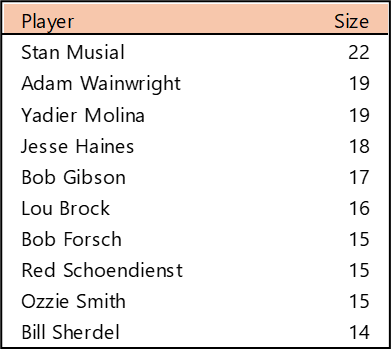
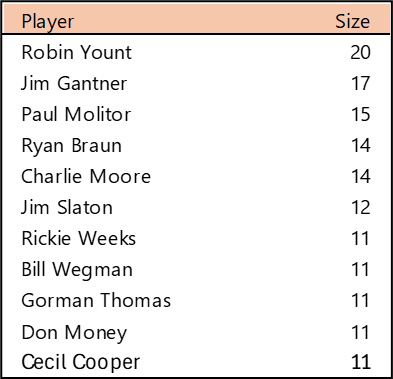
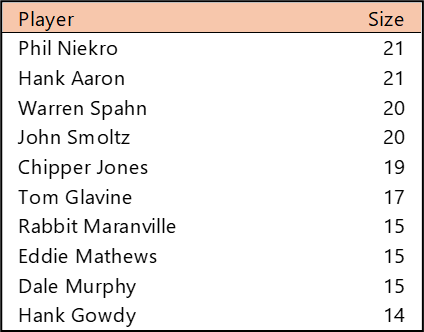
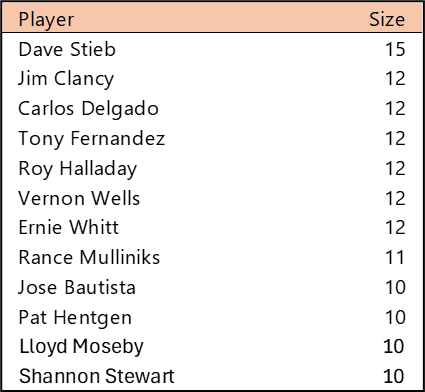
Top 10 by Seasons Played (Size)

Craig Biggio sits alone at the top of the Astros seasons played list with 20, trailed by Jose Altuve (now in season 16) and Jeff Bagwell. Other long-tenured Angels legends include Terry Puhl, Bob Watson, Jose Cruz, Larry Dierker, and Denny Walling.

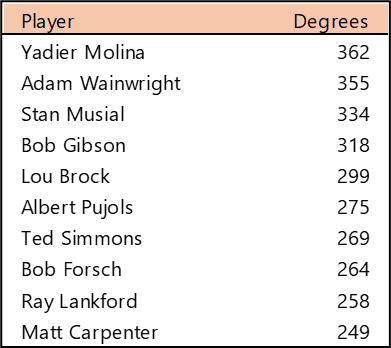
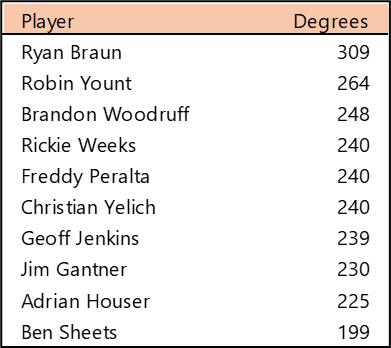
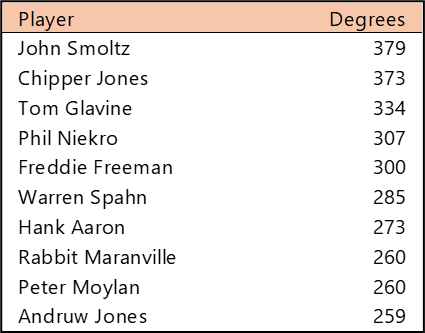
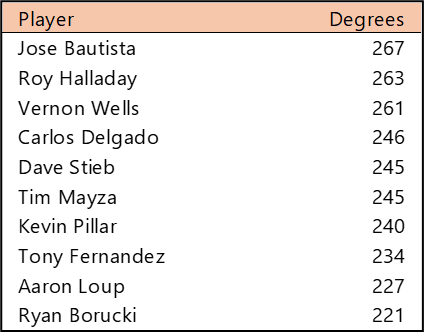
Top 10 by Degree (the number of connections)

Craig Biggio again tops the degrees ranking, having been on an Astros roster with 338 different teammates. Jose Altuve is likely to claim the top spot eventually, while Jeff Bagwell is a distant third. Jason Castro had two stints (2010-16, 2021-22) with Houston, leading to a large number of different teammates.

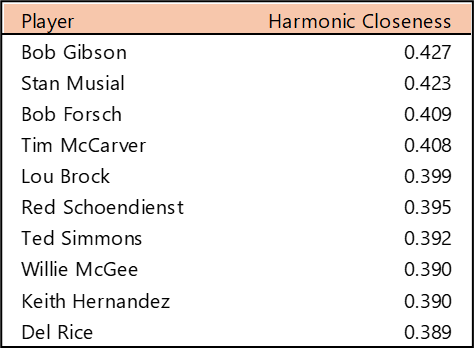
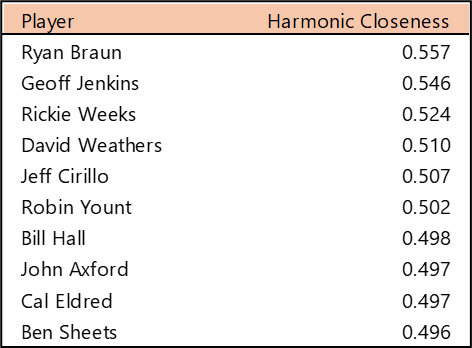
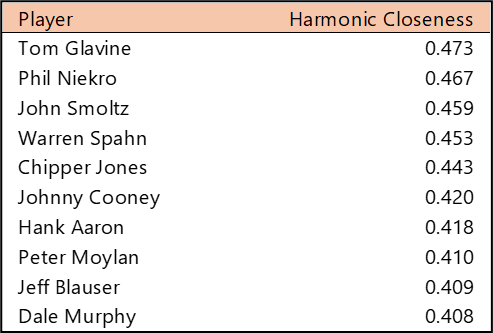
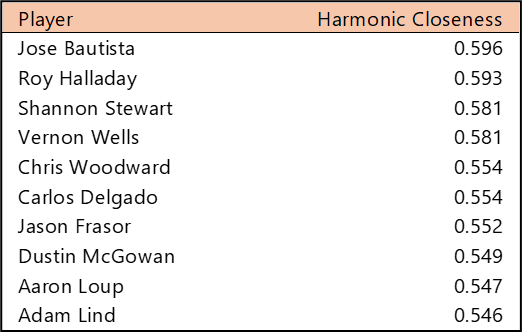
Top 10 by Harmonic Closeness Centrality

With Harmonic Closeness Centrality, we’re measuring how strongly an individual player is related to all players in the network. The Astros famed Killer B’s dominate this measure. Biggio, Bagwell, and Berkman all rank at the top of the most well-connected players in Astros history. Jose Altuve and Wandy Rodriguez are also very favorably positioned within the network.

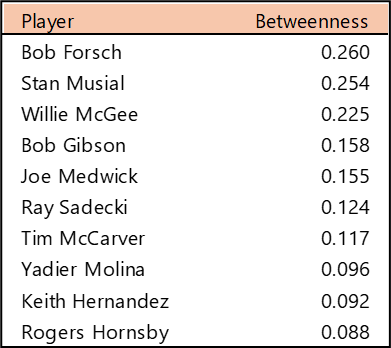
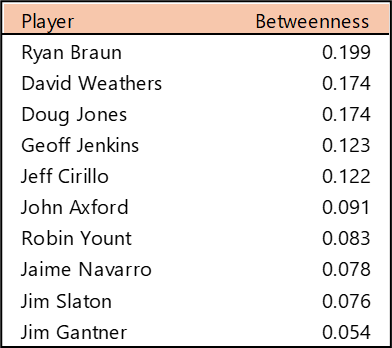
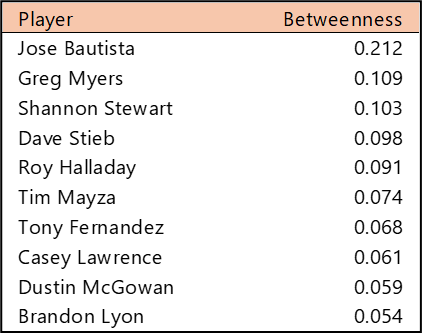
Top 10 by Betweenness Centrality

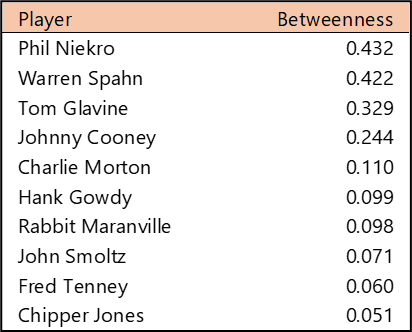
Betweenness Centrality measures which players are most central to the network. Often, this results in players who played in the middle period of a franchise’s history, or players with multiple stints with one franchise. Craig Biggio is unsurprisingly at the top of this measure, given his 20 seasons with the team. If we wanted to connect to every Astro in the network, our best path is through Biggio, followed by Greg Gross. Gross played just five seasons with the Astros, four to start his career and then one for his final MLB season. This makes him occupy a unique position within the Astros network, connecting to teammates from 1973-76 and again in 1989.

Summary

That’s it for our overview of the Astros network. Be sure to visit the interactive graph to discover additional insights about the Astros players over the last 64 seasons. We’ll be back shortly with our next franchise entry. Thanks for reading!
1980s MLB Team Rankings Countdown: 20 through 16

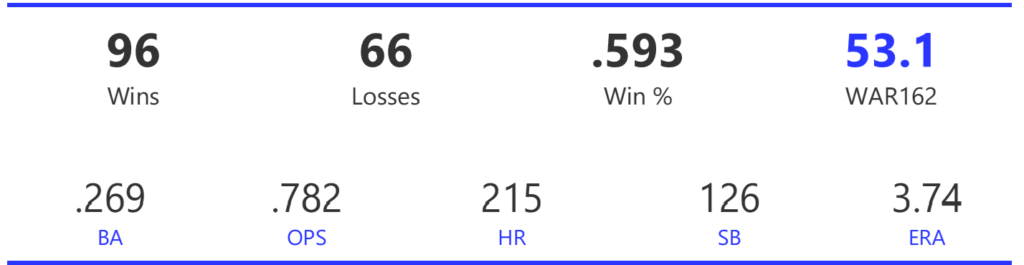
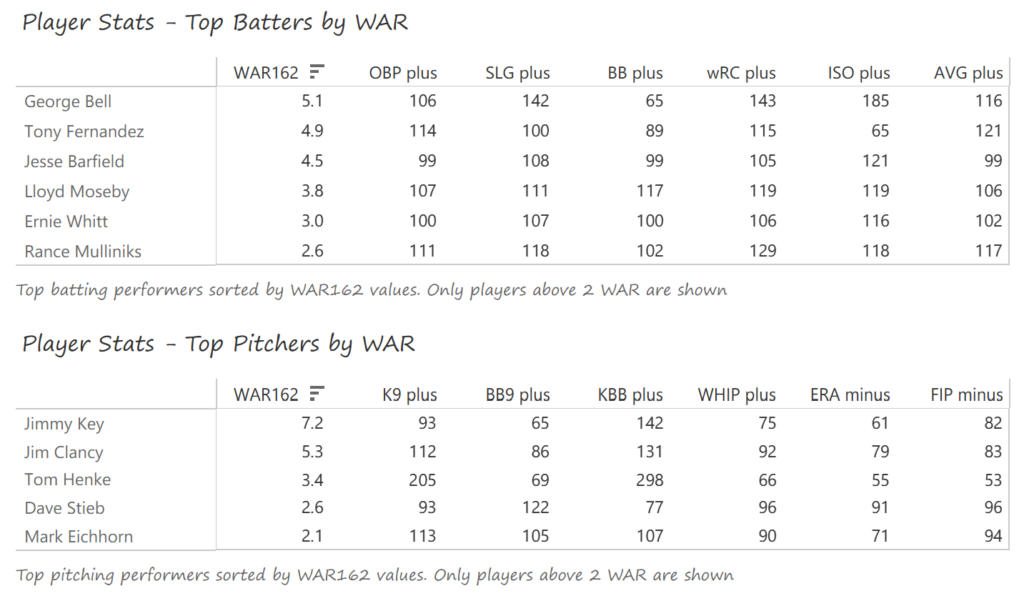
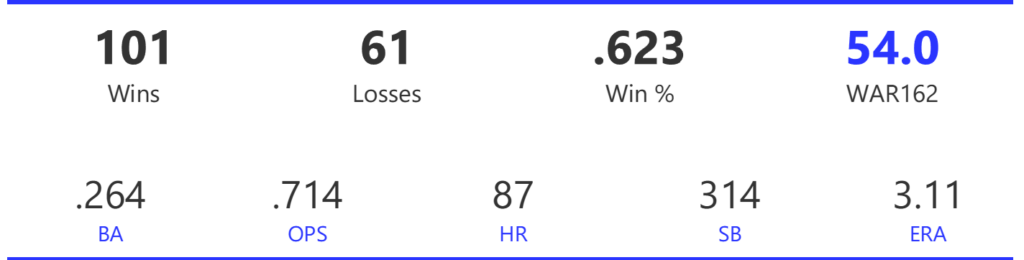
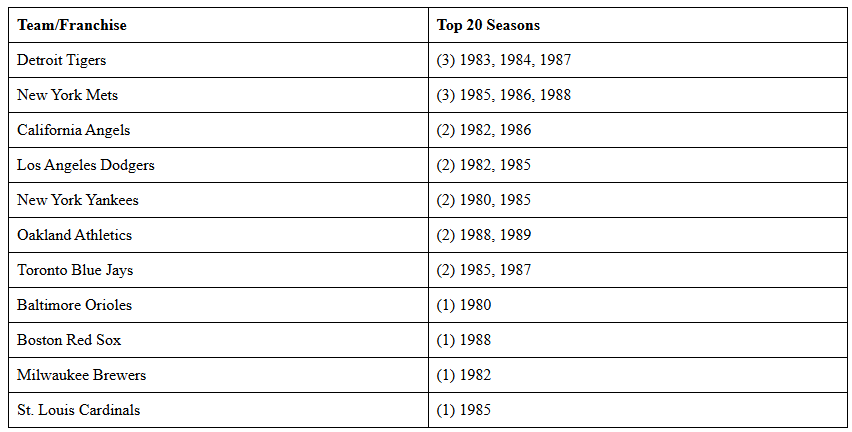
Welcome to the first countdown post in our series of MLB team rankings for the 1980s. As a reminder, the teams are ranked from #20 through #1 based on aggregate WAR162. For the 1980s (1980-1989), a total of 280 team-seasons were eligible, so the top 20 teams are a rather exclusive group – the top 7% for the decade. We’ll summarize each team, including portions of their team dashboard, and explain how they attained their ranking. So, without further ado, here are the teams ranked #20 through #16.

Here’s the interactive dashboard at Tableau Public: 1980s Top 20 MLB Teams Dashboard

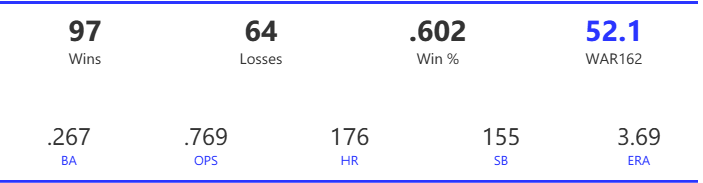
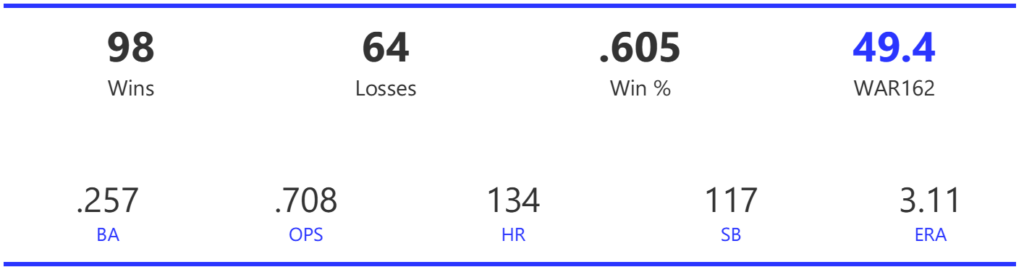
The 1982 Dodgers finished a single game behind the Braves in the NL West race, despite a Pythagorean projection five games better than Atlanta.

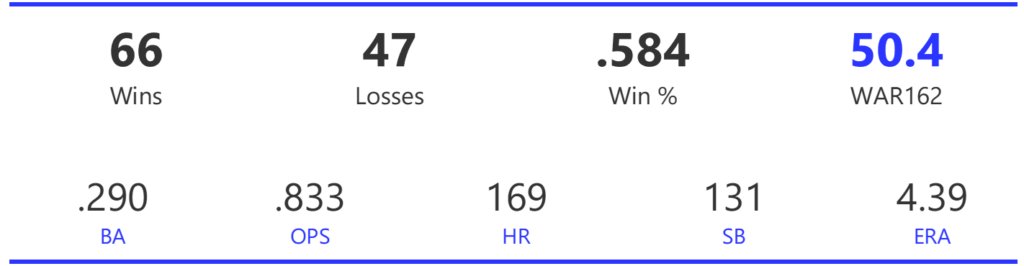
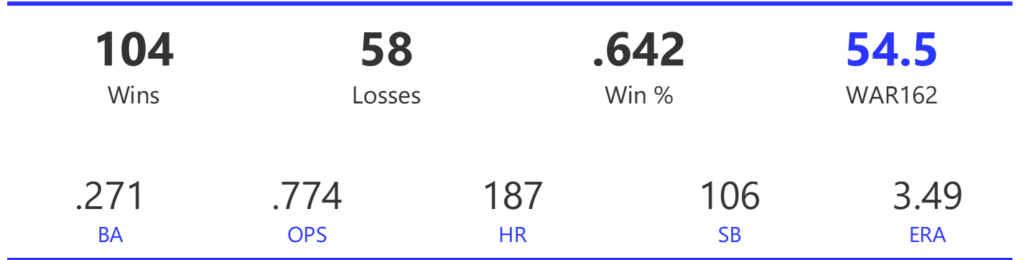
The Dodgers were a solid offensive club, ranking 3rd (out of 14) in runs, OPS, OBP, and BA. Their 138 homers trailed only the Braves. On the mound, the Dodgers topped the NL in ERA, WHIP, and shutouts.

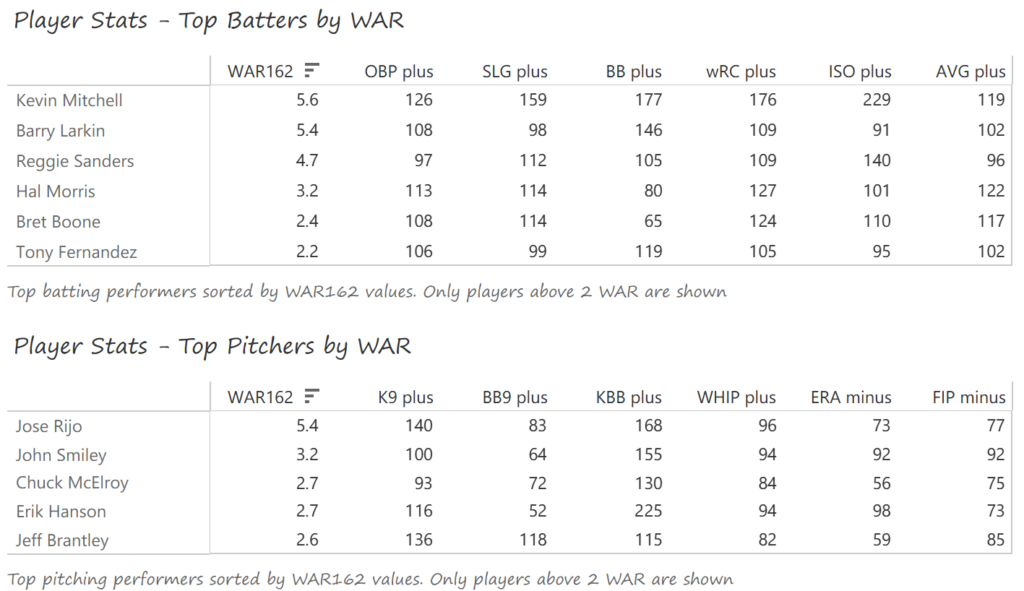
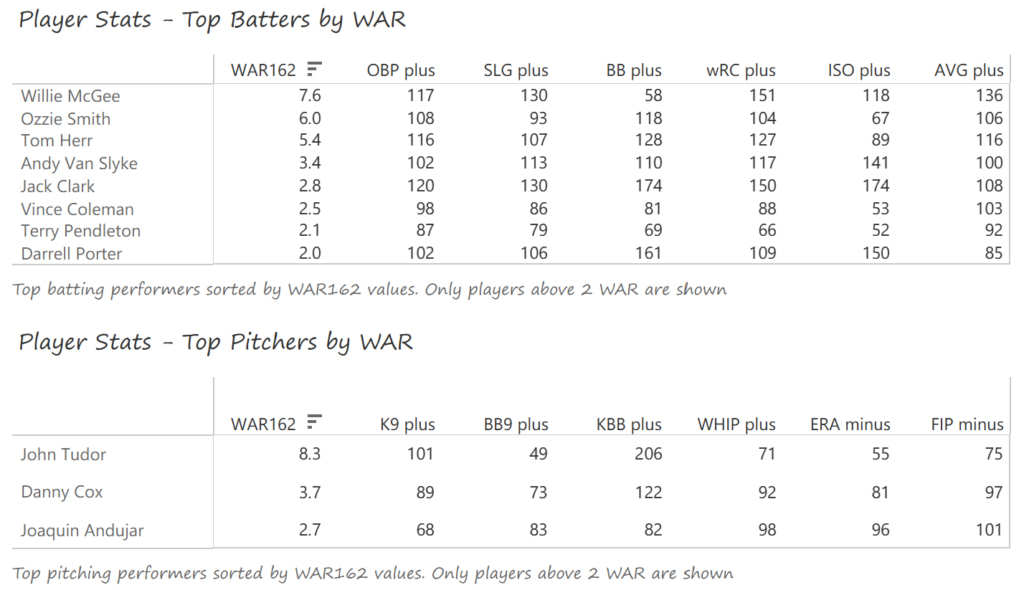
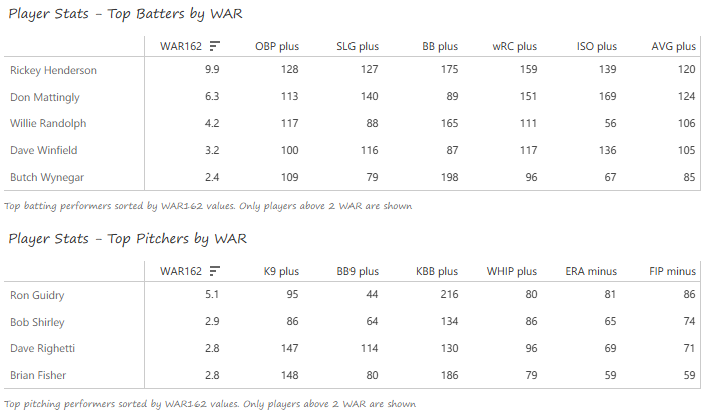
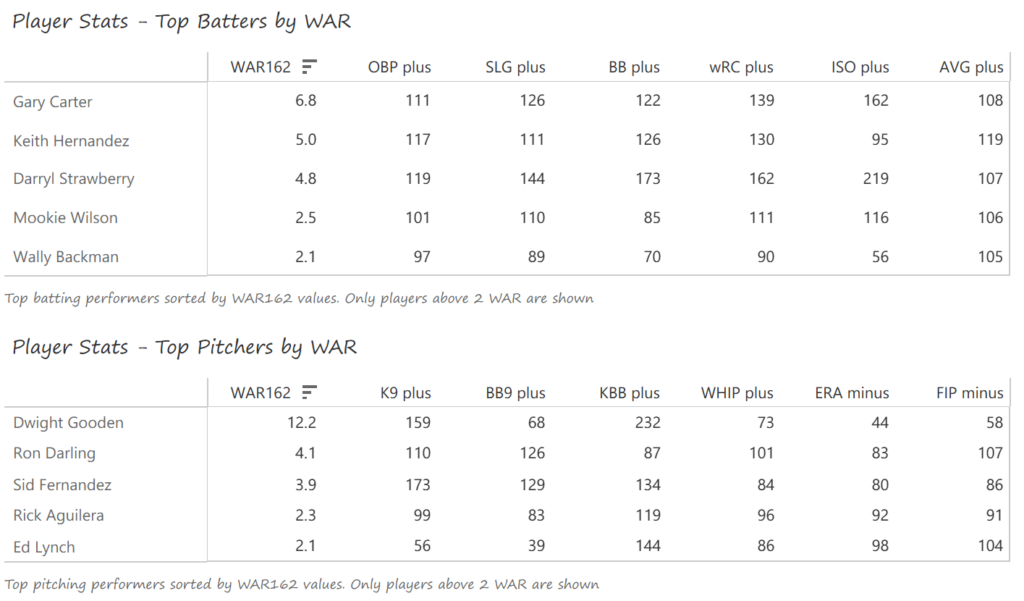
Pedro Guerrero was the offensive stalwart in 1982, batting. 304 with 32 home runs, 100 RBI, and 22 steals. Veteran shortstop Bill Russell had one of his best campaigns, batting .274 with solid defense. Ron Cey added 24 homers and 79 RBI. Steve Sax (.282 BA, 49 steals, Rookie of the Year) and Ken Landreaux (.284 BA, 31 steals) rounded out the top offensive producers for the Dodgers. 21-year-old lefty Fernando Valenzuela was the pitching story, posting a 19-13 record with a 2.87 ERA. Jerry Reuss added 18 wins for a formidable 1-2 punch.

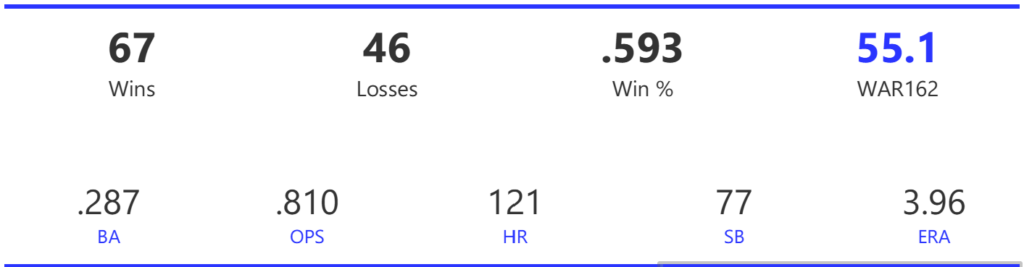
The Red Sox topped the AL East, winning the division by a single game over the Tigers in a hotly contested 4-team race. Boston’s season ended in a 4-game ALCS sweep by the Athletics in a one-sided ALCS.

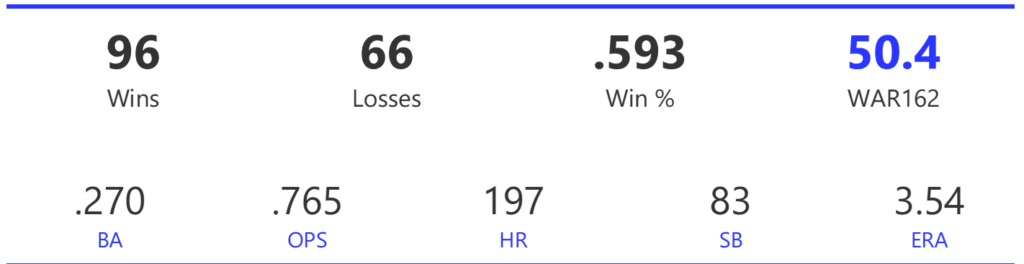
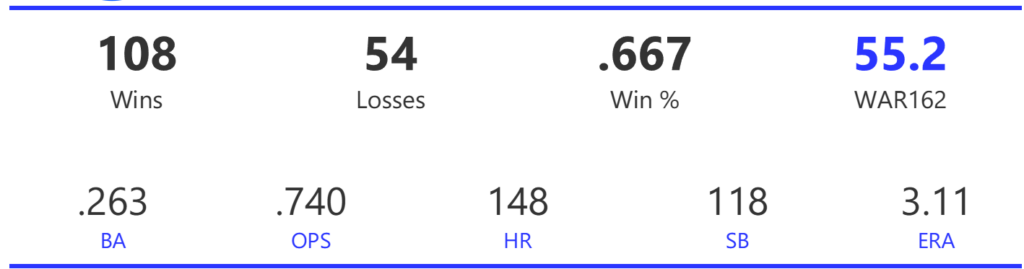
The Red Sox got things done on the offensive side of the ball, leading the league in runs, doubles, BA, OBP, and OPS. The pitching staff was less impressive, ranking 7th in both ERA and WHIP, although they ranked first in strikeouts and strikeout-to-walk rate.

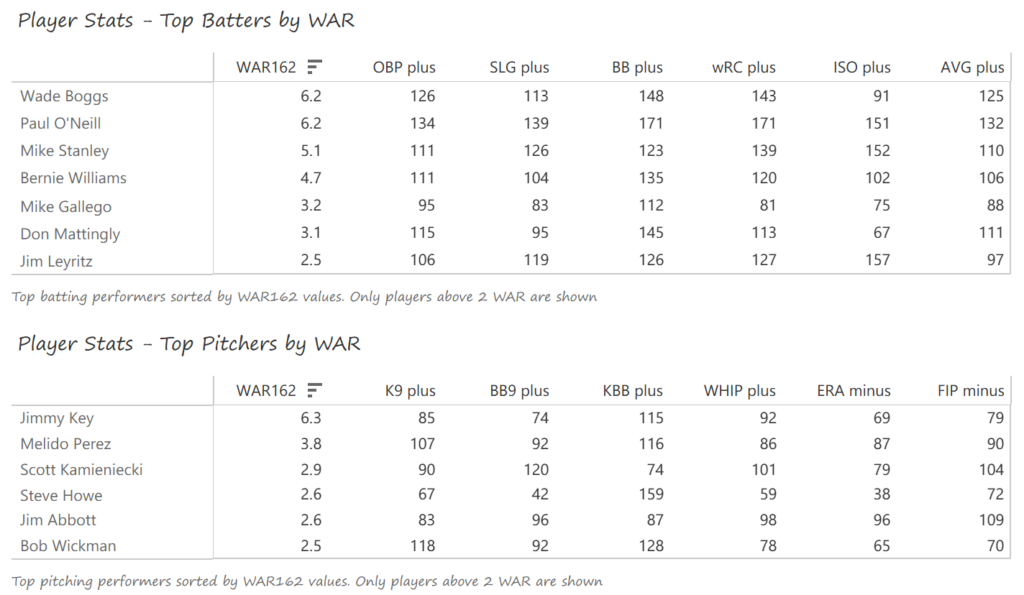
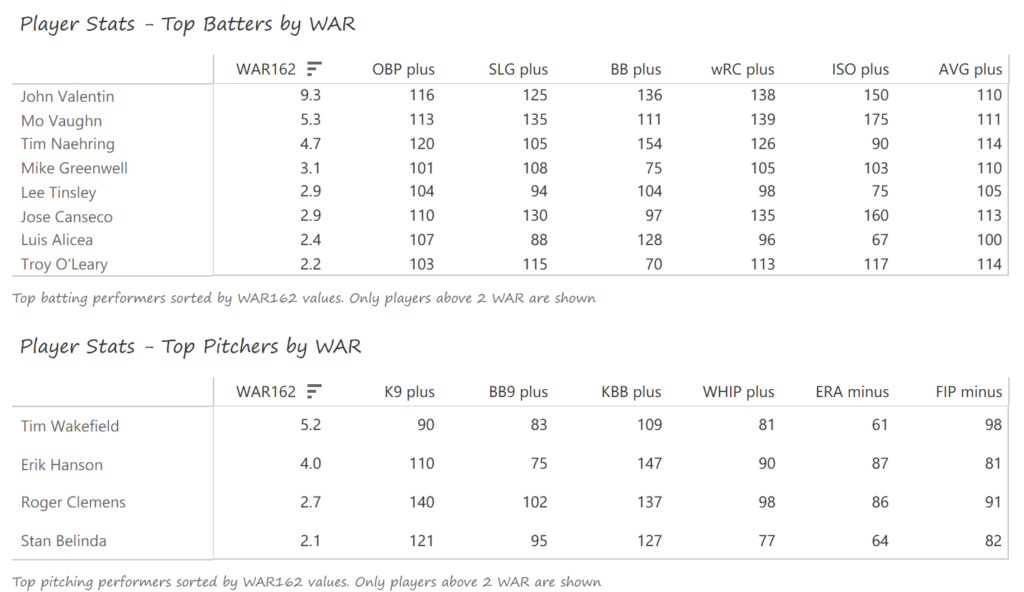
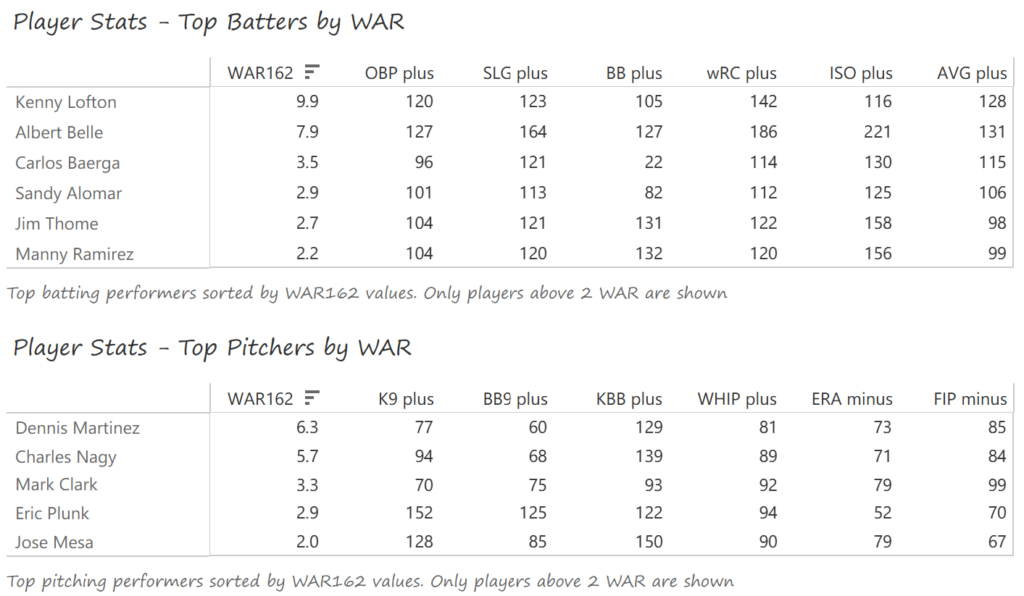
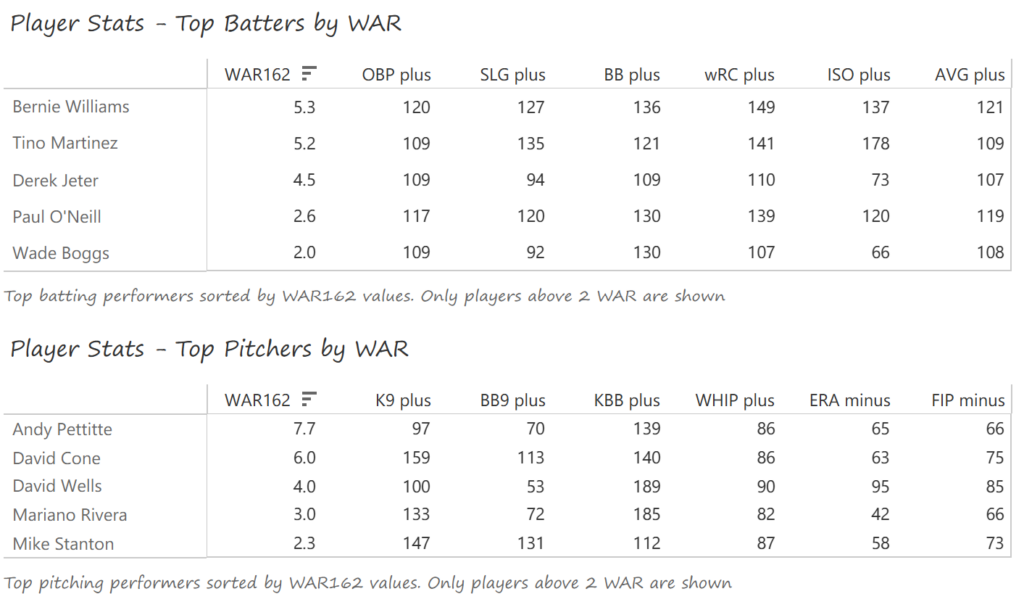
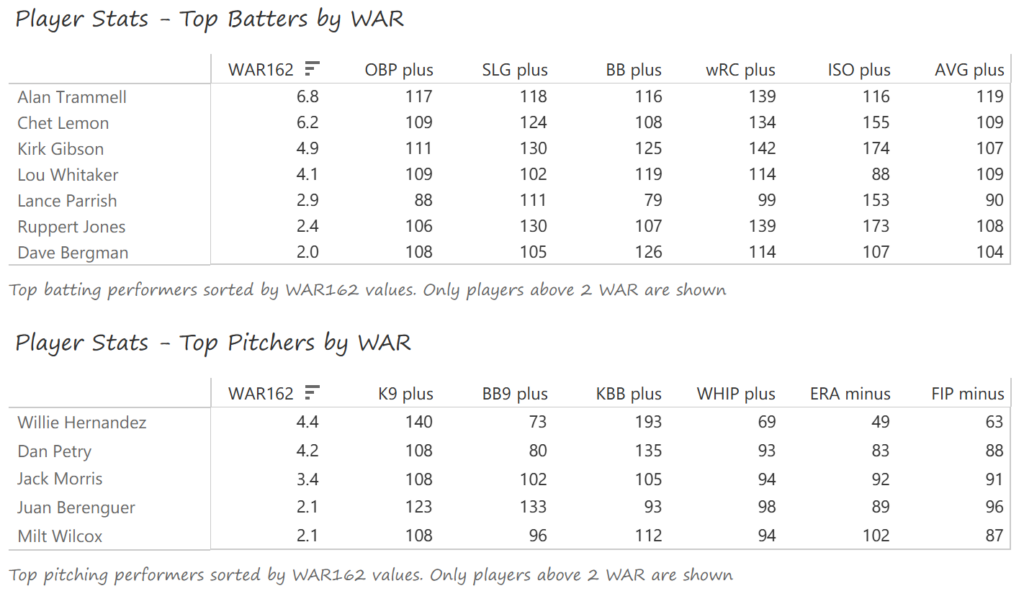
Wade Boggs had a stellar season for the Sox, leading the league in BA (.366), OBP (.476), walks, OPS, doubles, and runs (128). Mike Greenwell had a career season for Boston, batting .325 with 22 homers and 119 RBI. Ellis Burks was a strong third option, batting .294 with 25 stolen bases. On the mound, Roger Clemens led the AL in strikeouts, complete games, and shutouts while winning 18 games. Lefty Bruce Hurst was a capable second starter, posting 18 wins. After the top two, the Sox pitching fell sharply, making the team lean heavily on outscoring opponents.

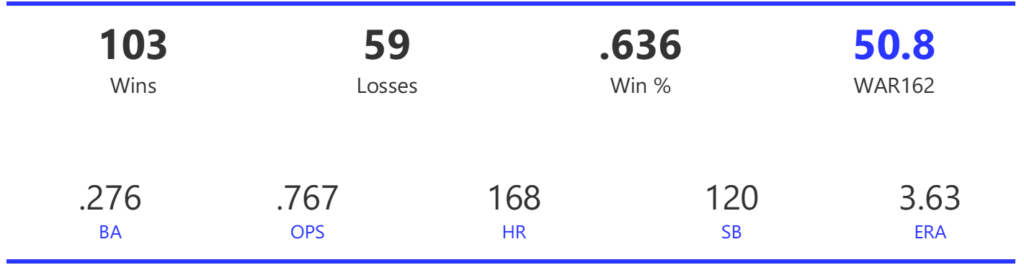
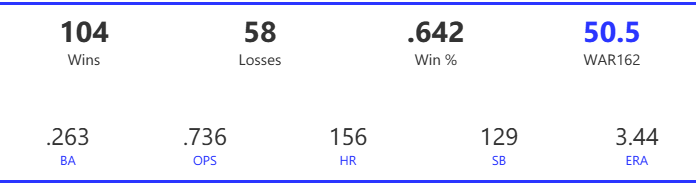
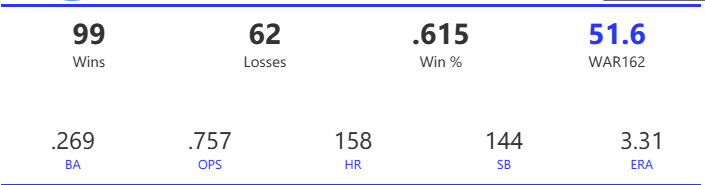
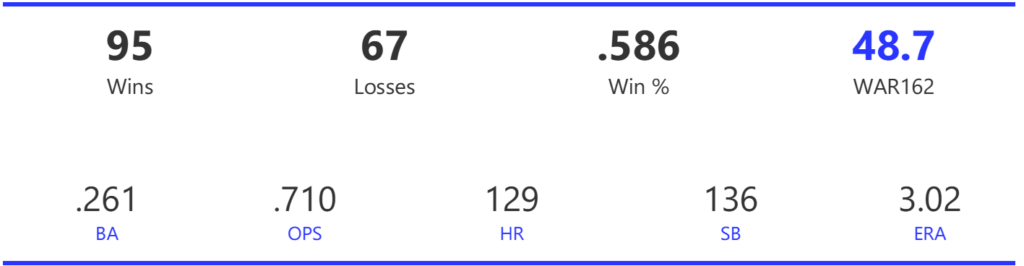
The 1989 Athletics easily won the AL West by 7 games over the Royals. They then topped the Blue Jays in five games and the Giants in four to claim the World Series crown.

The A’s offense was limited in 1989, placing 4th in runs and OBP, and just 6th in BA and OPS. The team ranked 2nd with 157 stolen bases, helping the Athletics’ manufacturer runs. The pitching staff performed well, leading the AL in ERA and WHIP, and tying for first with 20 shutouts.

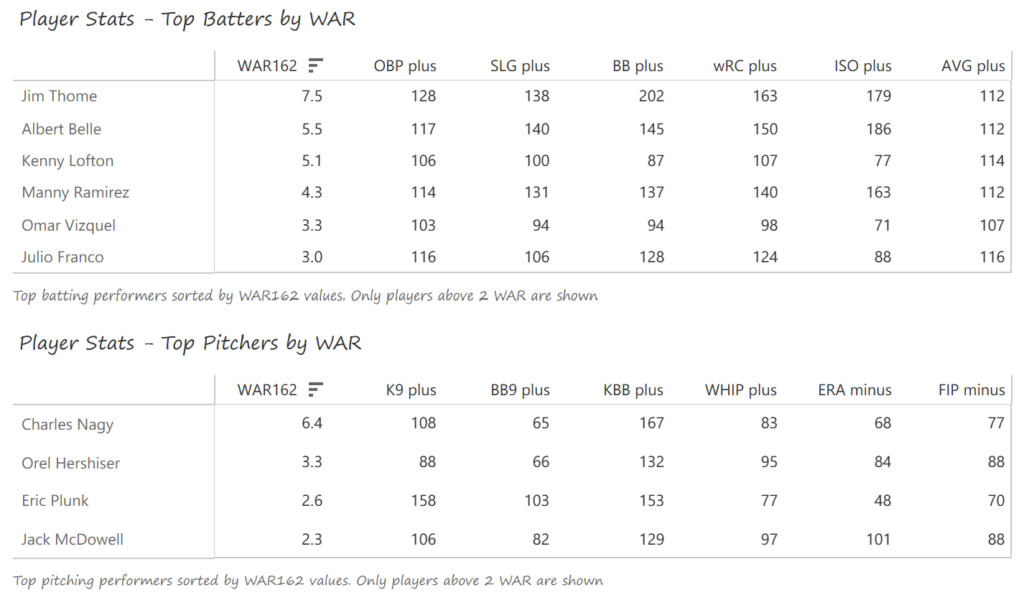
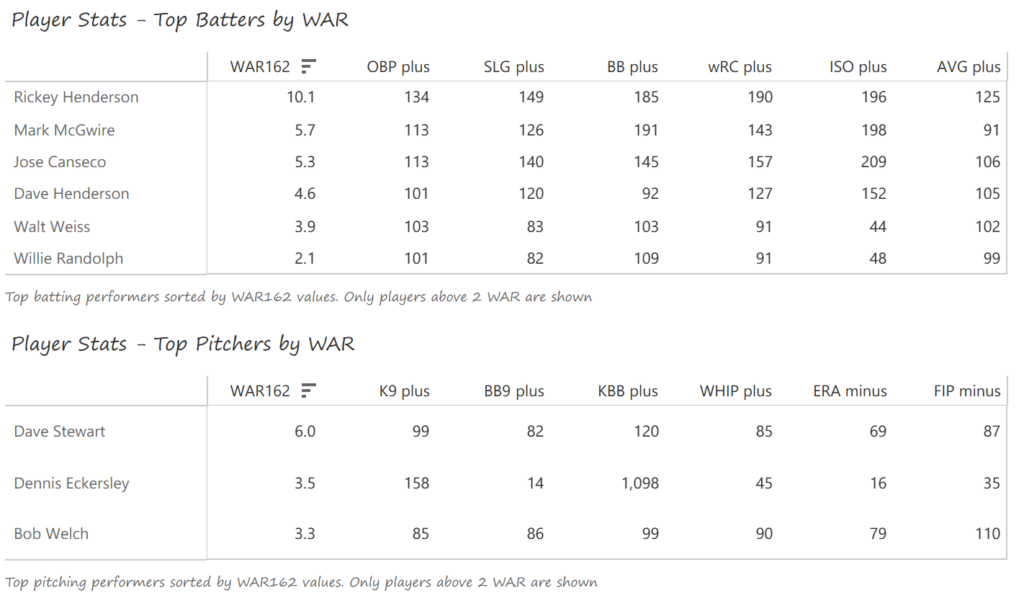
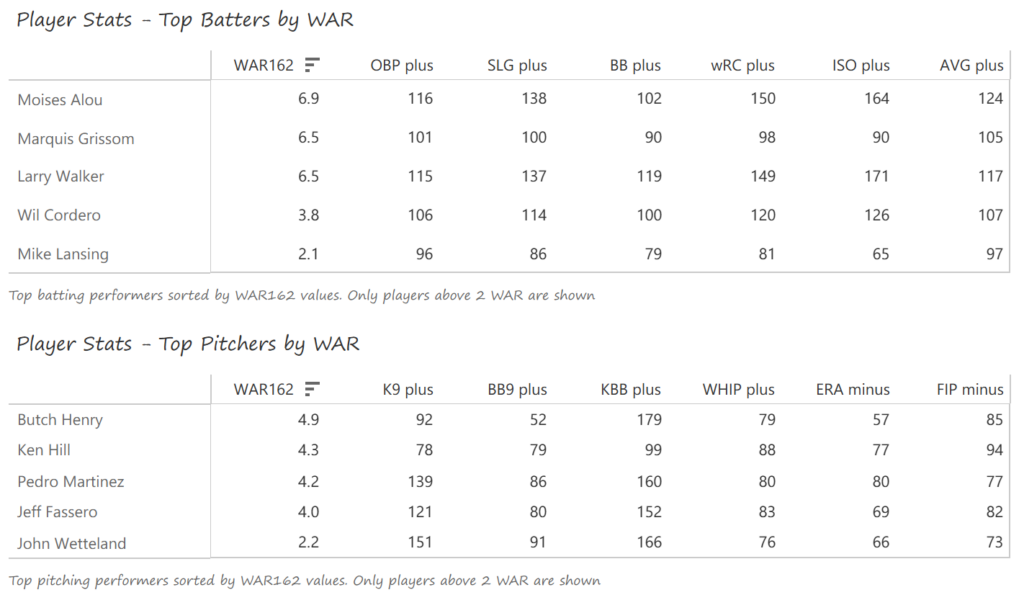
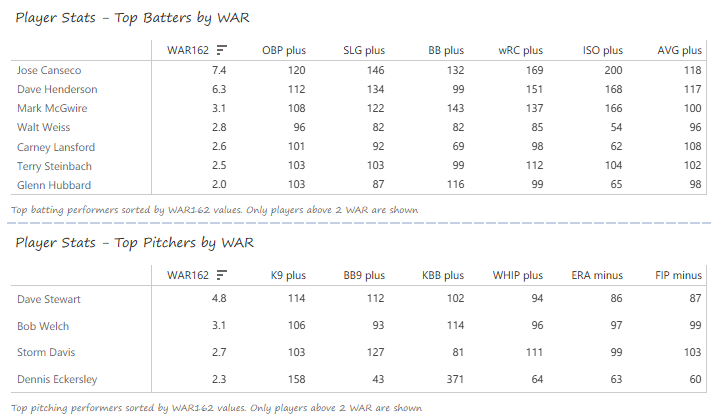
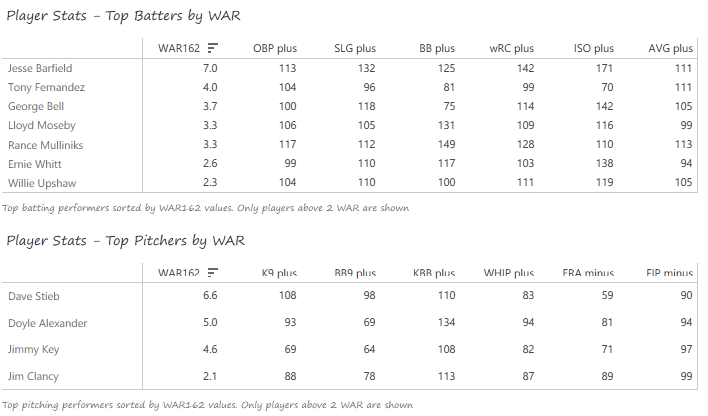
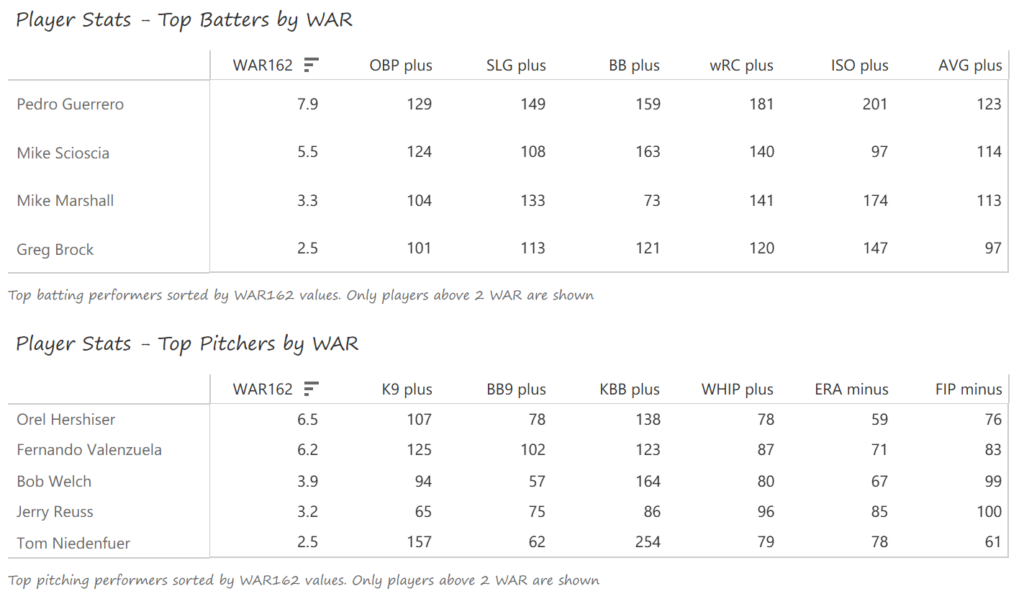
Rickey Henderson was the offensive sparkplug, batting .294 with 52 steals in just 85 games. Carney Lansford batted .336 with 37 stolen bases, and Dave Henderson added 15 homers and 80 RBI, along with strong defense. Mark McGwire launched 33 homers to help diversify the A’s offense. Mike Moore (19-11, 2.62 ERA) and Dave Stewart (21-9) combined for 40 wins at the top of the rotation, with Bob Welch adding 17 more wins.

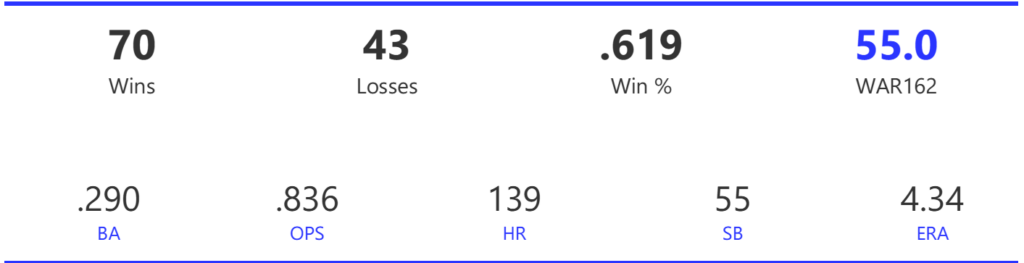
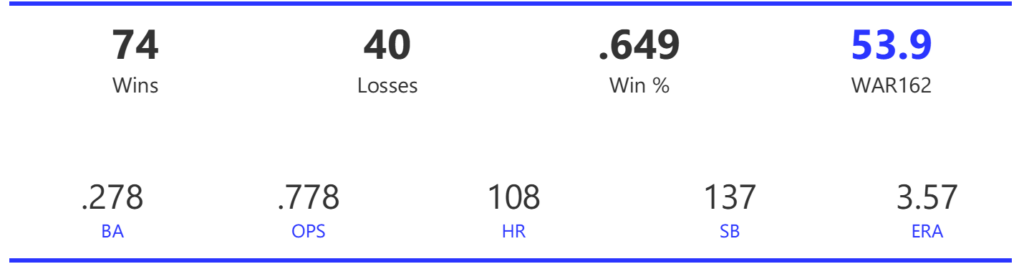
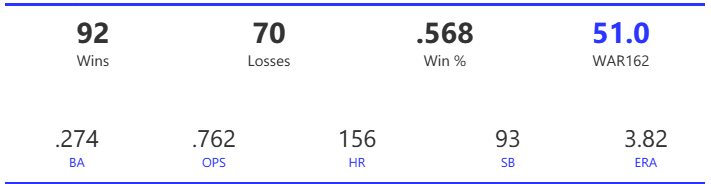
The 1982 Brewers beat out the Orioles by a single game for the AL East title, then defeated the Angels in a 5-game ALCS. Their good fortune ran out in the World Series, where they lost to the Cardinals in seven games.

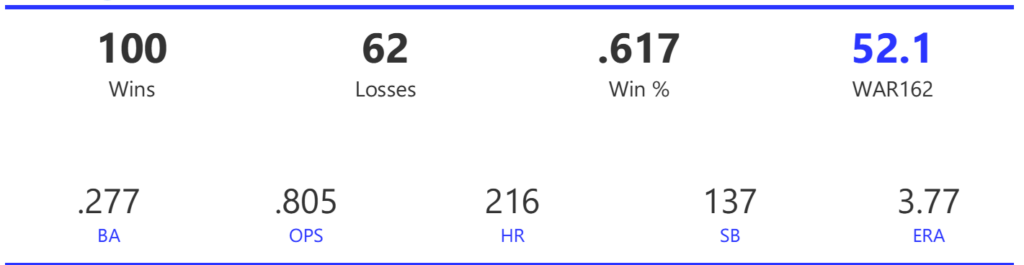
The Brewers rode a powerful offense to the top of the AL, scoring 891 runs on the season. They also launched 216 home runs, 30 more than their closest rival. The club finished second in BA and first in OPS to rank as the league’s most dominant offense. Pitching was merely average (at best), as the Brewers ranked 6th in ERA and 10th in WHIP out of 14 AL teams.

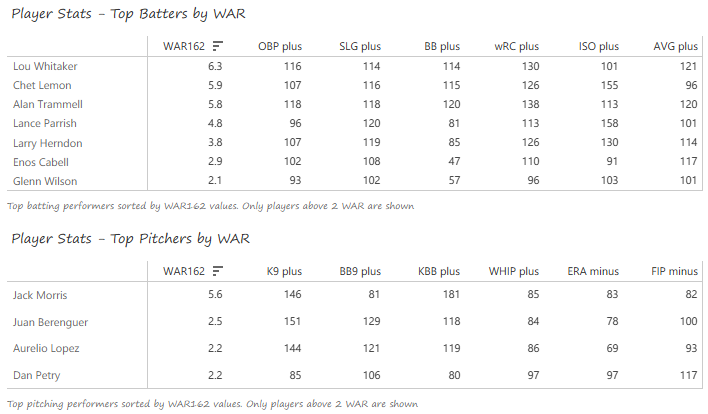
Robin Yount led the offense with an MVP season, totaling 46 doubles, a .957 OPS, and a .331 BA with 210 hits. He also claimed the Gold Glove Award at shortstop. Paul Molitor topped the league with 136 runs scored while posting a .302 BA, and Cecil Cooper slugged 32 homers with 121 RBI and a .313 BA. Gorman Thomas added additional pop with an AL-best 39 home runs. Pete Vuckovich won the AL Cy Young Award based on his 18-6 record, and Rollie Fingers saved 29 games.

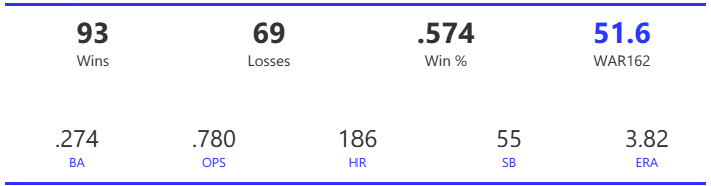
The 1986 Angels topped the AL West, beating the Rangers by five games before losing a dramatic five-game ALCS to the Red Sox.

The Angels had a rather ordinary offense in 1986, finishing 6th in runs, 7th in homers, and 9th in BA. They were adept at drawing walks, leading the AL with 671 walks, which boosted their OBP to third in the league. Pitching was a strength, as the Angels staff led the league in WHIP and ranked second in ERA behind the Royals.

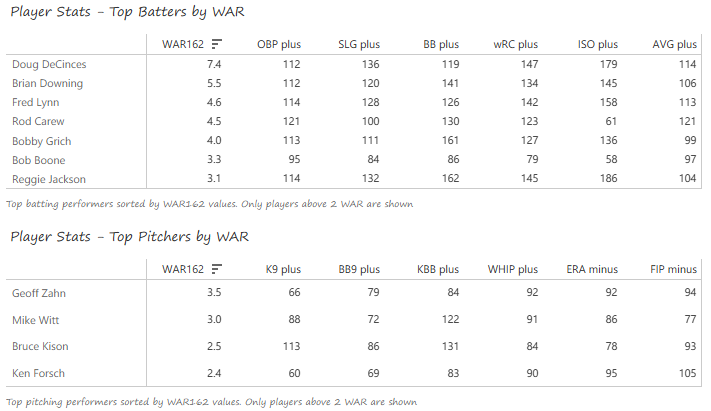
Garry Pettis stole 50 bases, scored 93 runs, and earned a Gold Glove for his defensive work in center field. Brian Downing posted a .389 OBP with 20 homers and 95 RBI, and Dick Schofield stole 23 bases and provided strong defense at shortstop. Mike Witt was the Angels’ ace on the mound, posting an 18-10 record with a 2.84 ERA, aided by Kirk McCaskill, who logged a 17-10 mark on the season.

Summary

That’s it for the first entry in our MLB Team Rankings for the 1980s decade! Stay tuned for the countdown from #15 to #11, arriving in a few days. As always, thanks for reading!