Month: May 2026

1970s MLB Team Rankings Countdown: 15 through 11

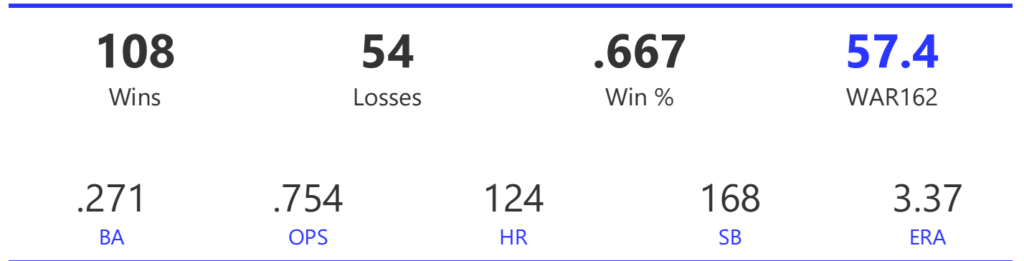
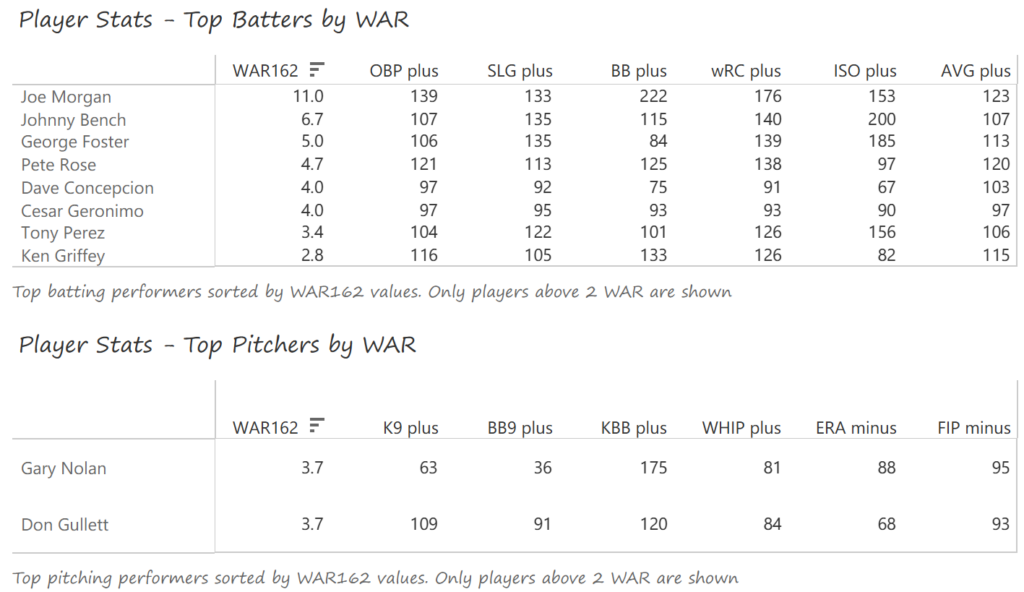
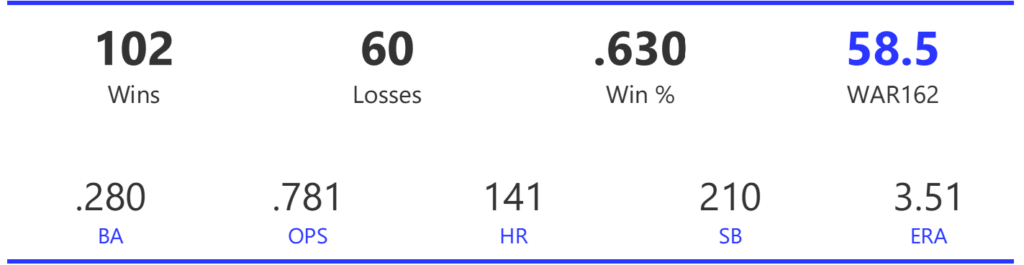
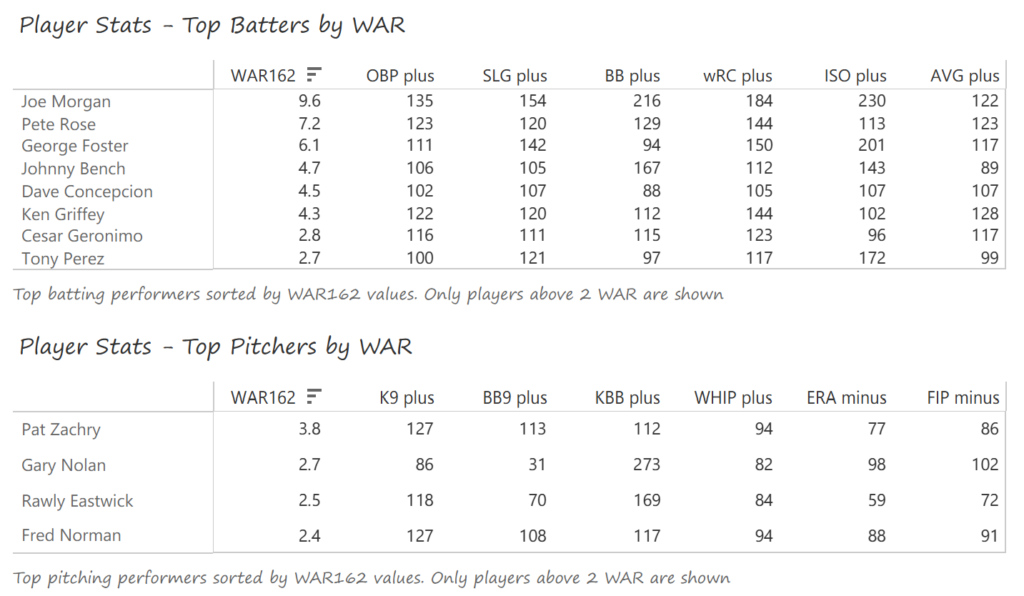
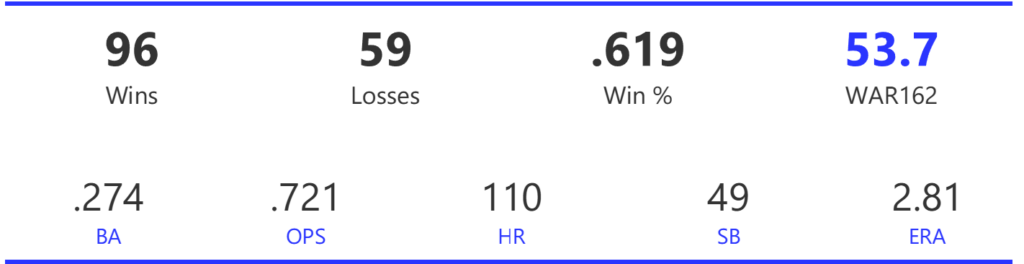
Welcome to the second countdown post in our series of MLB team rankings for the 1970s. Expansion continued in the 1970s, with four new teams added for the 1977 season, adding to the four that started play in the 1969 season. As a reminder, the teams are ranked from #20 through #1 based on aggregate WAR162. For the 1970s (1970-1979), a total of 252 team-seasons were eligible, so the top 20 teams are a rather exclusive group – the top 8% for the decade. We’ll summarize each team, including portions of their team dashboard, and explain how they attained their ranking. So, without further ado, here are the teams ranked #15 through #11.

Here’s the interactive dashboard at Tableau Public: 1970s Top 20 MLB Teams Dashboard

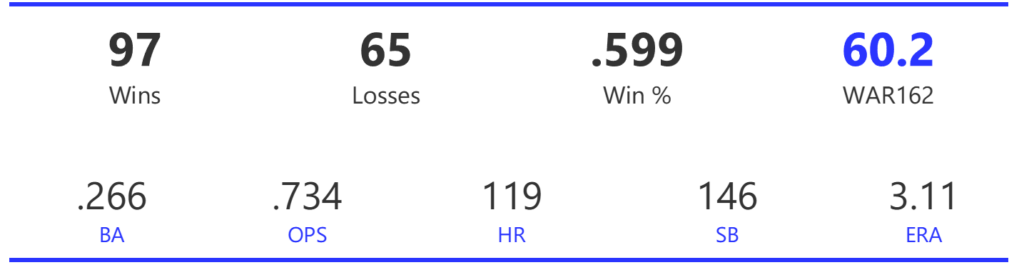
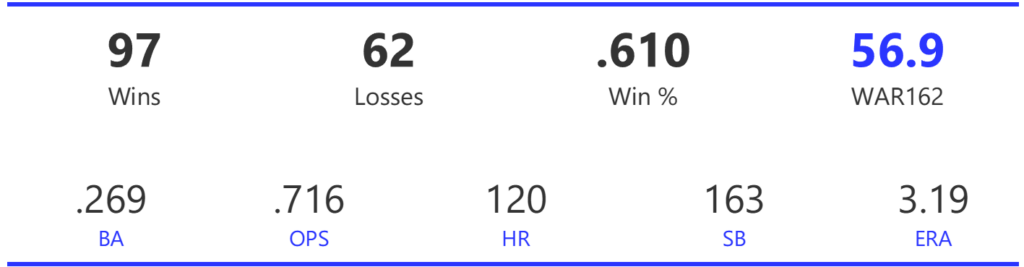
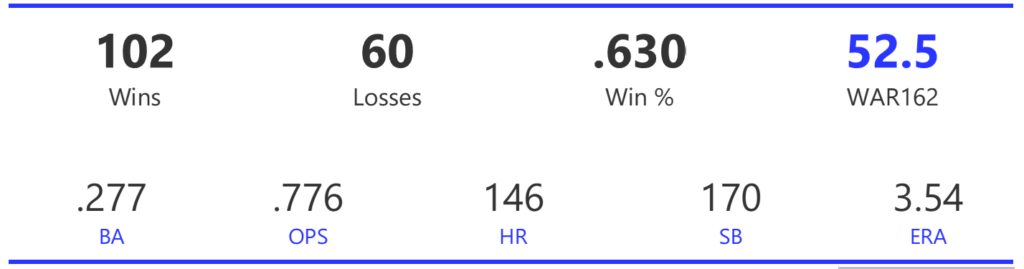
The 1975 Orioles finished second in the AL East, 5 games behind the Red Sox. The Orioles may have been better than their record, as their Pythagorean win projection was 95, 5 games above their actual result.

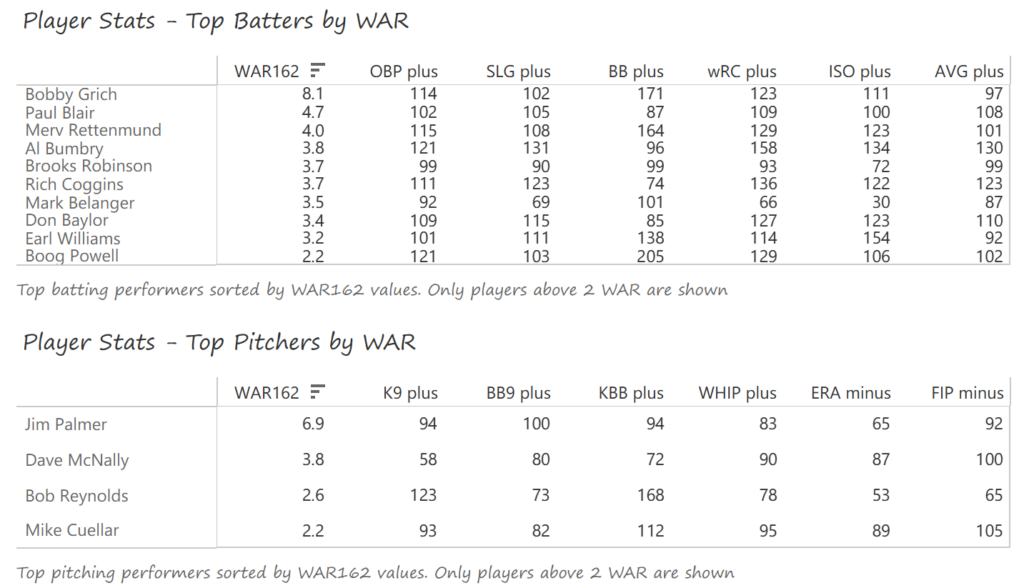
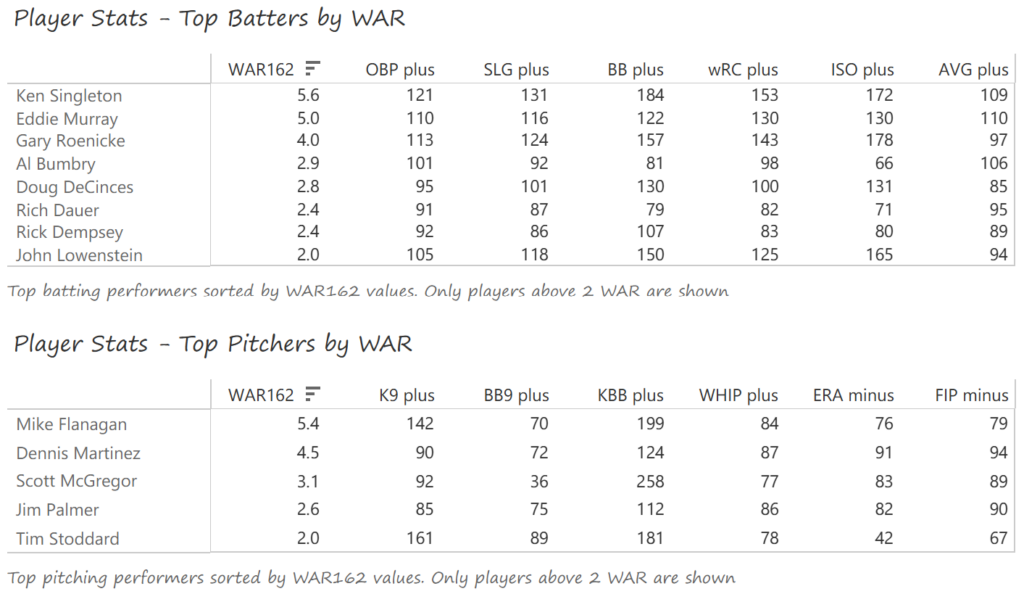
The Orioles had a mediocre offense, even given Memorial Stadium’s pitching-friendly confines in 1975. The Birds ranked below league average in most key offensive categories, relying on pitching and defense to carry the team. Their pitching staff led the AL in ERA, shutouts, and WHIP, while their defense featured four Gold Glove winners.

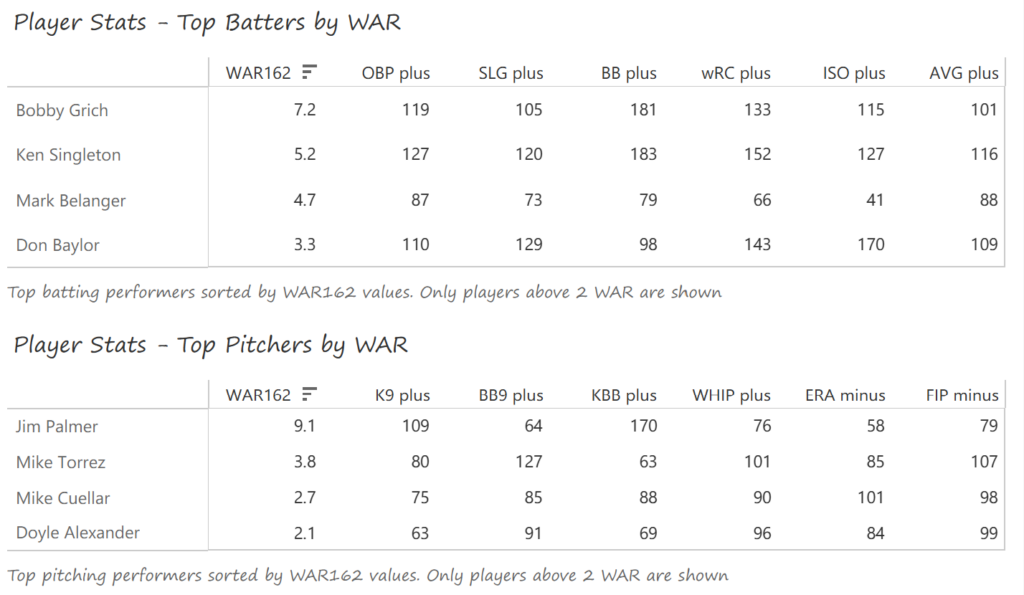
Bobby Grich had perhaps the best season of his long career, with a .389 OBP (with 107 walks), 81 runs scored, and Gold Glove defense. Ken Singleton batted .300 with a .415 OBP (with 115 walks) and 88 runs scored, and Mark Belanger coupled Gold Glove defense with 16 steals. On the mound, Cy Young winner Jim Palmer posted a 23-11 record, 2.09 ERA, and 10 shutouts, all AL-best numbers. His primary support came from Mike Torrez (20-9 record).

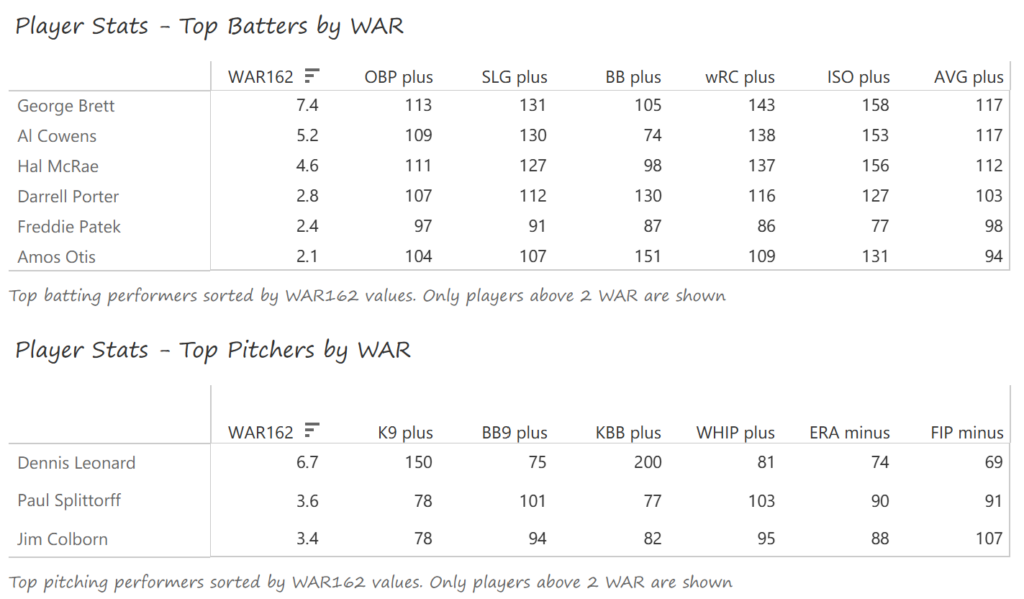
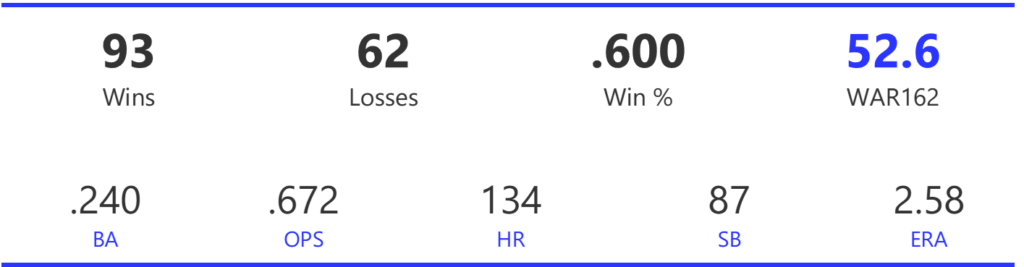
The Royals experienced quick success by expansion standards, with the 1977 team rating as their best team of the 1970s. Kansas City’s 102 wins were enough to win the AL West by 8 games. Unfortunately, their season ended with a 5-game loss to the Yankees in the ALCS.

The Royals’ 822 runs ranked 5th in the 14-team AL, and they led the league in both doubles and triples. Their offense also ranked 5th in BA and 4th in OPS. The pitching staff produced some excellent results, ranking first in ERA, second in WHIP, and third in strikeout-to-walk rate.

George Brett was the offensive leader at age 24, with a .312 BA, 22 homers, 88 RBI, and 13 triples. Al Cowens also batted .312, and launched 23 home runs with 112 RBI. Hal McRae batted .298 with an AL-best 54 doubles. Dennis Leonard had an outstanding season on the mound, with a 20-12 record and 5 shutouts. He was backed up by Paul Splittorff (16-6) and Jim Colborn (18-14).

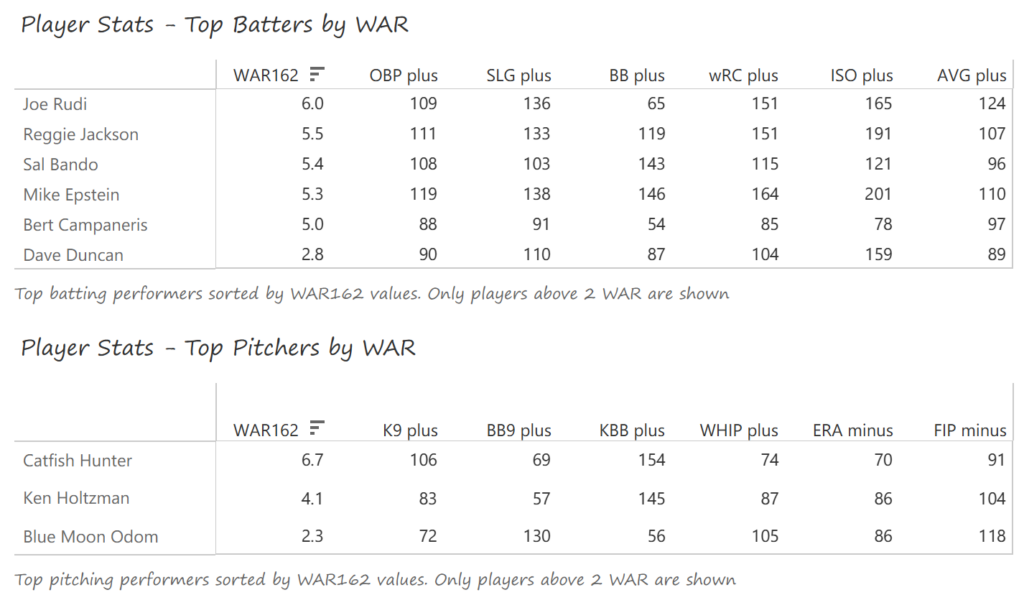
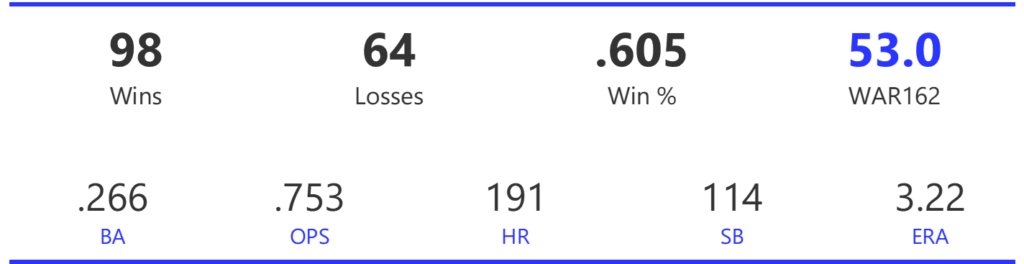
The 1972 Athletics became the first of three consecutive AL pennant winners and World Series champs from Oakland. The A’s outlasted the White Sox by 5.5 games in a strike-shortened season, then beat the Tigers in a 5-game ALCS win, and the Reds in a 7-game World Series triumph.

The Oakland club didn’t overwhelm teams offensively, ranking second in runs, first in home runs, sixth in BA and OPS, and fourth in OPS, playing home games in the pitcher-friendly Oakland Coliseum. The Athletics’ pitching staff was quite effective, ranking second in ERA, WHIP, and strikeout-to-walk rate, while topping the league with 23 shutouts.

Joe Rudi led the way for the A’s with a .305 BA, 19 home runs, 75 RBI, and 94 runs scored. He was followed closely by a cluster of teammates – Reggie Jackson (25 homers, 75 RBI), Sal Bando (78 walks, 77 RBI), Mike Epstein (26 homers, 70 RBI), and Bert Campaneris (AL-best 52 steals). Catfish Hunter led the pitching staff with a 21-7 record and 2.04 ERA, followed by left-hander Ken Holtzman (19-11, 2.51 ERA).

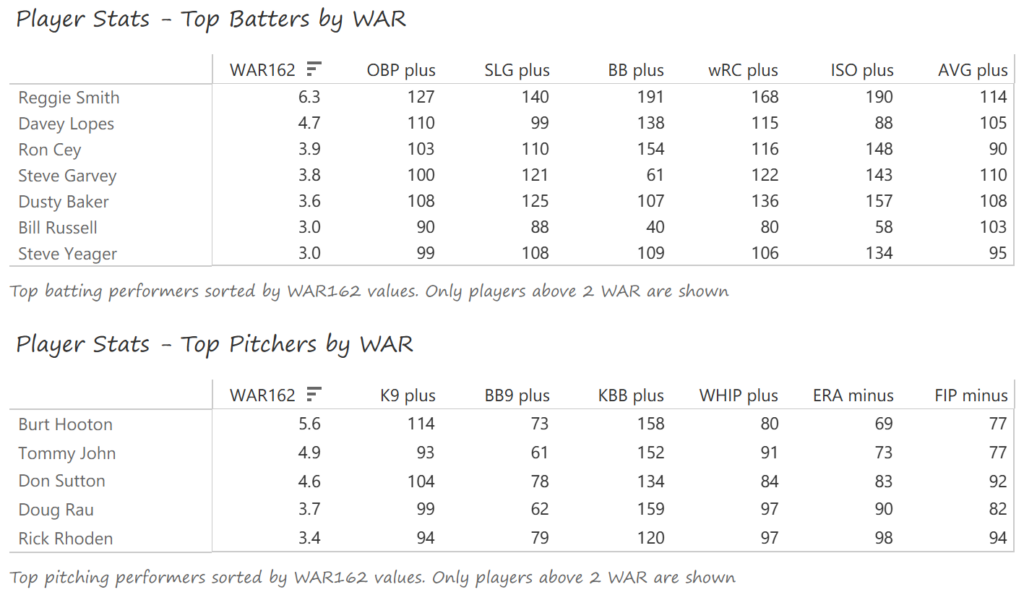
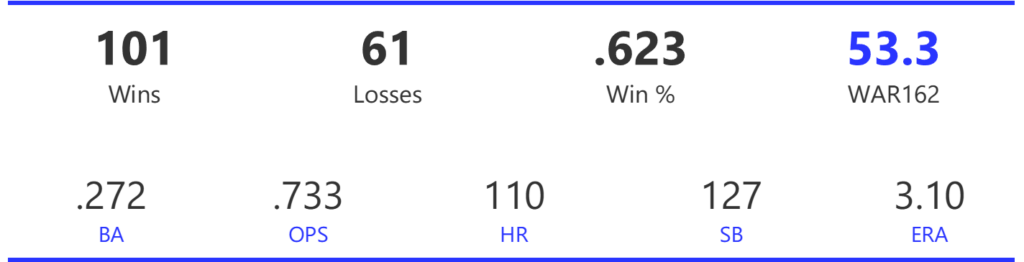
The 1977 Dodgers returned to the top of the NL West after two years of domination by the Reds, topping Cincinnati by 10 games. They went on to beat the Phillies in a 4-game NLCS before falling in a 6-game World Series to the Yankees.

The Dodgers had a capable offense in 1977, finishing 3rd in runs, 1st in homers, 5th in BA, and 3rd in both OBP and OPS. Pitching is what separated the team from the competition, as the Dodgers led the NL in ERA, WHIP, fewest walks, and best strikeout-to-walk rate.

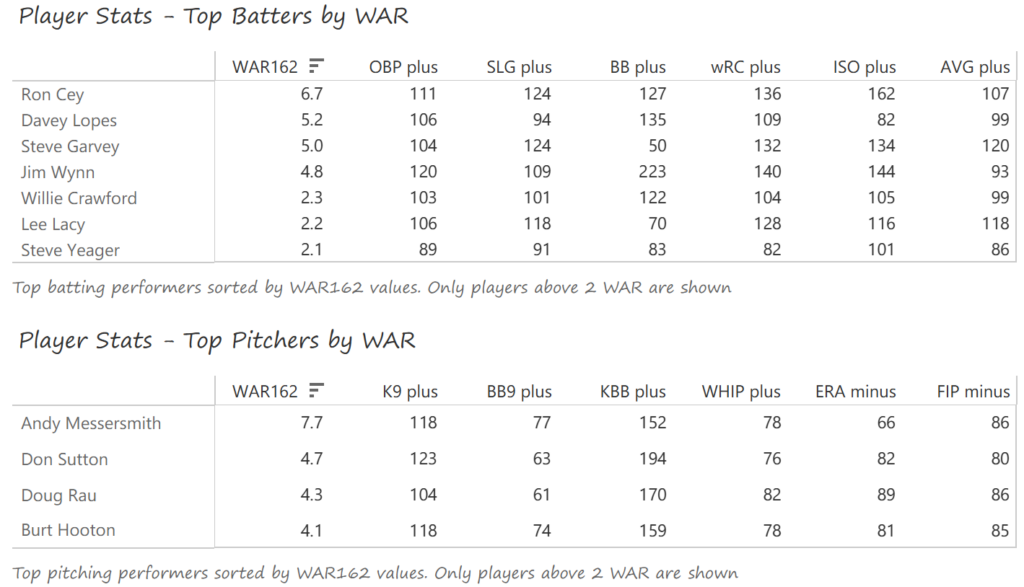
Reggie Smith had a fine season for Los Angeles, with a .307 BA, NL-best .427 OBP, 32 homers, 87 RBI, and 104 runs scored. Davey Lopes stole 47 bases and batted .283, Ron Cey mashed 30 home runs with 110 RBI, and Steve Garvey batted .297 with 33 homers, 115 RBI, and a Gold Glove Award at first base. Dusty Baker rounded out the Dodgers diversified offense with a .291 BA and 30 homers.

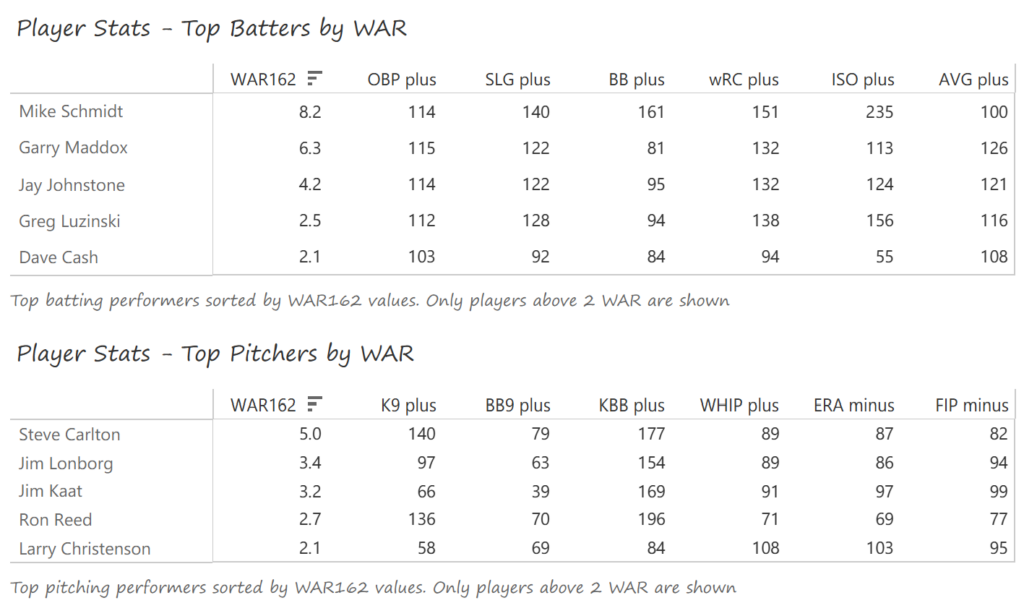
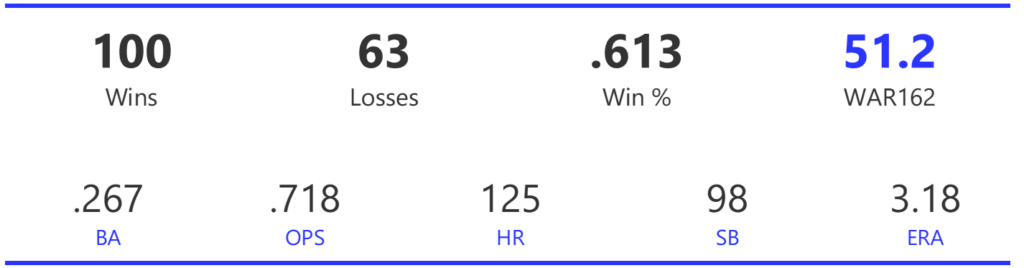
The 1976 Phillies rose to the top of the NL East after decades of frequent mediocrity. 1976 was the Phillies’ first time atop the standings since the 1950 Whiz Kids pennant winners. Unfortunately, they couldn’t get past a powerful Reds team, getting swept in a 3-game NLCS.

The Phillies had a potent offense that trailed only the Reds in most major categories – runs, home runs, BA, OBP, OPS, and doubles. Pitching was also a relative strength, with 2nd-place rankings in WHIP, strikeout-to-walk rate, and strikeouts. The Phillies’ staff issued the fewest walks in the NL, and also ranked 3rd in ERA.

Third Baseman Mike Schmidt powered the Phillies at the plate and in the field, belting 38 home runs with 107 RBI, 112 runs scored, 100 walks, and a Gold Glove Award. Center fielder Garry Maddox was another Gold Glove recipient, and batted .330 with 37 doubles and 29 stolen bases. Jay Johnstone batted .318 with 38 doubles to round out the Phillies’ top WAR producers. Veteran lefty Steve Carlton had a typically fine season, posting a 20-7 record. Carlton was supported by another pair of veterans in Jim Lonborg (age 34, 18-10 record) and Jim Kaat (age 37, 12 wins, Gold Glove award).

That’s it for the second entry in our MLB Team Rankings for the 1970s decade! Stay tuned for the countdown from #10 to #6, arriving in a few days. As always, thanks for reading!

1970s MLB Team Rankings Countdown: 20 through 16

Welcome to the first countdown post in our series of MLB team rankings for the 1970s. Expansion continued in the 1970s, with four new teams added for the 1977 season, adding to the four that started play in the 1969 season. As a reminder, the teams are ranked from #20 through #1 based on aggregate WAR162. For the 1970s (1970-1979), a total of 252 team-seasons were eligible, so the top 20 teams are a rather exclusive group – the top 8% for the decade. We’ll summarize each team, including portions of their team dashboard, and explain how they attained their ranking. So, without further ado, here are the teams ranked #20 through #16.

Here’s the interactive dashboard at Tableau Public: 1970s Top 20 MLB Teams Dashboard

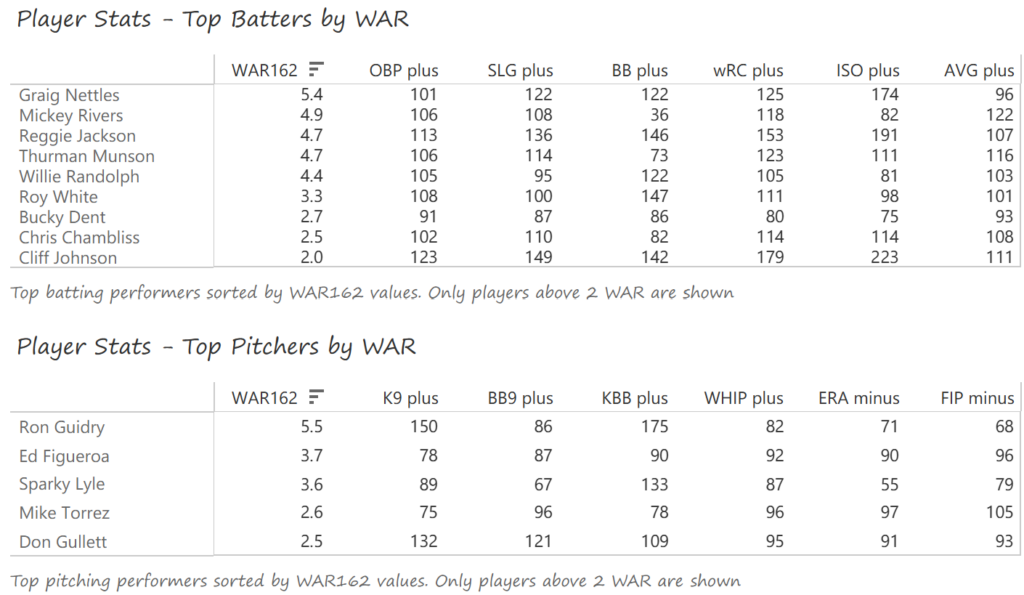
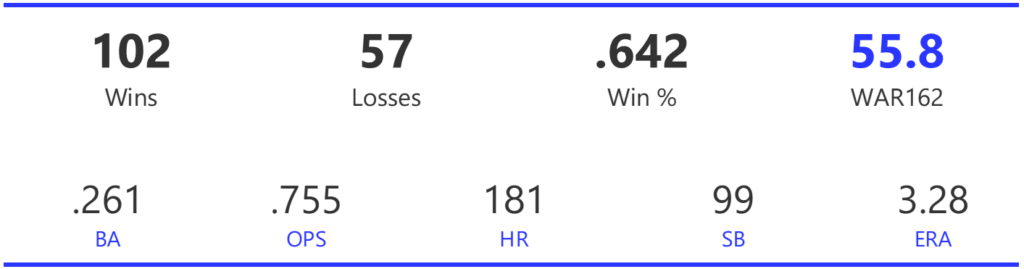
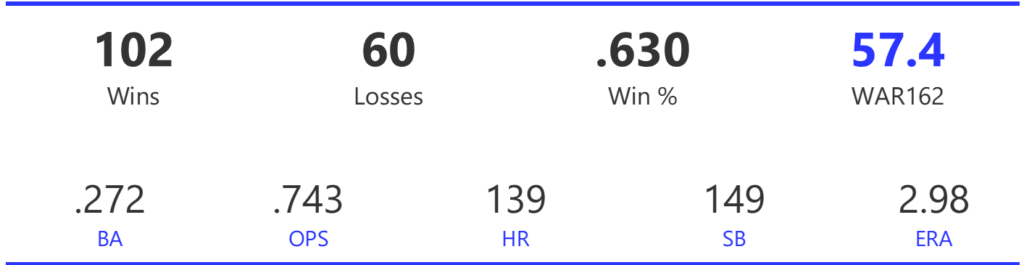
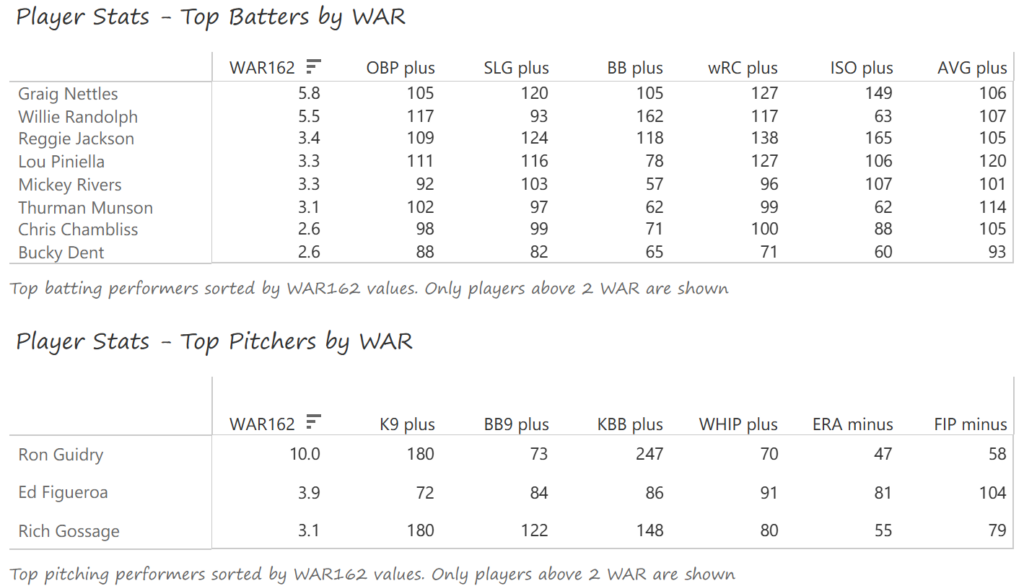
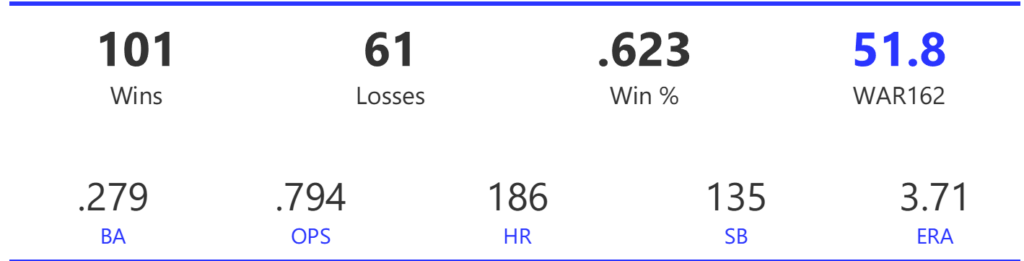
The 1978 Yankees famously captured the AL East after a furious stretch run, ultimately defeating the Red Sox in a single-game playoff. They then defeated the Royals 3 games to 1 to win the AL pennant, and then beat the Dodgers in six games to win the World Series.

The Yankees had a good, but far from dominant, offense. Their 735 runs ranked 4th in the AL, and they ranked 6th in both BA and OPS. Pitching separated them from their rivals, as they led the league in ERA, WHIP, and hits per 9 innings, and ranked second in strikeout-to-walk rate and strikeouts.

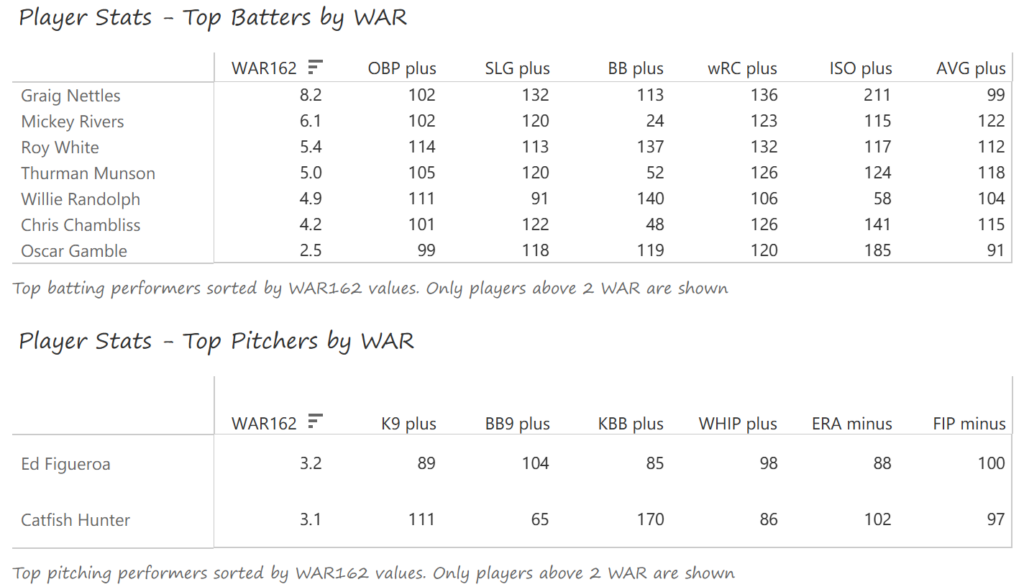
Graig Nettles (.276 BA, 27 HR, 93 RBI, Gold Glove) and Willie Randolph (.381 OBP, 87 runs, 36 steals) led the offense in 1978, with considerable support. Reggie Jackson added 27 homers and 97 RBI, Lou Piniella batted .314, Mickey Rivers stole 25 bases, and Thurman Munson batted .297 from his catcher’s spot. Ron Guidry had a sensational year, winning the AL Cy Young Award with a 25-3 record, 1.74 ERA, 9 shutouts, and a 0.946 WHIP, all best in the league. Ed Figueroa went 20-9 with a 2.99 ERA, and closer Goose Gossage compiled 27 saves with a 2.01 ERA.

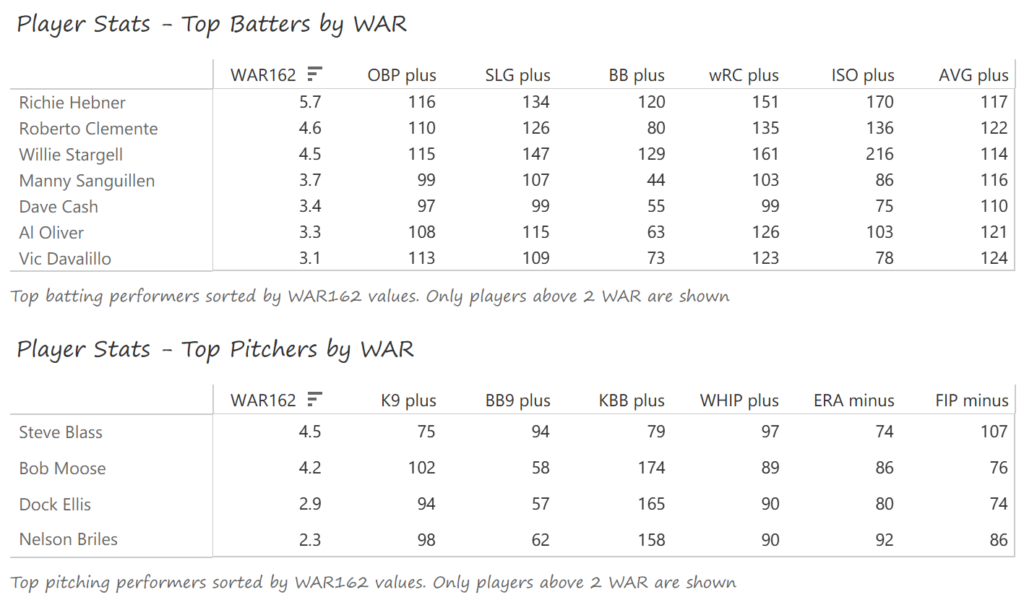
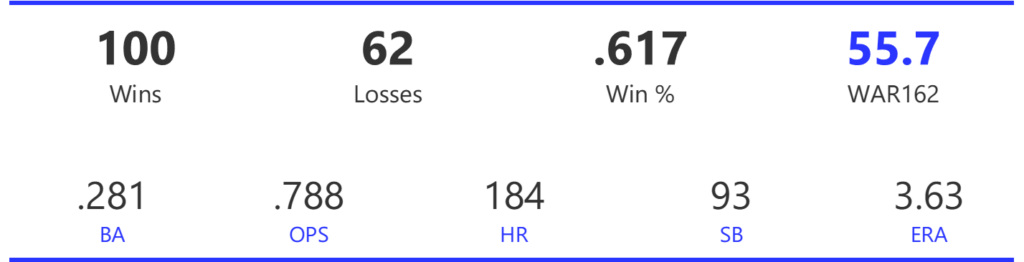
The Phillies broke through in the 1970s with several excellent teams, after decades of finishes near the bottom of the NL. The 1977 team claimed the NL East crown by 5 games over the Pirates, before losing to the Dodgers in the NLCS round.

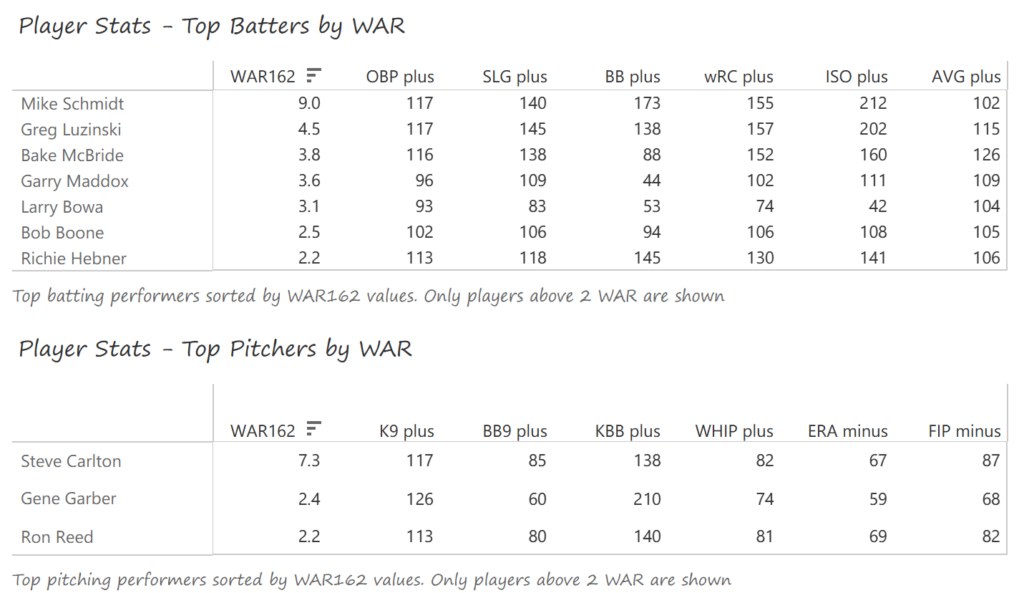
The Phillies had a powerful offense that led the NL in runs scored with 847, 45 more than their closest rival. They ranked 2nd in homers, 4th in stolen bases, and first across BA, OBP, SLG, and OPS. Pitching was not as strong as the team’s hitting, with 4th-place ERA and 5th-place WHIP rankings (out of 14 teams).

Mike Schmidt was the clear offensive leader, bashing 38 home runs with 101 RBI, 114 runs, and a Gold Glove on defense. Greg Luzinski added 39 homers with 130 RBI and a .309 BA, while Bake McBride batted .339 with 27 steals in just 314 plate appearances. Garry Maddox won a Gold Glove in center field while also batting .292 and stealing 22 bases, and Larry Bowa stole 32 bases and batted .280. Steve Carlton was the mound star, posting a 23-10 record and 2.64 ERA to claim the Cy Young Award.

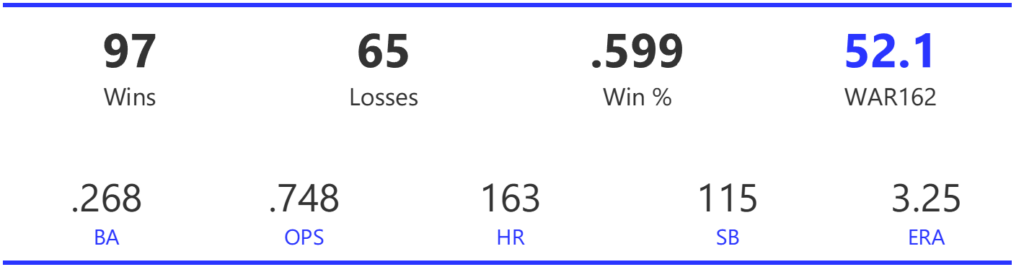
The Dodgers repeated as NL West division winners by 2.5 games over the Reds in a competitive race, and once again defeated the Phillies in 4 games to claim the NL pennant. Their good fortune ended with a 6-game World Series defeat to the Yankees.

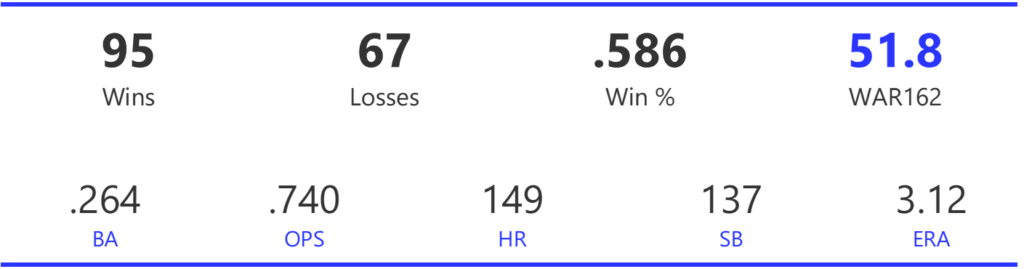
The Dodgers rode a balanced offense that featured both speed and power. Their 149 homers topped the NL, while their 137 steals tied for 5th in the 14-team NL. The team ranked first in each of the percentage metrics – BA, OBP, SLG, and OPS. Pitching was also a strength, as the Dodgers’ staff ranked first in ERA, 2nd in WHIP, and 3rd in strikeout-to-walk rate.

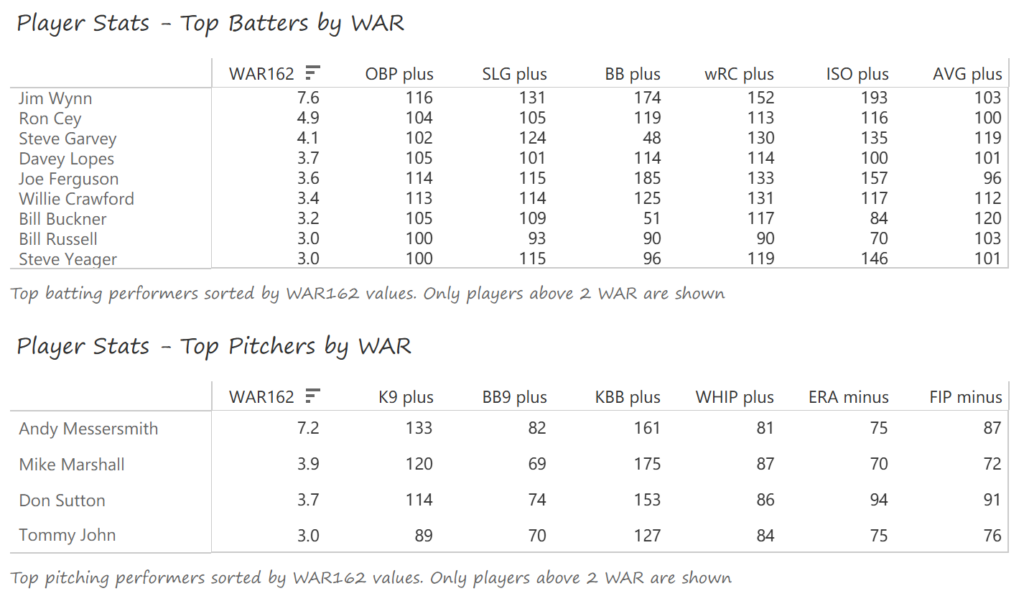
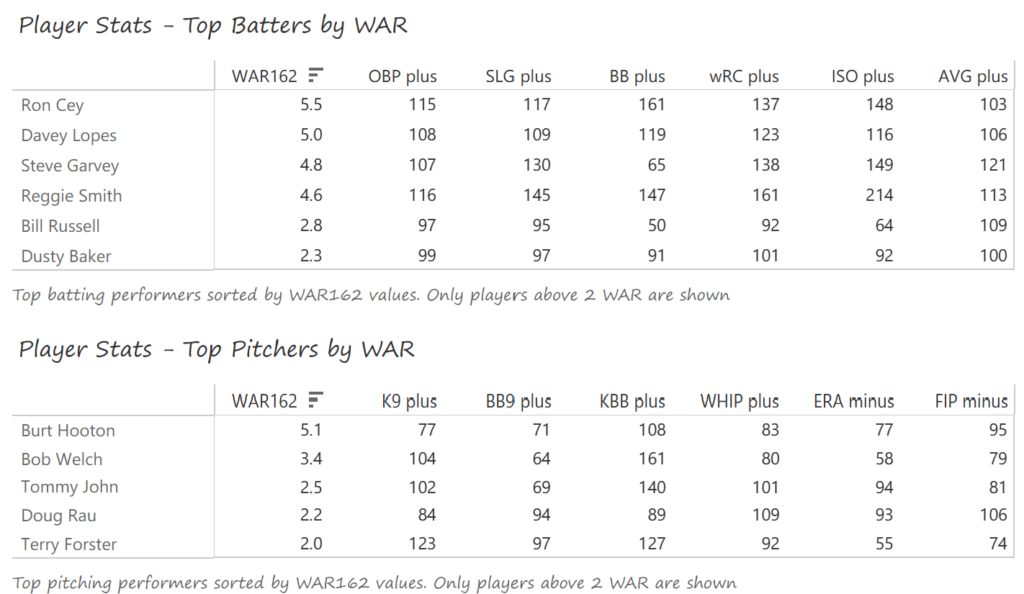
Ron Cey topped the Dodgers positional WAR, but was followed closely by three teammates. Cey had a .380 OBP with 23 home runs and 84 RBI, while his infield teammate Davey Lopes stole 45 bases, scored 93 runs, and hit 17 homers. Steve Garvey batted .316 with 21 homers and 113 RBI, and Reggie Smith added 29 home runs, 93 RBI, and a .295 BA. Burt Hooton led the effective pitching staff with a 19-10 record and 2.71 ERA, followed by 21-year-old Bob Welch, who went 7-4 with a 2.02 ERA in just 13 starts.

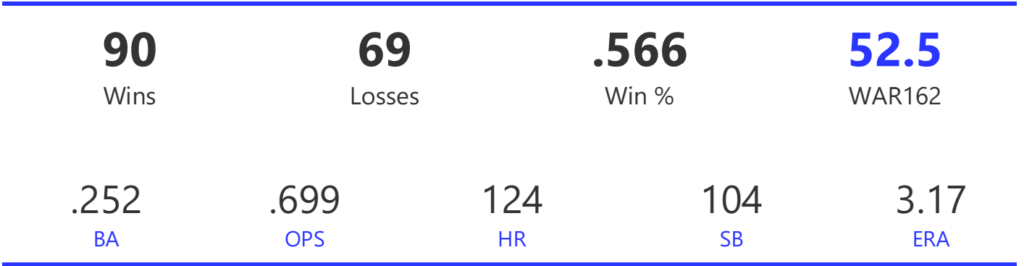
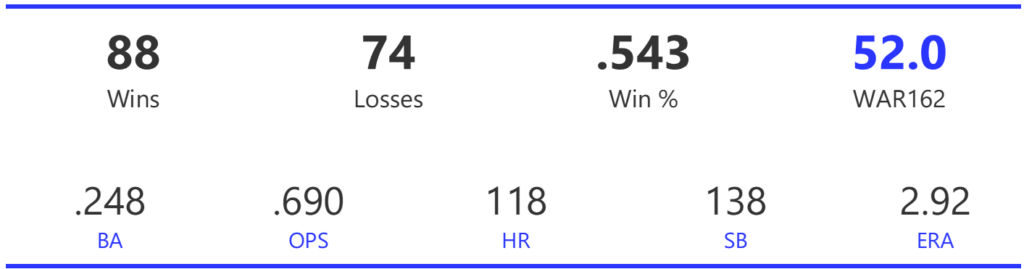
The 1975 Dodgers were not smiled on by good luck – their Pythagorean win projection had them at 95 wins, versus the 88 they actually won. It would hardly have mattered, as the Reds went 108-54 to run away with the NL West title.

The Dodgers’ offense in 1975 was essentially a league-average offense, with a few bright spots. They ranked second in stolen bases, but were just 4th in homers, 8th in runs scored, and 9th in BA in the 12-team NL. Playing in pitcher-friendly Dodger Stadium certainly didn’t help their offensive production. The Dodgers’ pitching staff was very effective, ranking first in both ERA (2.92) and WHIP (1.132). They also walked the fewest batters while striking out the 2nd-most for the season.

Third baseman Ron Cey led the Dodgers’ offense in 1975, with a .283 BA, 25 home runs, and 101 RBI. Davey Lopes led the NL with 77 steals and scored 108 runs, and Steve Garvey batted .319 with 95 RBI. Veteran outfielder Jim Wynn walked 110 times on the way to a .403 OBP. The pitching was led by Andy Messersmith, who led the NL with 19 complete games and 7 shutouts on his way to a 19-14 record and 2.29 ERA. Veteran Don Sutton led the NL in WHIP and won 16 games, and Doug Rau posted a 15-9 slate. Burt Hooton went 18-7 with a 2.82 ERA to round out a formidable rotation.

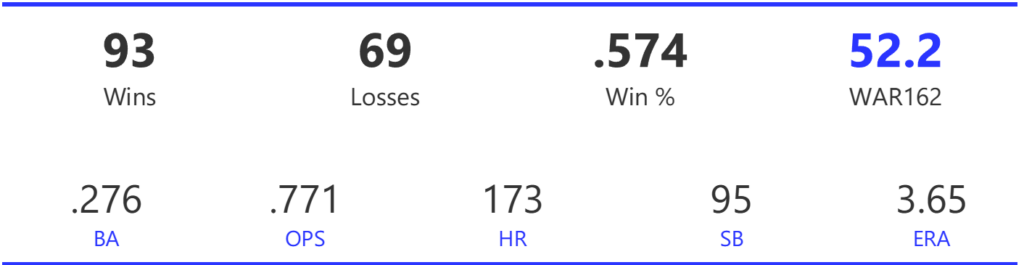
The 1978 Brewers trailed both the Yankees and Red Sox in a competitive AL East pennant race, finishing 6 games back before their one-game playoff. The Brewers were projected for 97 wins, so luck was not on their side in 1978.

The Brewers had a powerful offense that led the AL in runs with 804, just ahead of the Red Sox. They also ranked first in home runs, BA, OBP, SLG, and OPS, capitalizing on a multitude of contributors. The Brewers pitching was not as strong as their offense, placing 8th in ERA and 4th in WHIP. Their pitching staff didn’t beat themselves; they walked the fewest batters in the league.

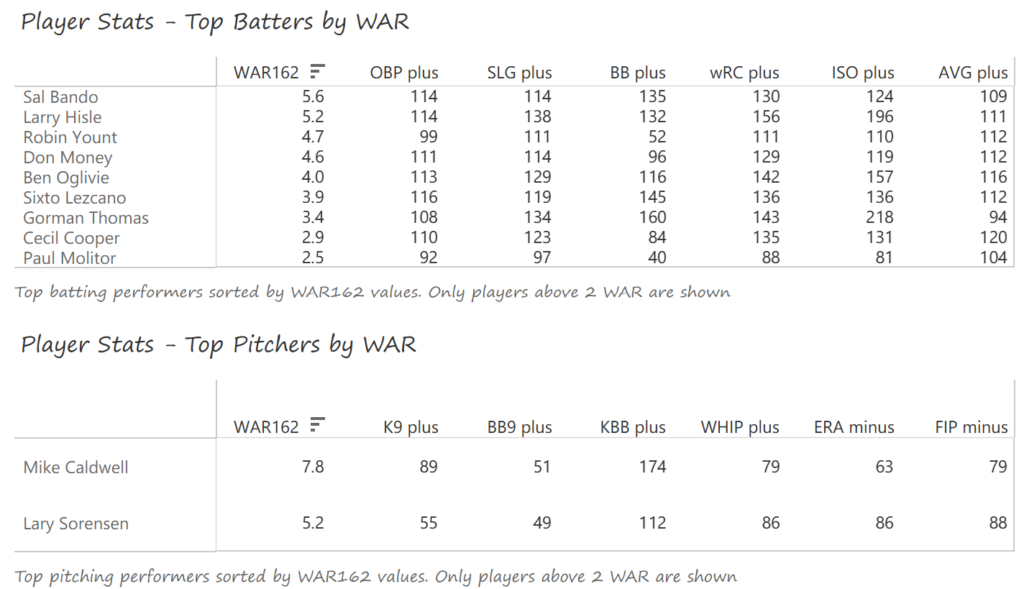
Sal Bando and Larry Hisle led the Brewers’ balanced offensive attack. Bando batted .285 with 17 homers, 78 RBI, and 85 RBI. Hisle had a career year with 34 homers, 115 RBI, and a .290 BA, followed by 22-year-old shortstop Robin Yount, who batted .293 with 16 stolen bases. Versatile infielder Don Money batted .293 with 88 runs scored, and Ben Ogilvie batted .303 with 18 home runs. Sixto Lezcano (.292 BA, 15 homers) and Gorman Thomas (32 homers, 86 RBI) were also major contributors. The Brewers had two top-flight pitchers, but little depth behind them. Lefty Mike Caldwell posted a 22-9 record with a 2.36 ERA and AL-best 23 complete games with 6 shutouts. Larry Sorensen went 18-12 in his age-22 season; both Caldwell and Sorensen walked fewer than two batters per 9 innings.

Summary

That’s it for the first entry in our MLB Team Rankings for the 1970s decade! Stay tuned for the countdown from #15 to #11, arriving in a few days. As always, thanks for reading!

1960s MLB Team Rankings Countdown: 5 through 1

Welcome to the final countdown post in our series of MLB team rankings for the 1960s. After decades with eight teams per league, the 1960s brought two waves of expansion – two new AL teams in 1961, two new NL teams in 1962, and two more for both in 1969. As a reminder, the teams are ranked from #20 through #1 based on aggregate WAR162. For the 1960s (1960-1969), a total of 198 teams were eligible, so the top 20 teams are a rather exclusive group – the top 10% for the decade. We’ll summarize each team, including portions of their team dashboard, and explain how they attained their ranking. So, without further ado, here are the teams ranked #5 through #1.

Here’s the interactive dashboard at Tableau Public: 1960s Top 20 MLB Teams Dashboard

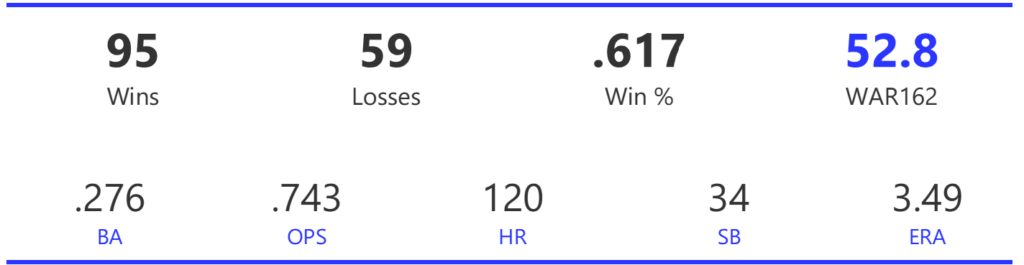
The Twins won the AL West by a comfortable 9 games over the Athletics in the first season with two divisions in each league. They then fell to the powerful Orioles in a 3-game sweep competing for the AL pennant.

The Twins had a potent offense, scoring an AL-best 790 runs with a league-leading 246 doubles. Minnesota also led the AL in BA, and placed second in both OBP and OPS, trailing only the Orioles. The Twins pitchers ranked third in ERA and fifth in WHIP in the 12-team AL, and had the 3rd-best strikeout-to-walk rate in the circuit.

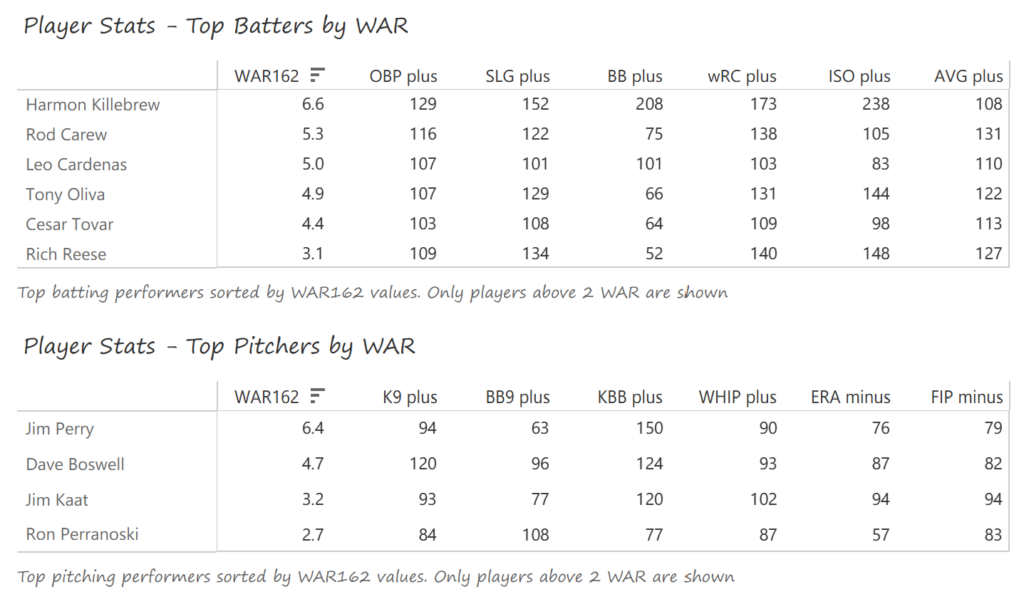
Slugging third baseman Harmon Killebrew claimed AL MVP honors based on a 49-homer, 140 RBI season where he drew 145 walks, all tops in the league. Rod Carew batted an AL-best .332, and Leo Cardenas batted .280 and played strong defense at shortstop. Tony Oliva batted .309 with a league-best 39 doubles, and versatile utilityman Cesar Tovar batted .288 with 45 stolen bases. Jim Perry (20-6, 2.82 ERA), Dave Boswell (20-12), and Jim Kaat (14-13, Gold Glove winner) led the mound corps. Ron Perranoski came out of the bullpen for an AL-best 31 saves with a 2.11 ERA.

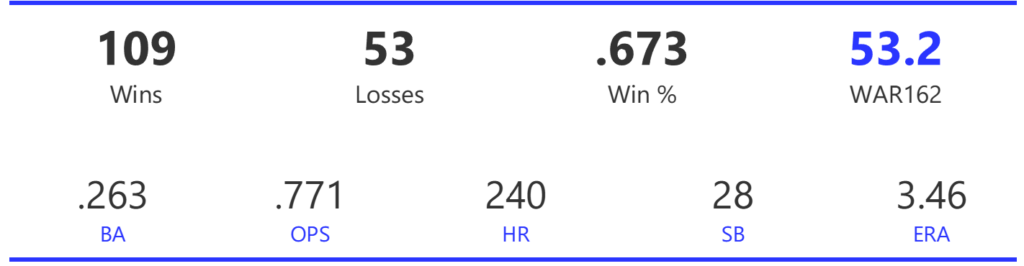
The Pirates dominated the NL in 1960, finishing 7 games ahead of the Braves. They then went on to defeat the Yankees in a dramatic 7-game World Series.

The Pirates scored the most runs in the NL, just 10 runs ahead of the Braves. They were not a power-hitting team, as their 120 home runs ranked 6th in the 8 team National League. They did, however, lead the NL in doubles, BA, OBP, and OPS. The pitching staff led the NL in WHIP while ranking third in ERA, and issued the fewest walks in the league. This led to the Pirates topping the strikeout-to-walk rate for the NL.

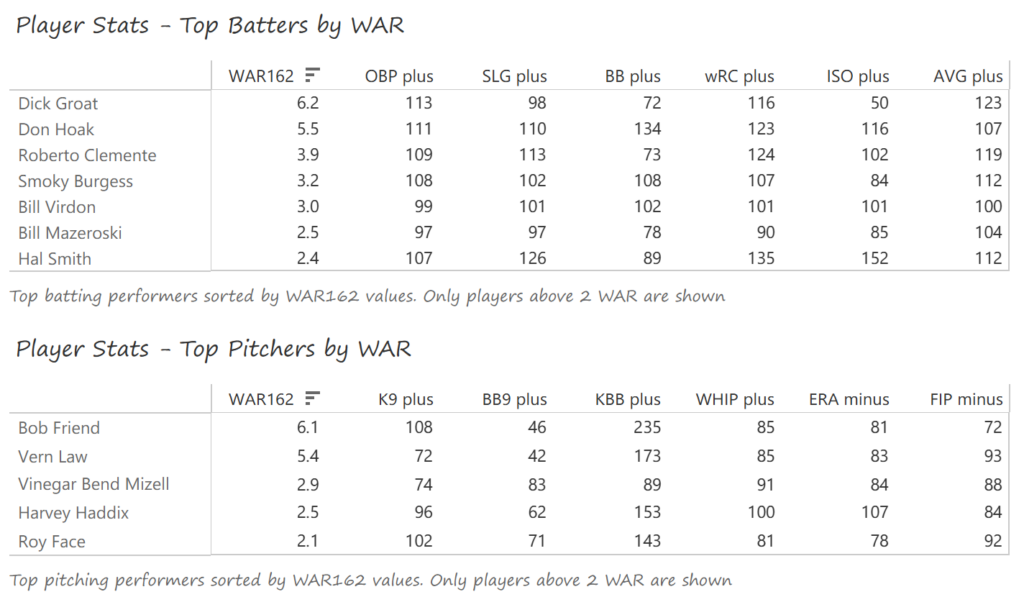
The Pirates were led by their MVP shortstop Dick Groat, who led the league with a .325 BA, and his infield teammate Don Hoak, who batted .282 with 97 runs scored. Star right fielder Roberto Clemente batted .314 with 94 RBI, and veteran catcher Smoky Burgess batted .294 across 110 games. Bob Friend (18-12, NL-best strikeout-to-walk rate) and Vern Law (20-9, Cy Young Award) anchored the pitching staff.

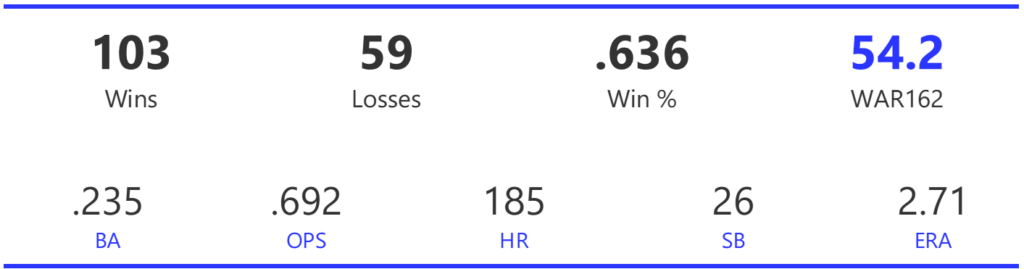
The 1961 Yankees posted 109 wins on the season (versus a projected 103) to cruise to the AL pennant by 8 games over a good Tigers team. They went on to defeat the Reds in a 5-game World Series, claiming their first title since the 1958 season.

While the Yankees blasted a record 240 homers, they were actually outscored on the season by the Tigers. The Yankees ranked 4th in BA and 5th in OBP, but led the AL in OPS due to their prodigious home run power. The New York pitching numbers were generally strong, trailing only the Orioles in both ERA and WHIP, and ranking in the top 4 in most categories.

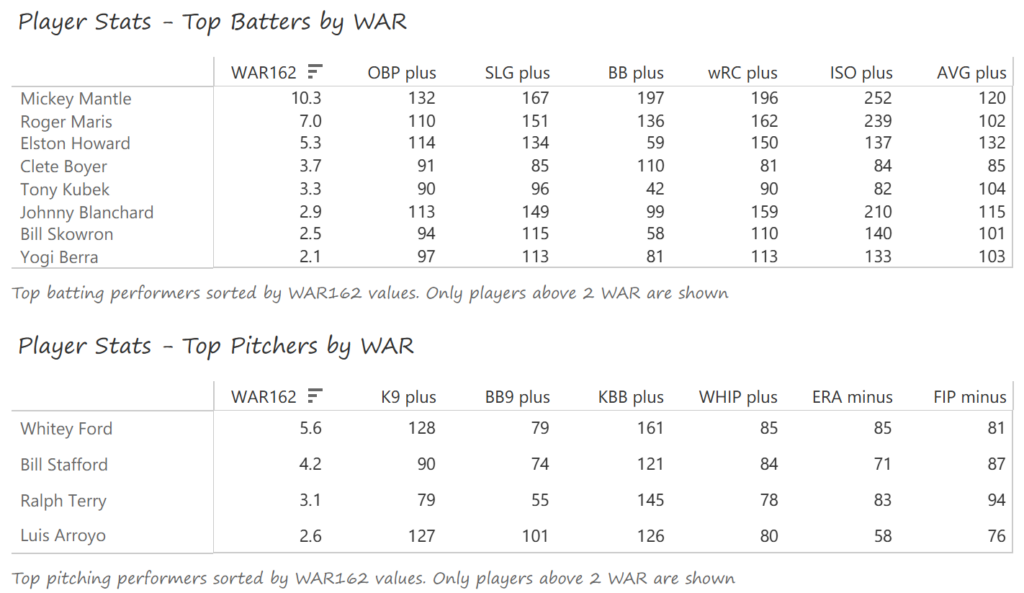
Mickey Mantle had another impressive season, batting .317 with 54 homers, 128 RBI, and 131 runs scored. His outfield partner, Roger Maris claimed MVP honors with a record 61 home runs, and added 132 runs scored and 141 RBI, both tops in the league. Elston Howard had a fine season from his catcher spot, with a .348 BA and 21 homers to round out a powerful top three hitters. Veteran lefty Whitey Ford was the Yankees ace and Cy Young winner with a 25-4 record, with support from 22-year-old Bill Stafford (14-9, 2.68 ERA).

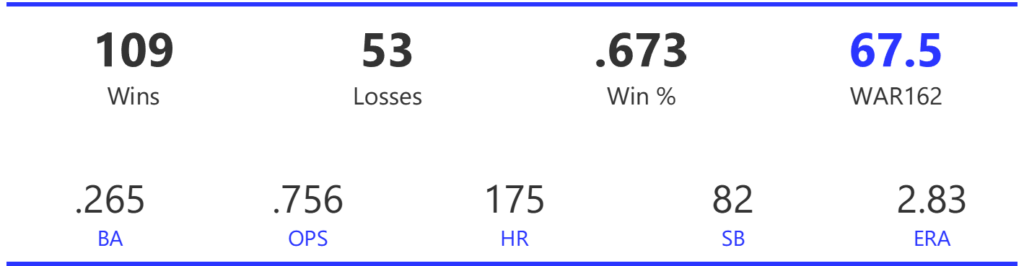
The 1968 Tigers recovered from their near-miss the previous season to roll to the AL pennant with a resounding 12-game margin over the Orioles. They then rebounded from a 3-1 deficit to top the Cardinals in a dramatic 7-game World Series.

The Tigers easily led the AL in runs scored with 671, 57 ahead of their closest rival. Their 185 home runs were 52 more than the next team, and they also topped the AL in OPS in the so-called “Year of the Pitcher”. Tigers pitchers ranked third in both ERA and WHIP, and second in both strikeouts and strikeout-to-walk rate.

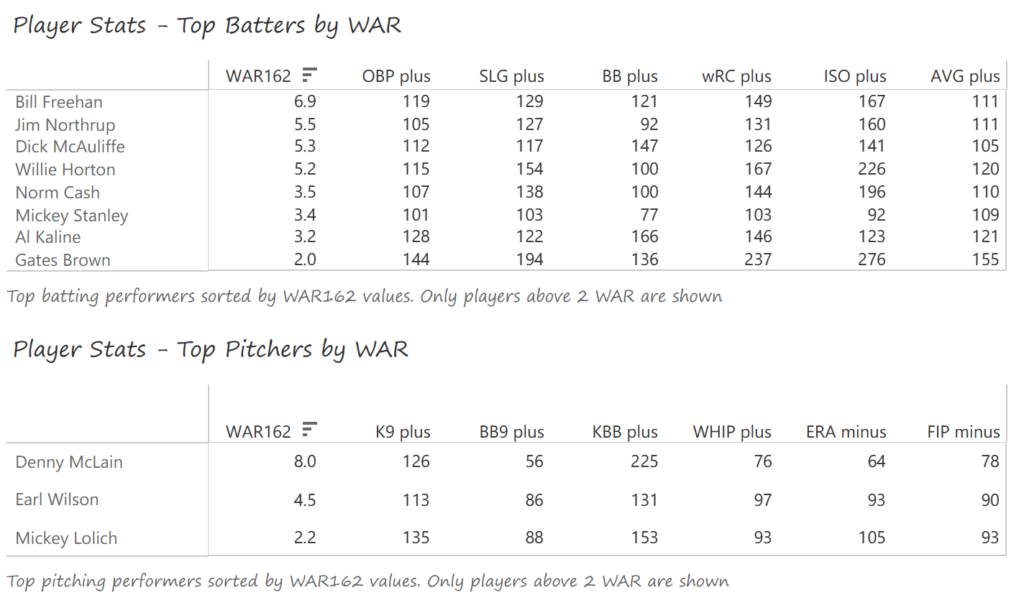
Catcher Bill Freehan had a career year, launching 25 homers with 84 RBI and a Gold Glove for his defensive prowess. Jim Northrup added 21 homers and 90 RBI, while second baseman Dick McAuliffe scored an AL-best 95 runs and drew 82 walks. Willie Horton belted 36 homers with 85 RBI and a .285 BA to round out the Tigers’ most productive quartet. Cy Young winner Denny McLain won 31 games with a 1.96 ERA and 28 complete games, while Earl Wilson (13) and Mickey Lolich (17) combined for an additional 30 wins.

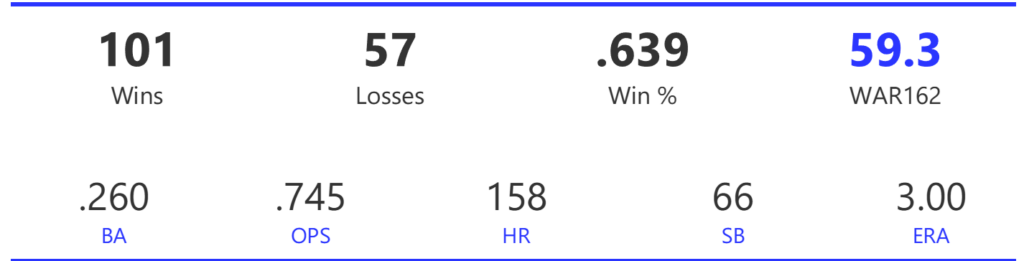
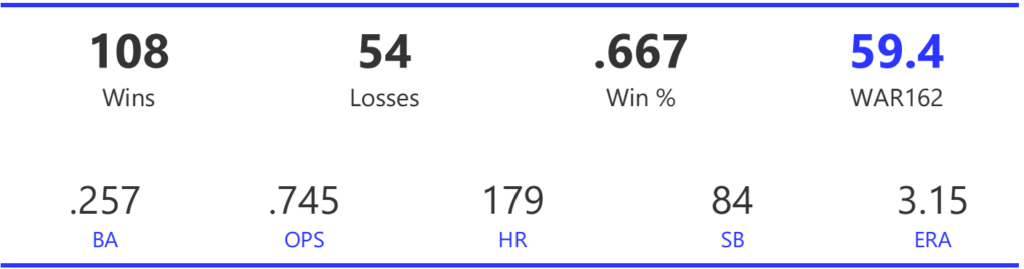
The 1969 Orioles turned the AL pennant race into their personal playground, topping the Tigers by 19 games to win the newly formed AL East. They then swept the Twins in 3 games to claim the pennant. The Orioles were denied a World Series title with a shocking 5-game loss to the upstart Mets.

The Orioles paced the AL in OBP and OPS, and ranked in the top three in most other categories – doubles, homers, and BA among them. Their pitching dominated the league, ranking first in ERA, WHIP, and strikeout-to-walk rate.

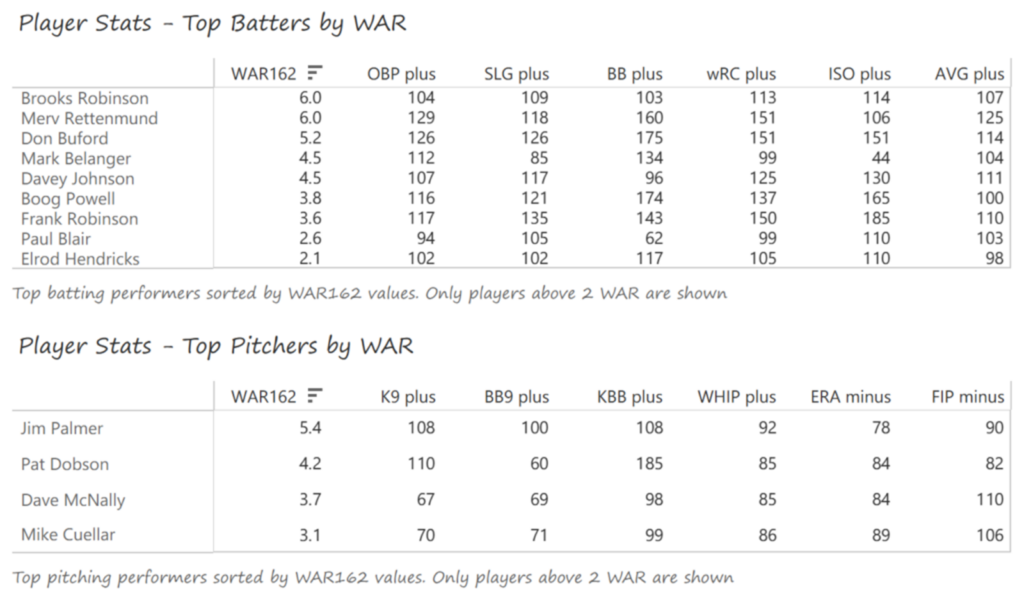
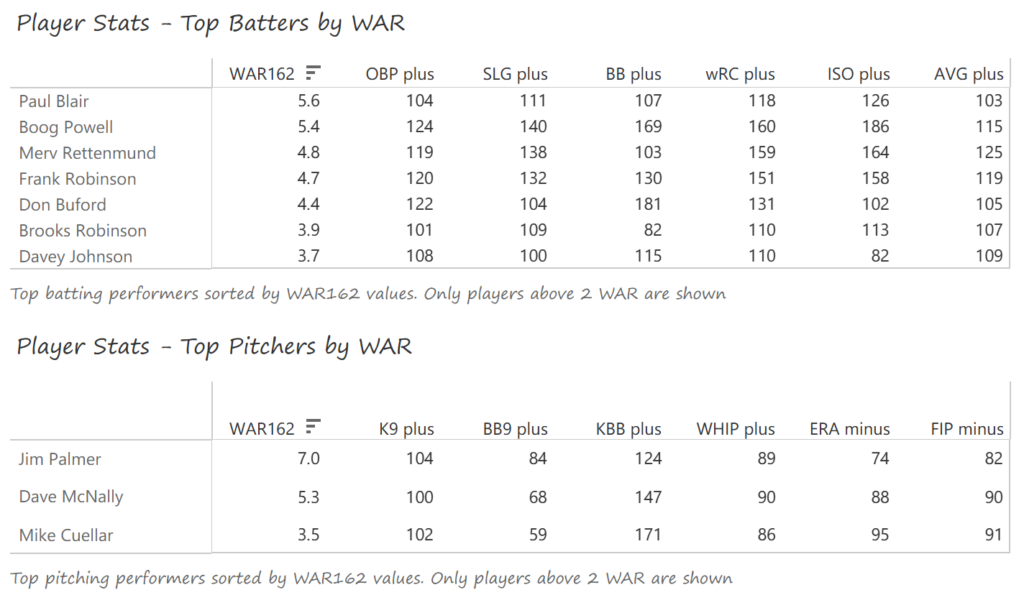
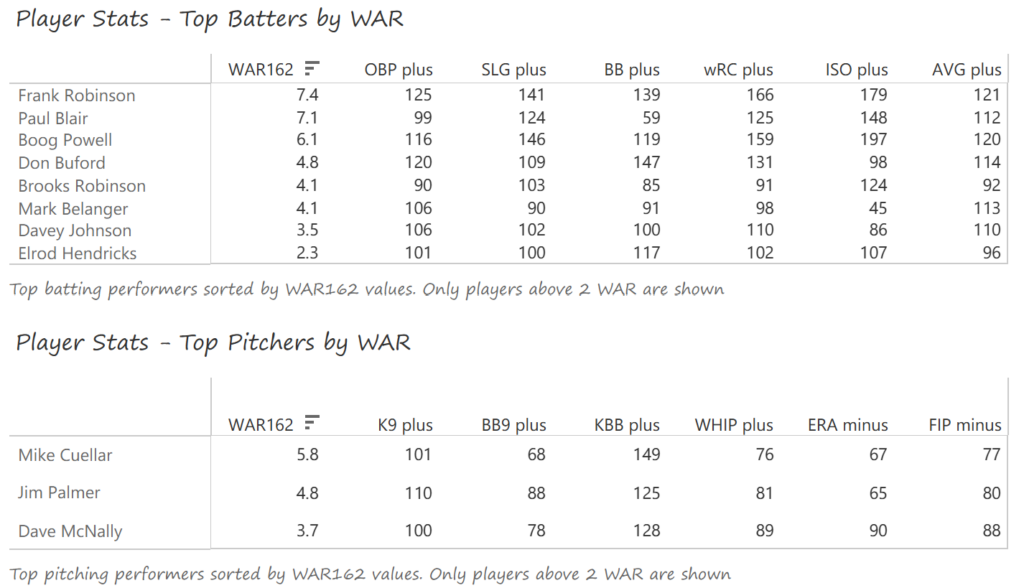
Baltimore had a loaded cast of position players in 1969, led by Frank Robinson (.308 BA, 32 homers, 100 RBI, 111 runs scored) and Paul Blair (20 steals, .285 BA, 102 runs, Gold Glove). Boog Powell bashed 37 homers with 121 RBI and a .304 BA, and Don Buford drew 96 walks while scoring 99 runs. Brooks Robinson (23 homers, 84 RBI, Gold Glove) and Mark Belanger (.287 BA, Gold Glove) formed an outstanding left side of the Orioles infield. Mike Cuellar shared the AL Cy Young Award based on a 23-11 record and 2.38 ERA. Jim Palmer (16-4, 2.34 ERA) and Dave McNally (20-7) rounded out the best starting staff in baseball for 1969.

Summary

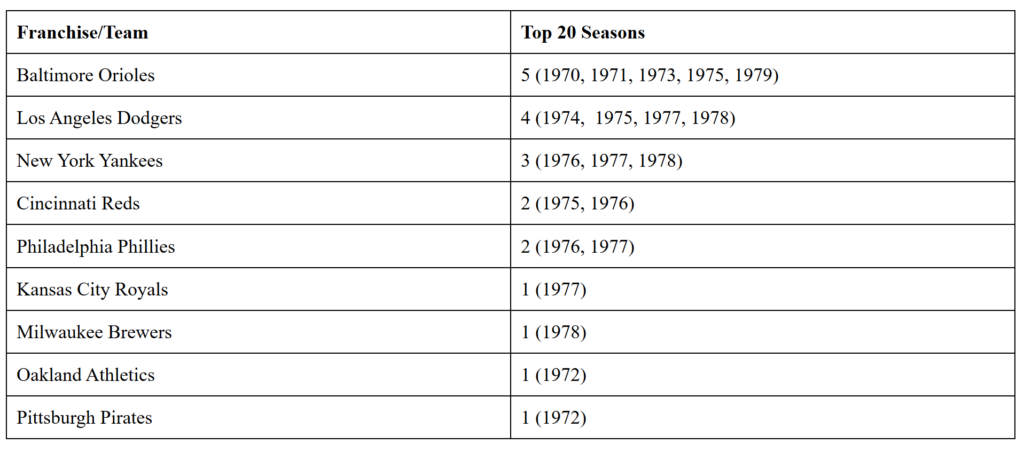
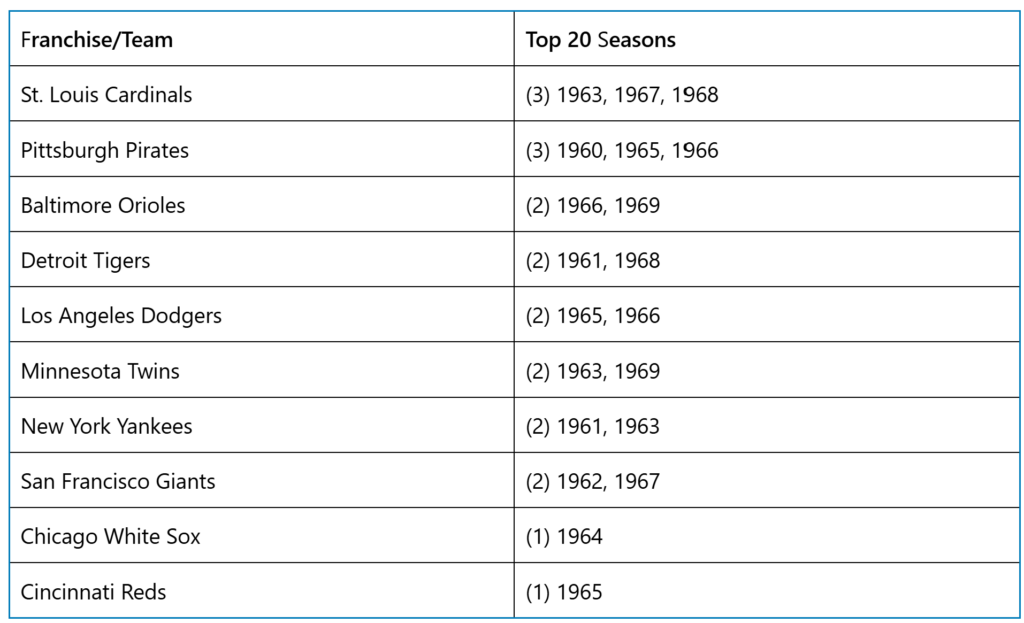
That’s it for the final entry in our MLB Team Rankings for the 1960s decade! Here’s a summary of the most dominant franchises of the 1960s:
1960s MLB Team Rankings Countdown: 10 through 6
Welcome to the second countdown post in our series of MLB team rankings for the 1960s. After decades with eight teams per league, the 1960s brought two waves of expansion – two new AL teams in 1961, two new NL teams in 1962, and two more for both in 1969. As a reminder, the teams are ranked from #20 through #1 based on aggregate WAR162. For the 1960s (1960-1969), a total of 198 teams were eligible, so the top 20 teams are a rather exclusive group – the top 10% for the decade. We’ll summarize each team, including portions of their team dashboard, and explain how they attained their ranking. So, without further ado, here are the teams ranked #10 through #6.

Here’s the interactive dashboard at Tableau Public: 1960s Top 20 MLB Teams Dashboard

The 1964 White Sox lost the pennant by a single game to the Yankees, with the Baltimore Orioles another game back in a torrid race.

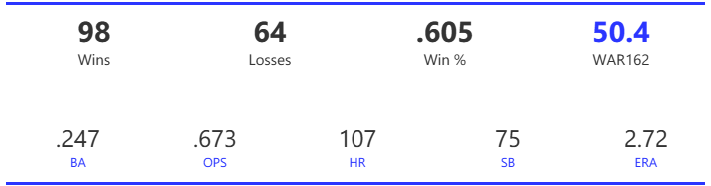
The Sox offense was limited, as their 642 runs ranked 7th in the league, and their 106 homers ranked 9th in the 10-team AL. Their best offensive categories were OBP (3rd), walks (1st), and strikeouts (1st). This was an offense that made contact and drew walks to compete with their AL rivals. Pitching was the major strength for the Chicagoans, with a 2.72 ERA and a 1.102 WHIP, numbers that easily topped the AL. The Chicago staff was very stingy with walks and also yielded the fewest hits of any team.

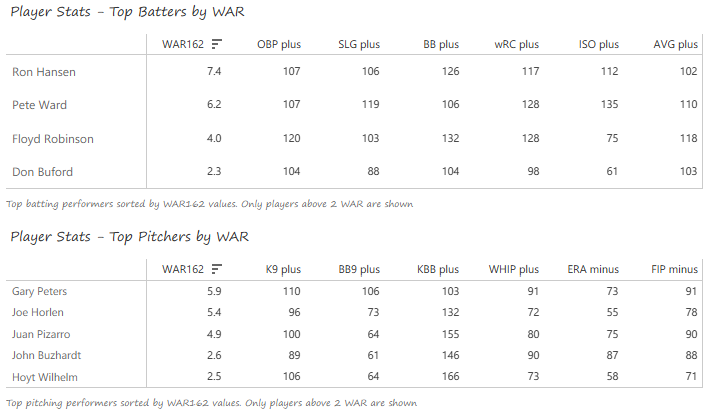
Ron Hansen and Pete Ward were the team’s offensive leaders, aided by Floyd Robinson. Hansen (20 homers, 85 runs) played well at shortstop, and Ward (23 homers, 94 RBI, .282 BA) added plenty of production from third base. Robinson batted .301 with a .388 OBP to round out the Sox’s top producers. On the mound, Gary Peters authored a 20-8 record and 2.50 ERA, while Joe Horlen won 13 with a sparkling 1.88 ERA and the AL’s top WHIP and hits per 9 innings numbers. Juan Pizarro went 19-9, John Buzhardt added 10 wins, and knuckleballer Hoyt Wilhelm saved 21 games at age 41.

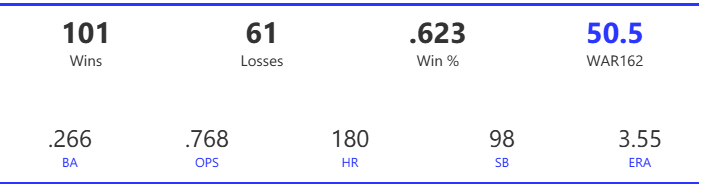
The 1961 Tigers won 101 games but still finished 8 games behind a powerful Yankees squad in the AL pennant chase. The Tigers’ win projection was 98, so they had a bit of good fortune, but were still a strong team.

Offense powered the Tigers to their 101 wins, as their 841 runs led the AL. Their 180 homers trailed the slugging Yankees and Angels, but they led the league in BA and OBP while placing second in OPS. Detroit’s pitching was solid, with third-place rankings in ERA and WHIP, and the top spot in strikeout-to-walk rate, courtesy of issuing the fewest free passes in the AL.

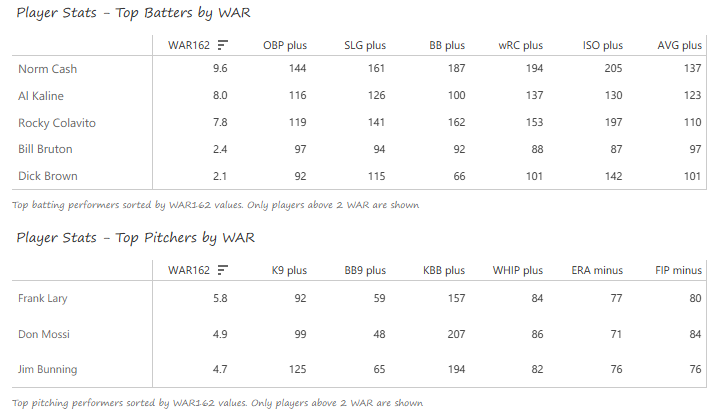
First baseman Norm Cash had a career year, leading the AL in BA (.361), OBP (.487), and OPS (1.148) while slugging 41 homers with 132 RBI and 119 runs scored. Al Kaline also had a fine season, batting .324 with a league-best 41 doubles and Gold Glove defense, and Rocky Colavito was close behind after slugging 45 homers with 140 RBI while batting .290. This trio accounted for more than 80% of the Tigers’ positional WAR. The pitching staff was led by Frank Lary (23-9), who tossed an AL-best 22 complete games. Don Mossi topped the AL in the fewest walks per 9 innings metric while winning 15, and Jim Bunning posted a 17-11 record.

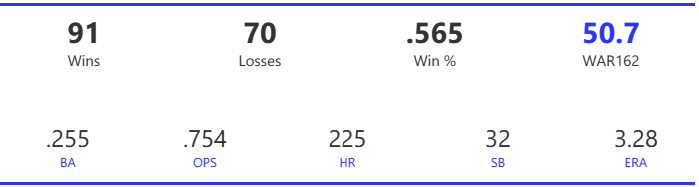
The 1963 Twins finished third in the American League pennant race, 15.5 games back of the Yankees. However, the Twins were a very unlucky team for the season, finishing 7 games below their projected win figure. The Yankees were slightly lucky on the year (+4 wins over projection); put those together and the Twins were just two games worse than the Yanks.

The Twins were a strong offensive club, leading the AL with 767 runs, 53 more than the Yankees. They clobbered 222 homers to easily top the AL, and they ranked first in BA and OPS, and a close second in OBP. Their pitching was above average, but not exceptional – third in ERA, WHIP, and strikeout-to-walk rate.

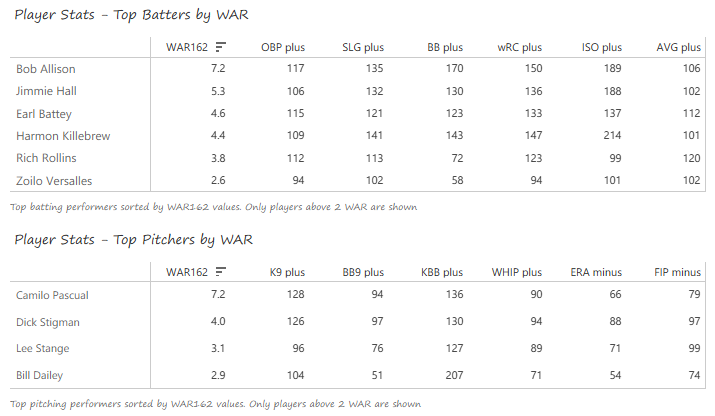
Bob Allison had a fine season, leading the AL in runs (99) and OPS (.911) after a 35-homer season. Jimmie Hall added 33 homers in his rookie year, and catcher Earl Battey added 26 more round-trippers. Harmon Killebrew led the AL with 45 homers, and Rich Rollins batted .307. Camilo Pascual was the ace of the pitching staff, going 21-9 and leading the league with 18 complete games and 202 strikeouts. Dick Stigman (15) and Lee Stange (12) combined for 27 wins.

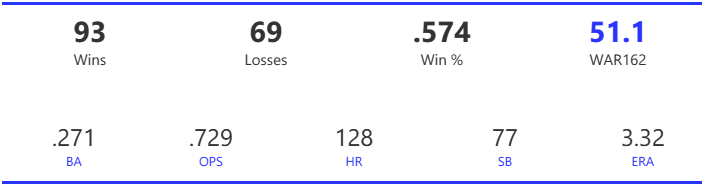
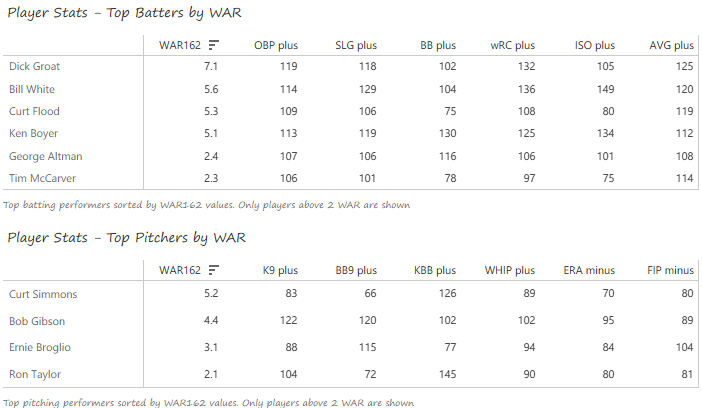
The 1963 Cardinals were the runner-up to the Dodgers in the NL, as the Dodgers were 7 games over their win projection, and the Cardinals were one below their projected 94 wins.

The Cardinals led the NL with 747 runs, and also led the league in doubles and triples. They also topped the league in BA and OBP, and finished a single point behind the Giants in OPS. The pitching staff was rather average, finishing 7th in ERA, 5th in WHIP, and 6th in strikeout-to-walk rate.

Dick Groat, Bill White, Curt Flood, and Ken Boyer all provided offensive firepower as well as defensive skill. Groat led the way (.319 BA, 43 doubles (NL-best), 85 runs), while White picked up a Gold Glove in addition to slugging 27 homers with 109 RBI. Flood was also a Gold Glove winner, while batting .302 with 112 runs, and Ken Boyer picked up a Gold Glove to go with 24 homers and 111 RBI. On the mound, it was primarily Curt Simmons and Bob Gibson leading the way. Simmons posted a 15-9 record with 6 shutouts and a 2.48 ERA, and Gibson racked up 18 wins.

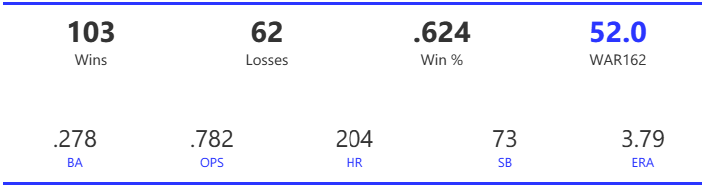
The 1962 Giants defeated their Los Angeles rivals in a single-game playoff to claim the NL pennant. They then lost a heartbreaking 7-game World Series to the Yankees.

The Giants topped the league with 878 runs, 36 more than the Dodgers. They also launched 204 homers and swept the BA, OBP, SLG, and OPS categories behind a deep offense. The Giants ERA ranked just 6th in the NL, but they were 2nd in WHIP. Still, it was the offense that made the Giants pennant winners.

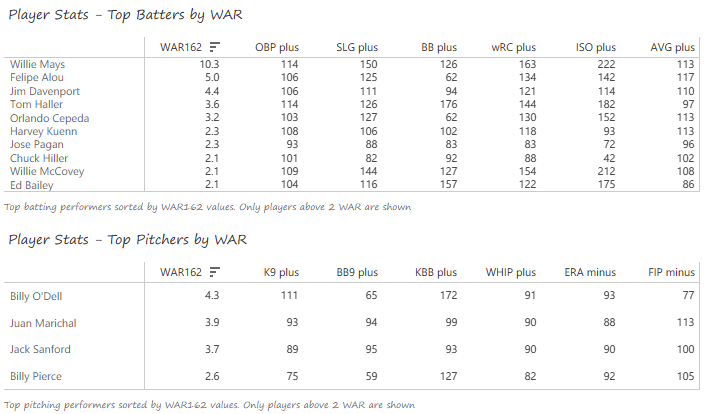
Willie Mays recorded one of his best seasons, mashing an NL-best 49 homers, with 141 RBI, 130 runs, 18 stolen bases, and a .304 BA, plus a Gold Glove in center field. Right fielder Felipe Alou batted .316 with 25 home runs and 98 RBI, and third baseman added a Gold Glove to go with his .297 BA. The Giants pitching was led by the trio of Billy O’Dell (19-14), Juan Marichal (18-11), and Jack Sanford (24-7). All three had ERAs in the mid-3s, so they weren’t dominant, just solid.

Summary

That’s it for the third entry in our MLB Team Rankings for the 1960s decade! Stay tuned for the countdown from #5 to #1, arriving in a few days. As always, thanks for reading!

1960s MLB Team Rankings Countdown: 15 through 11

Welcome to the second countdown post in our series of MLB team rankings for the 1960s. After decades with eight teams per league, the 1960s brought two waves of expansion – two new AL teams in 1961, two new NL teams in 1962, and two more for both in 1969. As a reminder, the teams are ranked from #20 through #1 based on aggregate WAR162. For the 1960s (1960-1969), a total of 198 teams were eligible, so the top 20 teams are a rather exclusive group – the top 10% for the decade. We’ll summarize each team, including portions of their team dashboard, and explain how they attained their ranking. So, without further ado, here are the teams ranked #15 through #11.

Here’s the interactive dashboard at Tableau Public: 1960s Top 20 MLB Teams Dashboard

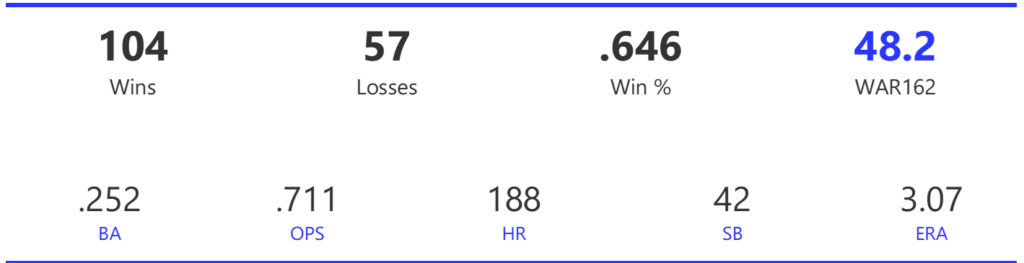
The 1963 Yankees won 104 games to cruise to the AL pennant by 10.5 games over the White Sox. The two teams were more evenly matched than the numbers suggest; Pythagorean projections have the Yankees just 2.5 games better than the Sox. The Yankees went to the World Series, only to be stunned by the Dodgers in a 4-game sweep.

The New Yorkers had a good offense, but not a dominant one. They ranked 2nd in runs, home runs, and BA, but just 7th in OBP and 3rd in OPS. The Yankees ranked dead last in walks, a dramatic departure from tradition. Pitching kept the Yankees at the top, as they led the AL in WHIP and ranked second behind the White Sox in ERA.

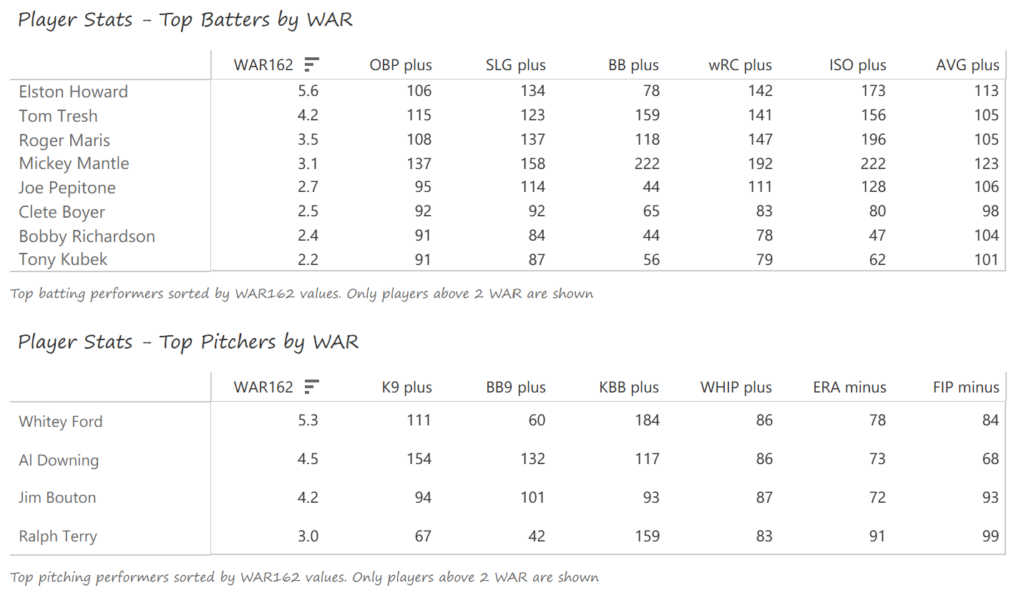
Elston Howard was the most effective position player for the Yankees, batting .287 with 28 homers and 85 RBI from his catcher position. Tom Tresh had 25 home runs and a .371 OBP as one of the few Yankees who would accept a walk (83 on the season), and Roger Maris added 23 homers. Mickey Mantle managed just 213 plate appearances due to injury, batting .314 with a 1.063 OPS. Joe Pepitone hammered 27 homers at age 22, but had just a .304 OBP. The Yankees benefited from an excellent age-34 season assembled by Whitey Ford (24-7, 2.74 ERA). Al Downing had the top hits and strikeout rates per 9 innings in the league with a 13-5 record, and Jim Bouton recorded a 21-7 record with a 2.53 ERA. Ralph Terry led the league in WHIP (1.063) and complete games (18) on the way to 17 wins.

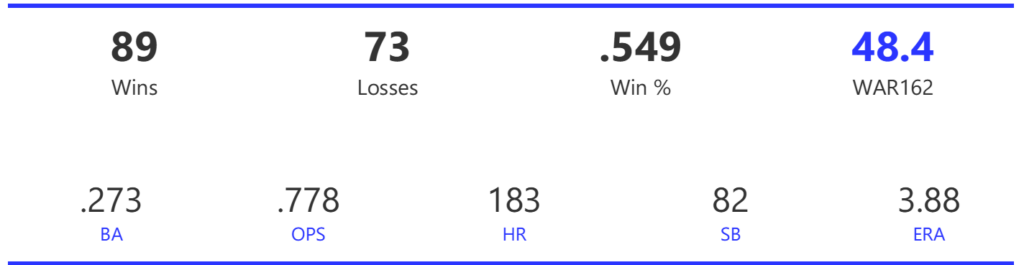
The Reds finished fourth in the NL, 8 games behind the Dodgers, despite winning 89 games. Pythagorean projections suggest that the Dodgers were quite lucky (+5 wins over expected) and the Reds were rather unlucky (-4 wins below expected). The Reds were good enough to win the NL pennant, but fortune had other ideas.

The Reds led the league in runs by a whopping 117-run margin over the Braves, helped by cozy Crosley Field. They ranked first in doubles and triples, and second to the Braves in home runs. The Reds also led the NL in each percentage metric – BA (.273), OBP (.339), SLG (.439), and OPS (.778). Pitching was their downfall, as they ranked 9th in both WHIP and ERA. The Reds staff struck out the most batters in the league; unfortunately, they also issued the most walks. Some of these numbers were tied to their ballpark, some were not.

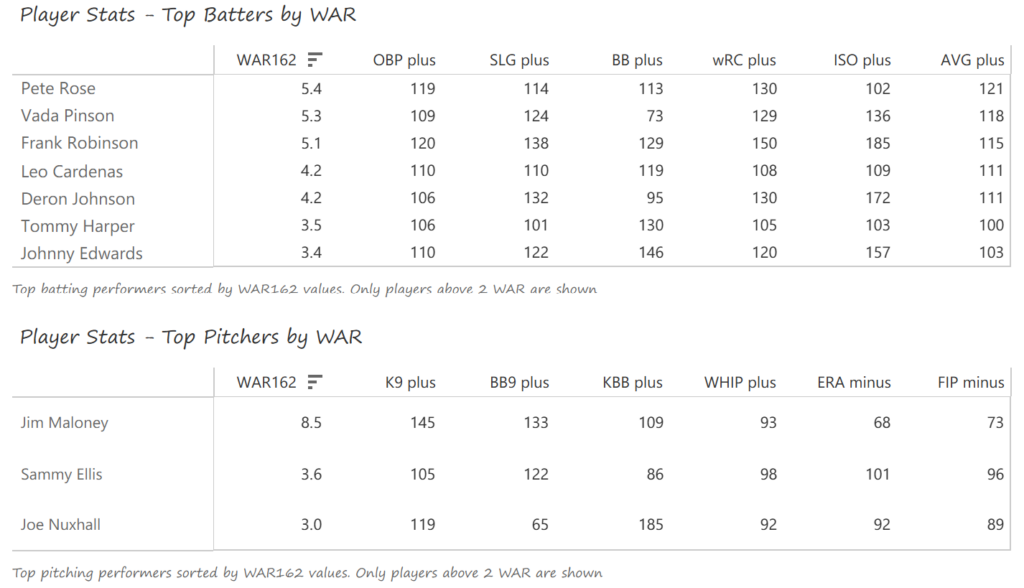
Pete Rose emerged as an offensive force for the Reds, batting .312, with an NL-best 209 hits. Rose also scored 117 runs and had 81 RBI. Vada Pinson had a fine season (.305 BA, 22 homers, 94 RBI, 21 steals), and Frank Robinson batted .296 with 33 homers, 113 RBI, and 109 runs scored in his final Reds season. Shortstop Leo Cardenas batted .287, and Deron Johnson belted 32homers with an NL-best 130 RBI. Tommy Harper led the NL with 126 runs scored and stole 35 bases, and catcher Johnny Edwards added 17 homers. On the mound, Jim Maloney had a great season, with a 20-9 record, 2.54 ERA, 244 strikeouts, and 5 shutouts. Sammy Ellis went 22-10, and 36-year-old Joe Nuxhall was effective as a starter and reliever, recording an 11-4 mark.

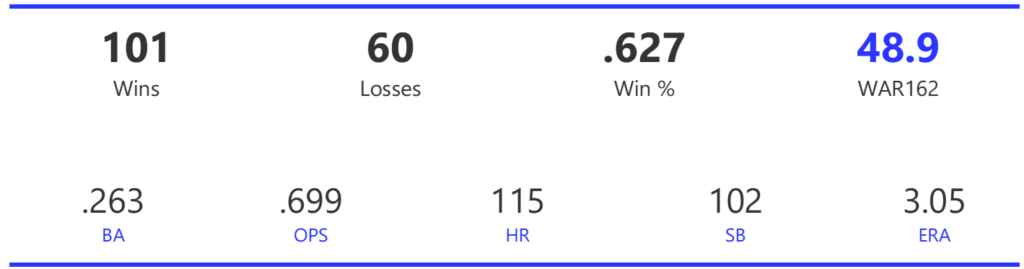
The 1967 Cardinals ran away with the NL pennant, defeating the Giants by 10.5 games. They were a bit lucky to win 101 (Pythagorean projection was 97 wins), but were still the best NL team. The Cards went on to defeat the upstart Red Sox in a thrilling 7-game World Series.

The Cardinals had a solid offense, finishing just 7 runs behind the Cubs, leading the NL in steals, and ranking second in OBP and OPS. The pitching staff was also solid, trailing only the Giants in ERA and WHIP, and tying for second with 17 shutouts on the season.

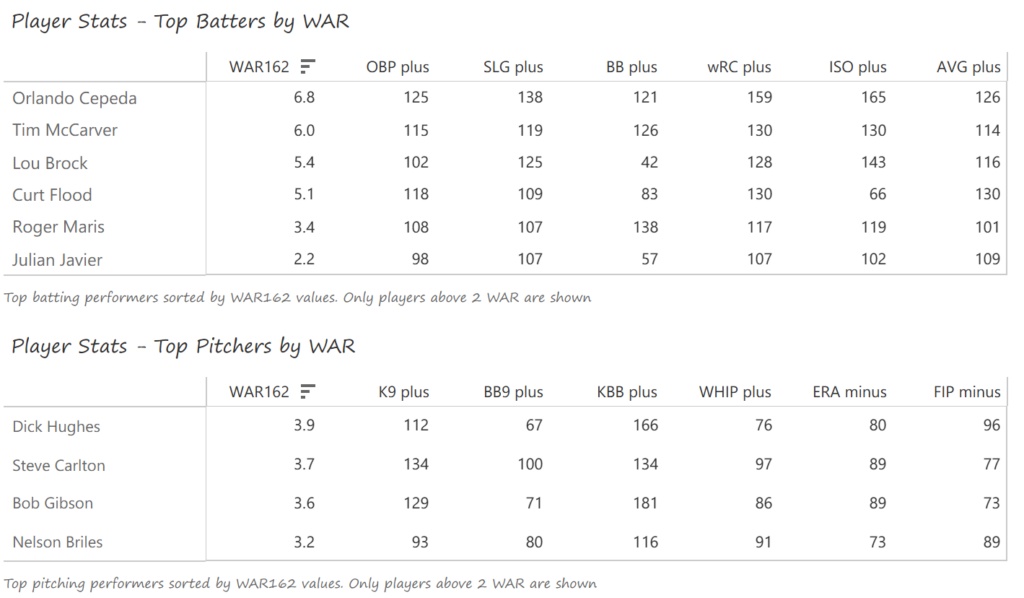
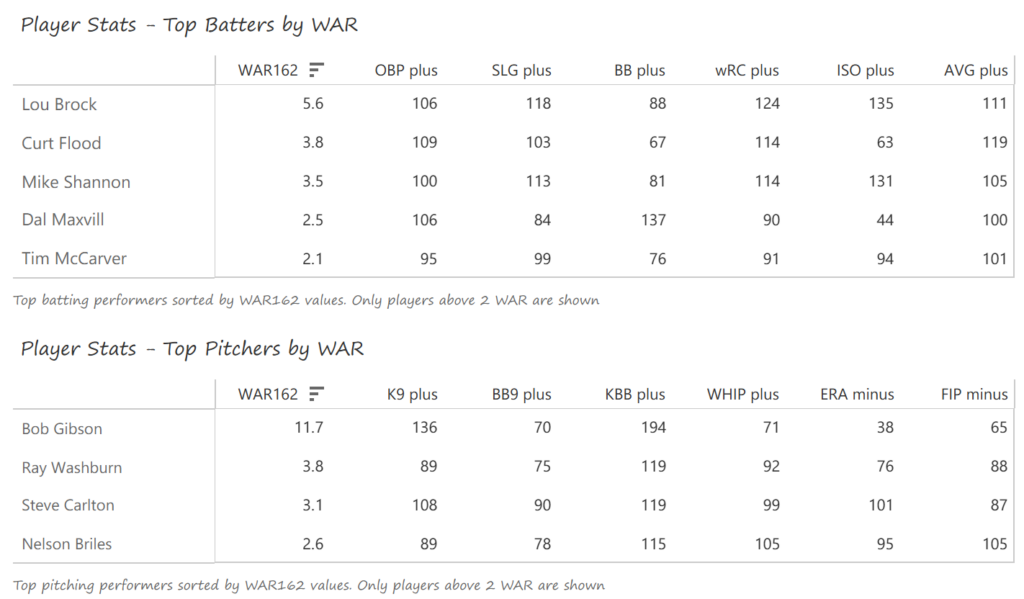
Orlando Cepeda earned NL MVP honors with a .325 BA, 25 home runs, 111 RBI (NL-best), and 37 doubles. Catcher Tim McCarver was second in MVP voting after a .295 BA with 14 homers and an excellent defensive season. Lou Brock led the league with 1123 runs and 52 stolen bases, and Curt Flood batted a robust .335 with Gold Glove defense in center field. Dick Hughes led a balanced pitching staff with a 16-6 mark and the top WHIP and hits per 9 innings marks in the NL. Steve Carlton (age 22) recorded a 14-9 campaign, and Bob Gibson posted a 13-7 record. Nelson Briles went 14-5 with a 2.43 ERA, working both in the rotation and out of the bullpen.

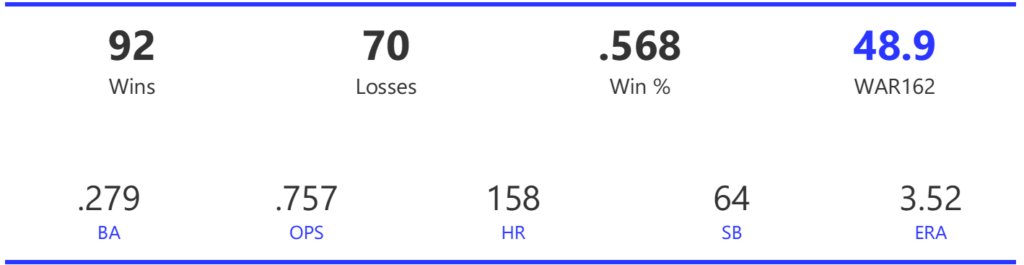
The 1966 Pirates finished a close third in the NL pennant race, just 3 games behind the Dodgers, and 1.5 back of a very lucky (+7 wins over projection) Giants team. The Pirates had identical 46-35 records at home and on the road in their near-miss season.

The Pirates had a very good offense, scoring 759 runs on the season, 2nd-most in the NL. They also led the league in doubles and triples. Their .279 BA was 16 points higher than the next-best mark, and they also led the league in OBP, SLG, and OPS. Unfortunately, the Pirates’ pitching was less effective than their hitting. The team ranked 4th in ERA and 7th in WHIP, and was no better than average in several other categories.

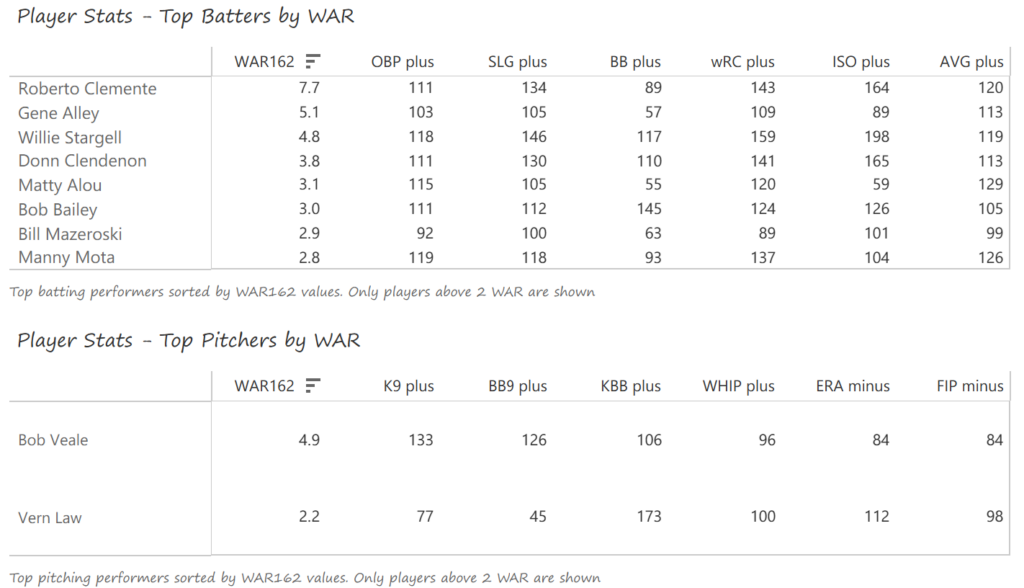
Right fielder Roberto Clemente was the clear leader of a deep offense, winning the NL MVP after a .317 BA, 29 homers, 119 RBI season. Clemente also scored 105 runs and claimed a Gold Glove. Gene Alley had a fine season at shortstop, batting .299 and winning a Gold Glove, and Willie Stargell belted 33 homers with 102 RBI and a .315 BA. Donn Clendenon batted .299 with 28 homers, and Matty Alou batted an NL-best .342. Bob Veale was the ace of a limited pitching staff, posting a 16-12 record with 229 strikeouts, aided by 36-year-old Vern Law, who added 12 wins.

The Dodgers edged out the Giants by 1.5 games and the Pirates by 3 games to claim the 1966 NL pennant. Their season ended on a low note when they were stunned in a World Series sweep at the hands of the Orioles.

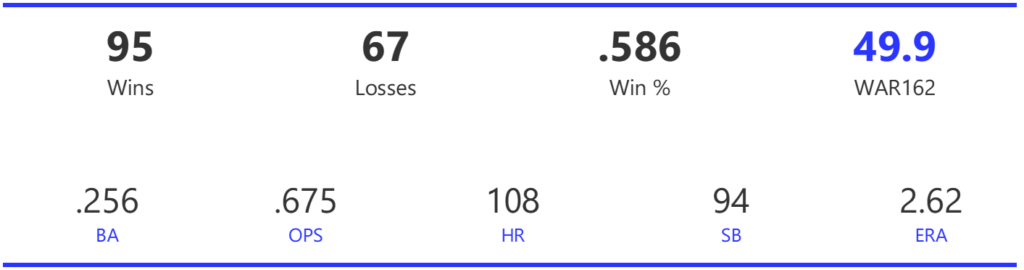
The Dodgers played home games at Dodger Stadium, notoriously known as a pitcher’s park. Even so, their offensive output was unimpressive, as they ranked 8th (out of 10) in runs scored, 7th in doubles, 10th in triples, and tied for 8th in home runs. Their .256 BA was 5th-best in the NL, as was their OBP, and they ranked a lowly 8th in OPS. Pitching was the Dodgers’ savior, with a 2.62 ERA and a 1.127 WHIP that ranked far ahead of their closest pursuers. They also led the league in strikeouts and strikeout-to-walk rate.

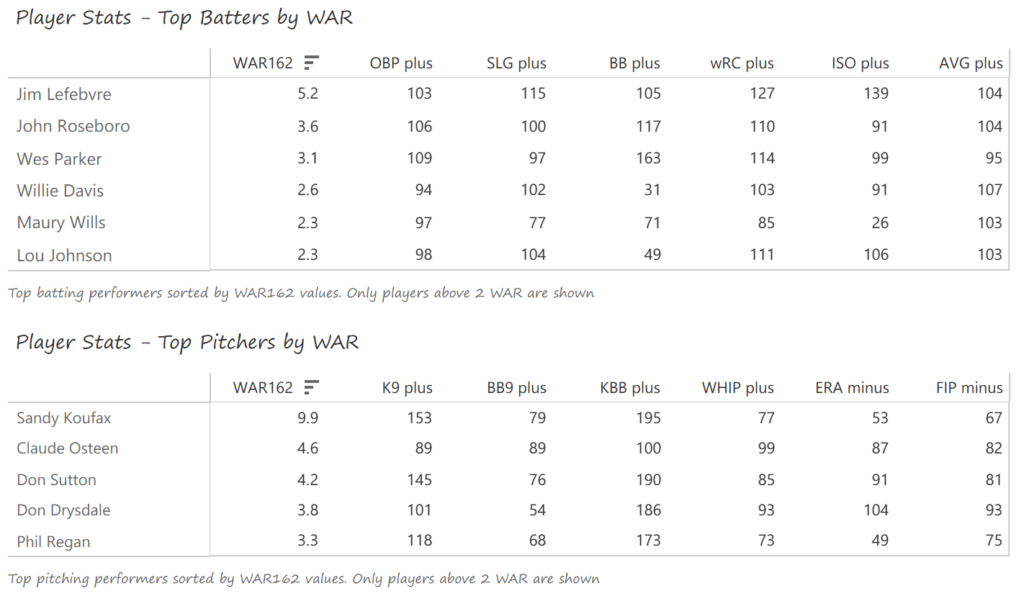
Jim Lefebvre led the offense with 24 homers, 74 RBI, and 69 runs scored, with catcher John Roseboro winning a Gold Glove and batting .276. Wes Parker was a solid presence at first base with a .351 OBP to help the Dodgers limited offense score often enough to win. On the mound, Sandy Koufax had a brilliant season, winning 27 games with a 1.73 ERA, 27 complete games, 317 strikeouts, and 5 shutouts, all best in the league. This performance earned Koufax the Cy Young Award for 1966. Claude Osteen won 17 games with a 2.85 ERA, Don Sutton had a fine age-21 season, winning 12 with a 2.99 ERA, and veteran Don Drysdale added another 13 wins. Phil Regan had a marvelous season out of the bullpen, posting a 14-1 mark with a 1.62 ERA and an NL-best 21 saves.

Summary

That’s it for the second entry in our MLB Team Rankings for the 1960s decade! Stay tuned for the countdown from #10 to #6, arriving in a few days. As always, thanks for reading!

1960s MLB Team Rankings Countdown: 20 through 16

Welcome to the first countdown post in our series of MLB team rankings for the 1960s. After decades with eight teams per league, the 1960s brought two waves of expansion – two new AL teams in 1961, two new NL teams in 1962, and two more for both in 1969. As a reminder, the teams are ranked from #20 through #1 based on aggregate WAR162. For the 1960s (1960-1969), a total of 198 teams were eligible, so the top 20 teams are a rather exclusive group – the top 10% for the decade. We’ll summarize each team, including portions of their team dashboard, and explain how they attained their ranking. So, without further ado, here are the teams ranked #20 through #16.

Here’s the interactive dashboard at Tableau Public: 1960s Top 20 MLB Teams Dashboard

The 1965 Dodgers held off the rival Giants by two games to claim the NL pennant. The Dodgers projected as a 92-win team, so they were fortunate to win 97 games, but they made the most of it by defeating the Twins in a 7-game World Series.

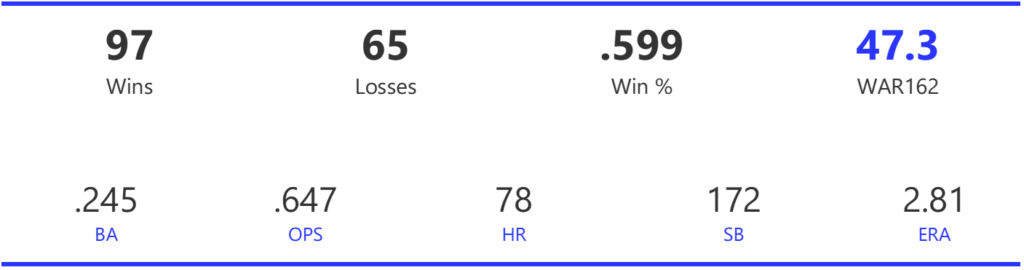
Offense was not a strength for the Dodgers – their 608 runs placed 8th in a 10-team league, and they hit the fewest homers in the NL. Even within the pitching-friendly environment at Dodger Stadium, these were low numbers. The Dodgers ranked 7th, 6th, and 8th, respectively, in BA, OBP, and OPS. Fortunately, they had exceptional pitching, with league-leading numbers in ERA, WHIP, and shutouts, and ranked near the top in strikeouts and walks.

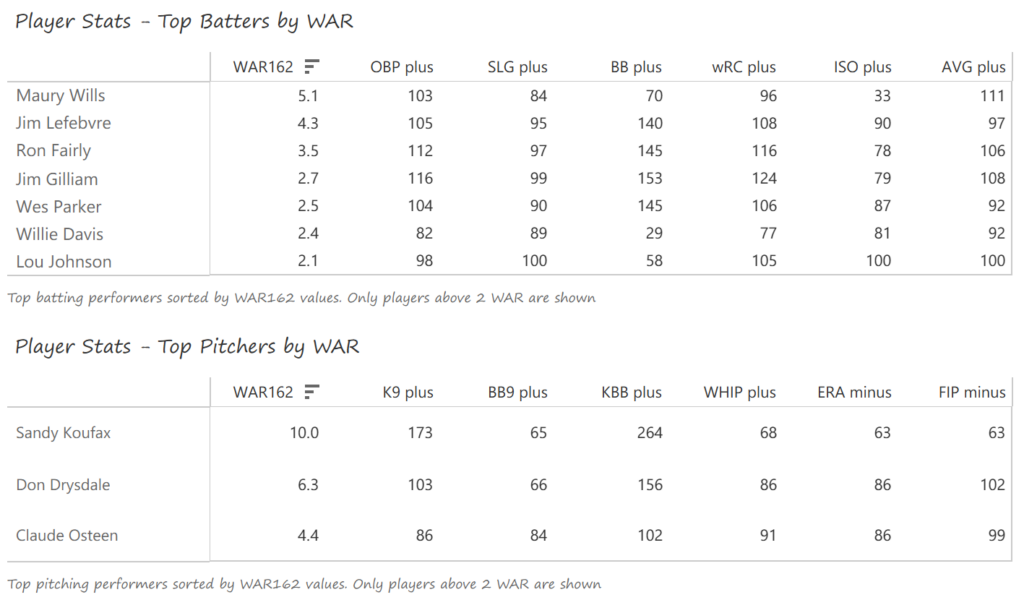
Maury Wills swiped 94 bases to lead the NL, while batting .286 and scoring 92 runs. His double-play partner Jim Lefebvre was effective at second base, earning Rookie of the Year honors, and Ron Fairly batted .274 with a .361 OBP. Additional support came from veteran Jim Gilliam (.280 BA), Wes Parker, and Willie Davis (25 steals). Interestingly, Wills, Lefebvre, Gilliam, and Parker were all switch-hitters, while Davis and Fairly batted from the left side. Sandy Koufax had a monster season, going 26-8 with a 2.04 ERA, 382 strikeouts, and a 0.855 WHIP, topping the NL in each category and winning the Cy Young award. Don Drysdale was an excellent second option, going 23-12 with a 2.77 ERA, and Claude Osteen added another 15 wins with a 2.79 ERA.

The Cardinals repeated as NL champs, defeating the Giants by 9 games before losing to the Tigers in a dramatic 7-game World Series.

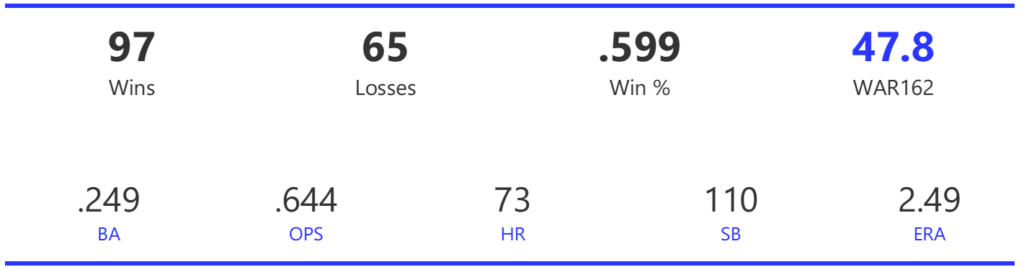
The Cardinals’ offense was quite average, tying for fourth in runs scored, and ranking just 8th (of 10) in home runs. They did place second in stolen bases, but were fourth or worse in BA, OBP, and OPS. The pitching was exceptional, even by the standards of the so-called Year of the Pitcher (NL-average ERA of 2.99). The Cards’ ERA of 2.49 topped the league, as did their 1.120 WHIP and 30 shutouts. They also ranked near the top in strikeouts and walks.

Lou Brock led the league in three metrics – doubles (46), triples (14), and steals (62). Outfield mate Curt Flood batted .301, and Mike Shannon had 15 homers and 79 RBI. Bob Gibson compiled a season for the ages with a 22-9 mark, 268 strikeouts, 13 shutouts, and a 1.12 ERA on his way to Cy Young and MVP honors. Ray Washburn posted a 14-8 record with a 2.26 ERA, and a young Steve Carlton provided a glimpse of the future with 13 wins.

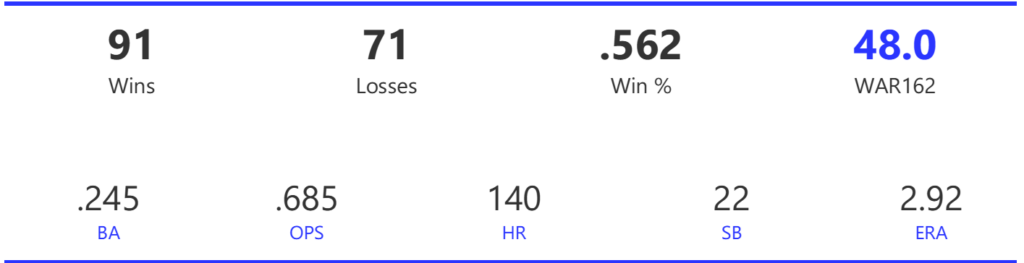
The Giants finished second in the 1967 NL pennant race, trailing the Cardinals by 10.5 games. According to Pythagorean projections, the gap should have been about 4 games, but the Cardinals were clearly the better club.

The Giants were a middle-of-the-pack offensive team, ranking 4th in runs and OPS, 6th in BA, and 5th in OBP. The team did have some power, trailing only the Braves in home runs. Pitching made the Giants a contender, as their 2.92 ERA and 1.177 WHIP topped the league. They ranked a bit lower in other metrics, but always above the NL average.

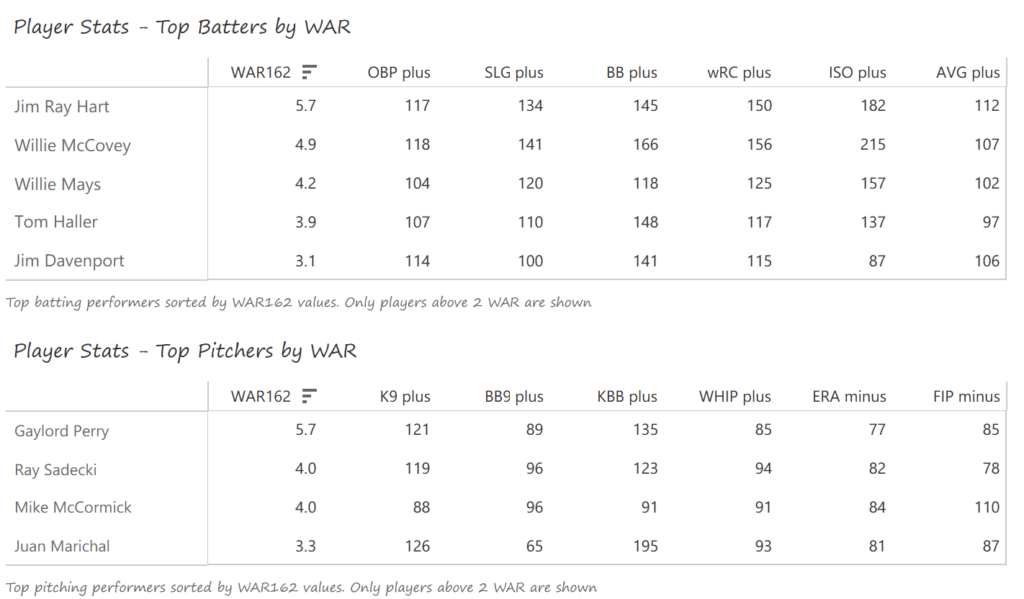
Third baseman Jim Ray Hart had a fine season, belting 29 homers to go with a .289 BA, 99 homers, and 98 runs scored. Willie McCovey led the Giants with 31 homers while batting .276 with 91 RBI, and 36-year-old Willie Mays added 22 homers. Tom Haller had an all-star season behind the plate, adding 14 homers to the mix. Gaylord Perry had a bad-luck 15-17 record despite his 2.61 ERA, while Ray Sadecki won 12 with a 2.78 ERA, and Mike McCormick claimed the Cy Young with a 22-10 mark and 2.85 ERA. Juan Marichal had a quiet season by his lofty standards, posting a 14-10 mark with a 2.76 ERA. He also posted the highest strikeout-to-walk rate in the NL. This foursome provided the Giants with a deep and consistent pitching staff for the 1967 season.

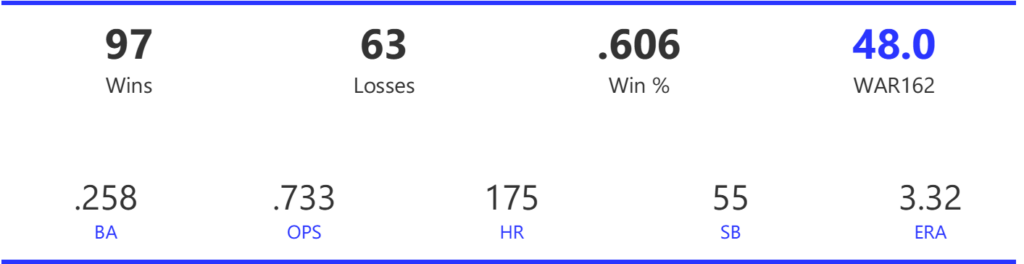
The 1966 Orioles topped the AL, beating the Twins by a solid 9-game margin to claim the AL pennant. The O’s then stunned the Dodgers in a 4-game World Series sweep.

The 1966 edition of the Orioles had a strong offense relative to their AL rivals. Their 755 runs were 36 more than the Tigers managed, and they finished just behind Detroit with 175 homers on the season. The team also led the AL with 243 doubles, and made a clean sweep of the BA, OBP, SLG, and OPS categories. The Orioles’ pitching was decidedly more ordinary, but possessed some young talent that would emerge over the next several seasons. The O’s ranked 4th in ERA and WHIP, and second in strikeouts behind the Indians.

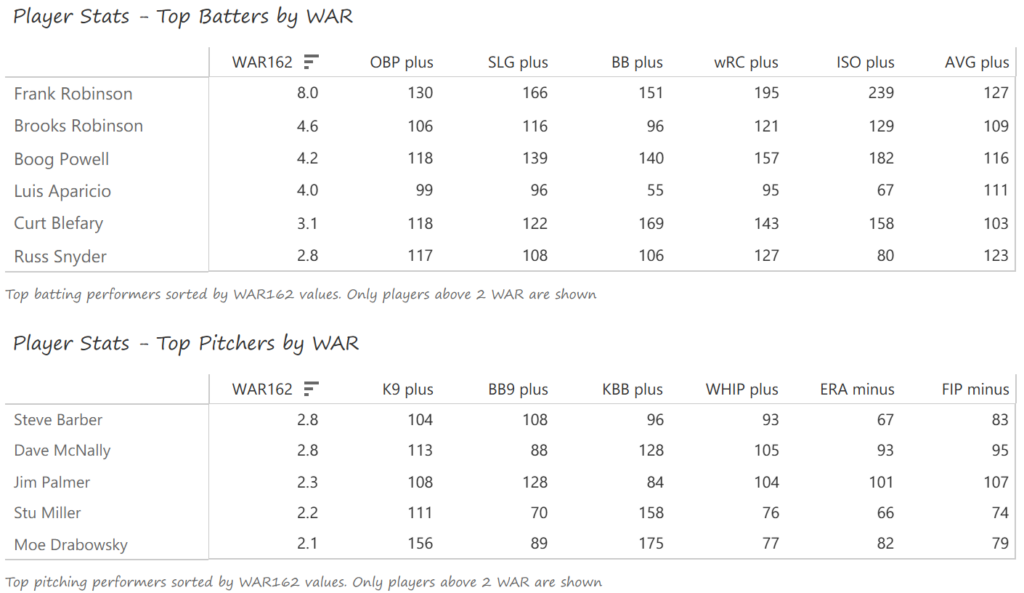
Triple Crown winner Frank Robinson was the offensive standout, leading the league in numerous batting metrics. Robinson batted .316 with a .410 OBP, 1.047 OPS, 122 runs scored, and 49 homers with 122 RBI on his way to MVP honors. His primary support came from defensive standout Brooks Robinson (23 homers, 100 RBI) and slugging first baseman Boog Powell (34 homers, 109 RBI). Shortstop Luis Aparicio added speed to the O’s lineup, swiping 25 bases and scoring 97 runs. The pitching staff was led by veteran Steve Barber, who posted a 10-5 record with 3 shutouts and a 2.30 ERA. Youngsters Dave McNally (age 23, 13-6 record) and Jim Palmer (age 20, 15-10 mark) provided a glimpse of future greatness on the mound for the Orioles.

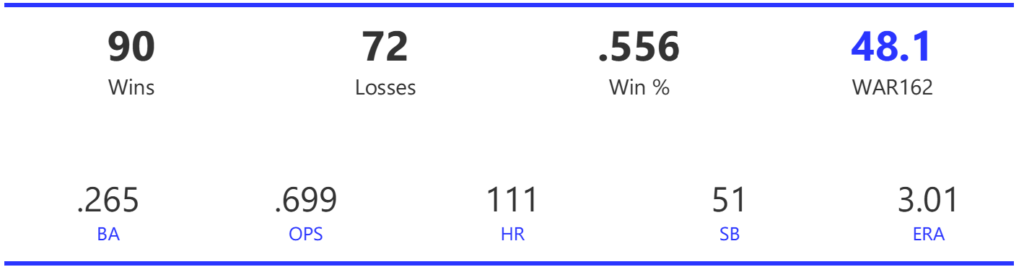
The Pirates finished third in the 1965 NL pennant race, trailing the Dodgers by 7 games and the Giants by 5 games. However, Pythagorean win projections have the Dodgers and Pirates at 92 wins, and the Giants at 91. The Dodgers and Giants had some favorable luck on their side; the Pirates did not.

The Pirates were not impressive offensively, finishing 5th in runs, 6th in homers, and 3rd in OPS. They were a bit better in the BA and OBP categories, ranking second behind the Reds. The Pirates’ pitching was solid, with the second-best NL ERA and 3rd-place rankings in shutouts and WHIP. The staff was average at best in the walk and strikeout categories.

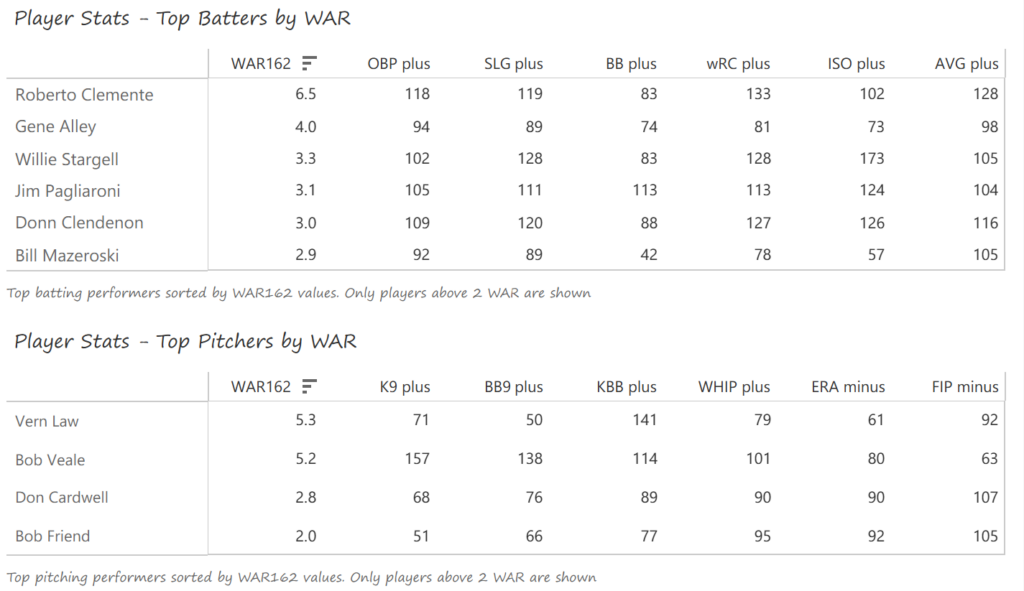
Roberto Clemente led the NL with a .329 average while scoring 91 runs and adding 14 triples along with his superlative defense. Young shortstop Gene Alley provided excellent defense, and Willie Stargell bopped 27 homers with 107 RBI. Catcher Jim Pagliaroni added 17 homers, and Donn Clendenon had 17 homers and a .301 BA. Vern Law had a terrific age-35 season, posting a 17-9 record with a 2.15 ERA, while Bob Veale went 17-12 with a 2.84 ERA despite leading the NL by dishing out 119 walks. Veale yielded just 5 home runs in 266 innings on the season, striking out 276 batters.

Summary

That’s it for the first entry in our MLB Team Rankings for the 1960s decade! Stay tuned for the countdown from #15 to #11, arriving in a few days. As always, thanks for reading!